

COURTKUTCHEHRY SPECIAL ON SC KEY CLARIFICATION ON SUMMON & WARRANT
Supreme Court: Summons in Private Complaint Do Not Mean Arrest
Anticipatory bail cannot be based on hypothetical fears
Court distinguishes between summons and warrants
By Legal Reporter
New Delhi: March 06, 2026:
Also Read: DRT Orders Karur Vysya Bank Recovery of ₹99 Lakh from Defaulting Borrower
In a significant ruling, the Supreme Court of India has addressed a common concern among accused persons facing private complaints. The Court clarified that mere issuance of summons under Section 204 of the Code of Criminal Procedure (CrPC) does not automatically imply arrest. This judgment provides clarity on the scope of anticipatory bail and reinforces the distinction between summons and warrants in criminal proceedings.
[Recommended Research Resources]
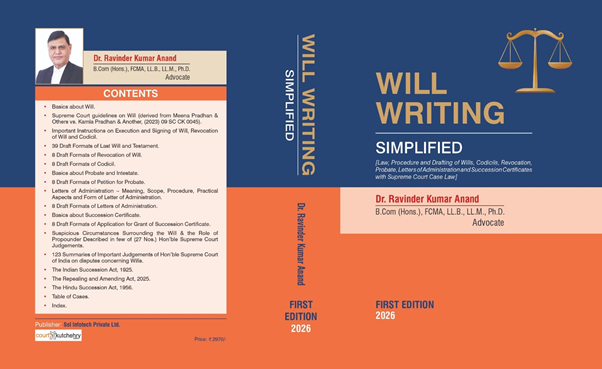
📘 Legal professionals and students alike will benefit from Will Writing Simplified, which covers procedure and case law in detail.
🔹 Buy on Amazon
🔹 Buy on Flipkart
Also Read: Delhi High Court Quashes Attempt-to-Murder Case, Calls Mother–Child Bond Sacrosanct
Background of the Case
- The case arose from a private complaint alleging cheating and criminal breach of trust.
- The magistrate, after taking cognizance, issued summons to the accused under Section 204 CrPC.
- The accused, fearing arrest, approached the High Court seeking anticipatory bail, which was rejected.
- The matter reached the Supreme Court, where the bench of Justice J.B. Pardiwala and Justice K.V. Viswanathan delivered the ruling.
Supreme Court’s Observations
- Summons ≠ Arrest: The Court emphasized that summons is simply a directive to appear before the magistrate. They do not carry the threat of arrest.
- Warrants Trigger Arrest: Only if a magistrate issues a warrant of arrest can the accused justifiably seek anticipatory bail.
- No Hypothetical Fears: The Court criticized the practice of seeking anticipatory bail based on speculative fears, stating that legal remedies must be grounded in actual circumstances.
- Judicial Efficiency: The ruling discourages unnecessary litigation and ensures that anticipatory bail petitions are filed only when warranted.
Also Read: Karnataka High Court Denies Custody to Mother Accused in Prostitution Racket
Legal Significance
- Clarifies Section 204 CrPC: The judgment reinforces that summons under this section are procedural, not punitive.
- Limits on Anticipatory Bail: It narrows the scope of anticipatory bail, ensuring it is not misused.
- Strengthens Judicial Process: By distinguishing between summons and warrants, the Court ensures that accused persons are not burdened with unnecessary apprehensions.
Implications for Accused Persons
- Practical Relief: Accused individuals can now appear before magistrates without fearing immediate arrest.
- Legal Strategy: Lawyers must advise clients that anticipatory bail is not necessary unless a warrant is issued.
- Reduced Litigation: The ruling will likely reduce the number of anticipatory bail petitions filed on speculative grounds.
Also Read: MP High Court Orders Enquiry Against Trial Judge Over Non-Compliance
Expert Reactions
Legal experts have welcomed the ruling, noting that it brings much-needed clarity to criminal procedure. They argue that this will prevent misuse of anticipatory bail provisions and streamline judicial processes. Critics, however, caution that accused persons may still feel vulnerable, especially in sensitive cases, and call for better awareness campaigns to explain the distinction.
Conclusion
The Supreme Court’s ruling is a landmark in criminal jurisprudence, ensuring that summons in private complaints is not equated with arrest. By clarifying the scope of anticipatory bail, the Court has strengthened procedural fairness and reduced unnecessary litigation. This judgment will serve as a guiding precedent for both lawyers and accused persons navigating private complaint cases.
Keywords for Faster Searches
Also Read: ITAT Quashes Lalit Modi’s Reassessment: Credit Card & Private Jet Expenses Disputed
- Supreme Court summons private complaint ruling
- Section 204 CrPC summons vs arrest
- Anticipatory bail Supreme Court India
- Cheating breach of trust private complaint
- Supreme Court Justice Pardiwala Viswanathan ruling
- Summons and warrants difference India
- Supreme Court anticipatory bail clarification
Also Read: RBI Caps Digital Fraud Claims at ₹50,000: Banks Must Prove Customer Liability