
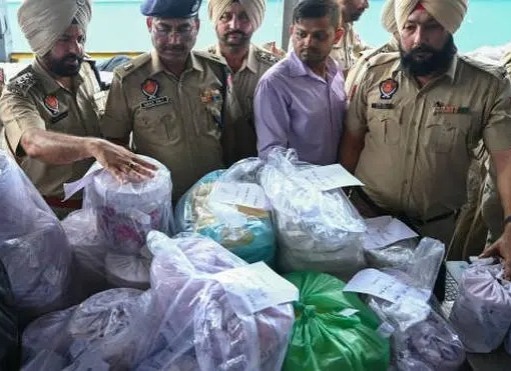
Supreme Court Slams Punjab Over Drug Menace
Police Accused of Targeting Small Peddlers for Publicity
Call for Central Coordination in NDPS Enforcement
By Legal Reporter
New Delhi: May 08, 2026:
The Supreme Court of India has sharply criticized Punjab’s failure to tackle drug abuse, highlighting misuse of police resources, lack of accountability for influential offenders, and the urgent need for coordinated enforcement under the Narcotic Drugs and Psychotropic Substances Act (NDPS Act). This ruling underscores the judiciary’s role in ensuring systemic reforms against organized drug trafficking.
Indian courts have laid down detailed principles governing the execution, proof, attestation, and validity of Wills in succession and probate disputes. The in-depth legal resource on Supreme Court Judgments on Wills explains landmark rulings on suspicious circumstances, burden of proof, limitation in probate cases, role of attesting witnesses, and evidentiary standards under the Indian Succession Act. This guide is highly useful for legal professionals, litigants, researchers, and families dealing with contested inheritance and testamentary succession matters in India.
Key Highlights of the Case
- Bench Composition: Chief Justice of India Surya Kant and Justice Joymalya Bagchi.
- Context: Suo motu case on creation of exclusive courts for speedy trials under special statutes like NDPS and UAPA.
- Punjab’s Drug Crisis: CJI cited tragic cases of families losing multiple children to addiction, calling the situation “terrible.”
- Criticism of Police: Punjab Police accused of arresting small-time peddlers for publicity while ignoring “bigger sharks,” including influential persons.
- Judicial Stand: Courts will support systemic reforms, but enforcement agencies must act against syndicates rather than scapegoats.
Laws and Rules Discussed
1. Narcotic Drugs and Psychotropic Substances Act, 1985 (NDPS Act)
- Provides stringent provisions for drug-related offences.
- Mandates severe penalties for trafficking and organized crime.
- Supreme Court emphasized that enforcement must target syndicates, not just petty offenders.
2. Exclusive Special Courts Framework
- Case arose from a suo motu initiative to establish special courts for speedy disposal of NDPS and UAPA trials.
- Framework requires states to set up courts proportional to pending cases.
3. Judicial Oversight
- CJI assured that High Courts will extend support to ensure effective functioning of special courts.
- Judiciary stressed accountability of state agencies in tackling organized crime.
4. Central Agency Coordination
- CJI suggested a statutory mechanism for pan-India coordination.
- Syndicates often operate across states; intelligence sharing is critical.
- States must cooperate with the Centre without viewing it as interference.
Analytical Insights
- Systemic Failure in Punjab: The ruling highlights how selective enforcement undermines the NDPS Act’s deterrent effect.
- Publicity vs. Substance: Arresting small peddlers for media coverage diverts attention from organized cartels.
- Judicial Activism: By invoking suo motu powers, the Supreme Court is pushing for structural reforms in criminal justice.
- Federal Coordination: The call for a central monitoring agency reflects recognition of drug trafficking as a national security issue.
- Human Impact: The CJI’s reference to families devastated by addiction underscores the urgency of reform beyond legal frameworks.
FAQ: Supreme Court’s Observations on Punjab’s Drug Menace
Q1: What law governs drug offences in India?
A: The NDPS Act, 1985, which prescribes strict penalties for possession, trafficking, and organized drug crimes.
Q2: Why did the Supreme Court criticize Punjab Police?
A: For focusing on arresting small-time peddlers for publicity while ignoring influential persons running drug rackets.
Q3: What are “special courts” mentioned in the case?
A: Courts dedicated to expeditious trials under special statutes like NDPS and UAPA, mandated based on pending case volume.
Q4: Did the Court suggest central intervention?
A: Yes, the CJI proposed a statutory mechanism for pan-India coordination to dismantle syndicates operating across states.
Q5: What role will High Courts play?
A: They will provide full support to ensure effective functioning of special courts and accountability in NDPS trials.
Q6: Does this ruling affect only Punjab?
A: While Punjab was singled out, the principle applies nationwide, especially in states facing organized drug trafficking.
Q7: What is the broader implication of this ruling?
A: It strengthens judicial oversight, demands systemic police reform, and emphasizes consumer protection against organized crime.
Conclusion
The Supreme Court’s intervention marks a turning point in India’s fight against drug abuse, shifting focus from token arrests to dismantling powerful syndicates. By invoking the NDPS Act’s spirit and demanding central coordination, the Court has signalled that half-measures and publicity stunts will no longer suffice. This ruling is both a wake-up call for Punjab and a national directive for serious, coordinated enforcement against the drug mafia.