
Supreme Court Orders Regularization of Income Tax Casual Workers
Tribunal and High Court Misapplied Uma Devi Judgment
Apex Court Upholds Parity Principle for Long-Serving Employees
By Legal Reporter
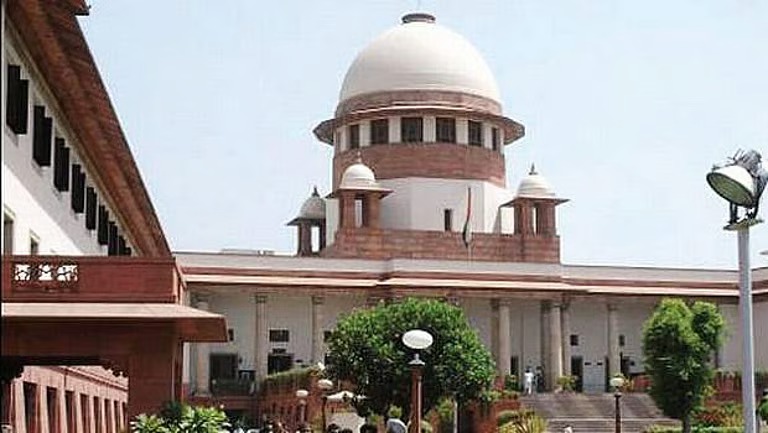
New Delhi, February 17, 2026 — In a landmark ruling, the Supreme Court of India directed the regularization of casual workers employed by the Income Tax Department, Gwalior, holding that the Central Administrative Tribunal (CAT) and the Madhya Pradesh High Court had erred in applying the Uma Devi judgment. The Court emphasized that similarly situated employees cannot be treated differently, reinforcing the principle of parity in public employment.
Also Read: Telangana Police Bust ₹19 Crore USDT Crypto Fraud Linked to Fake KYC Website
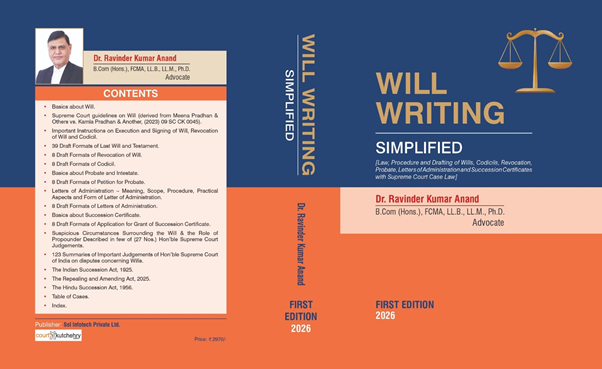
[💡 If you want practical guidance on drafting wills, codicils, and probate procedures, Will Writing Simplified is an invaluable resource. Available on Amazon and Flipkart.]
Background of the Case
The case involved long-serving casual workers — including sweepers and a cook — who had been employed since the 1990s in the Income Tax Department. Despite performing duties of a perennial nature for decades, their requests for regularization were rejected by the department.
- The workers approached the CAT, which denied relief citing the Uma Devi (2006) judgment.
- The High Court upheld the CAT’s decision, ruling that the workers did not meet the requirement of ten years of continuous service as of April 10, 2006, the cut-off date set in Uma Devi.
- The workers then appealed to the Supreme Court, arguing that other similarly placed employees had already been regularized in earlier cases.
Also Read: ICAI Reprimands Chartered Accountant for Signing Tax Audit Reports Without Certificate of Practice
Supreme Court’s Observations
A Bench comprising Justice J.K. Maheshwari and Justice Atul S. Chandurkar set aside the High Court’s order, ruling that the appellants were entitled to regularization.
Key points from the judgment:
- Parity Principle: Once regularization has been granted to some employees, denying it to others in identical circumstances amounts to discriminatory treatment.
- Misapplication of Uma Devi: The Tribunal and High Court wrongly applied the Uma Devi judgment, which was intended to prevent backdoor entries into government service, not to penalize workers who had served for decades in essential roles.
- Effective Date: The Court ordered that the workers’ services be regularized with effect from July 1, 2006, aligning with earlier directions in similar cases.
Significance of the Ruling
This judgment carries wide implications for casual and daily wage workers across government departments:
- Strengthens Workers’ Rights: It affirms that long-serving employees cannot be denied regularization merely due to technical misinterpretations of Uma Devi.
- Ensures Equality: The ruling reinforces Article 14 of the Constitution, ensuring equal treatment for workers in identical circumstances.
- Sets Precedent: The decision may influence future cases involving casual workers in other departments, particularly where parity with previously regularized employees is evident.
Also Read: Supreme Court Rules Condonation of Delay Is Not a Right, Entirely Court’s Discretion
Reactions and Impact
Legal experts hailed the judgment as a corrective step against rigid application of Uma Devi. Worker unions welcomed the ruling, noting that it provides relief to employees who have dedicated decades of service without job security.
The Income Tax Department is now expected to implement the Court’s directions, regularizing the services of the appellants and potentially reviewing similar pending cases.
Conclusion
The Supreme Court’s ruling underscores the judiciary’s role in balancing constitutional principles with fairness in employment. By correcting the misapplication of Uma Devi, the Court has ensured that justice is not denied to those who have served faithfully for years.
This case highlights the importance of judicial interpretation in safeguarding workers’ rights and preventing discriminatory practices in government employment.
Keywords for SEO & Faster Searches
Also Read: Delhi High Court Reviews Amrit Wilson’s OCI Card Cancellation, Says India Cannot Be Maligned Abroad
- Supreme Court India casual workers regularization
- Income Tax Department Gwalior workers case
- Uma Devi judgment misapplication
- CAT and High Court error in regularization
- Parity principle in public employment
- Supreme Court ruling February 2026
- Regularization of sweepers and cook Income Tax Department
Also Read: Supreme Court Rules Illegal Land Use Permissions Cannot Be Legalised Post-Facto