
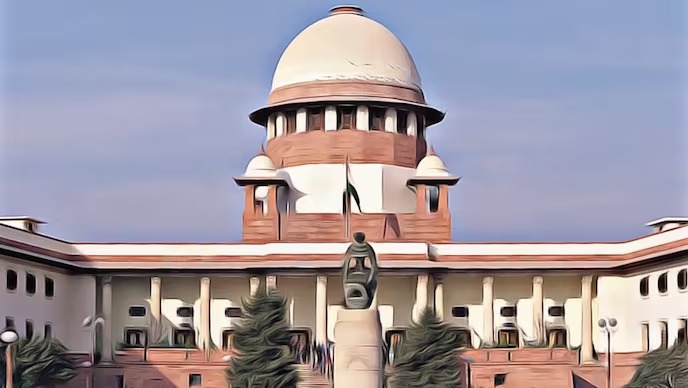
Supreme Court: Court’s Permission Needed to Arrest Accused of New Offence Added After Bail
Investigating agencies cannot re-arrest without judicial approval when fresh charges are added post bail
Judges stress balance between personal liberty and investigative powers in criminal proceedings
By Legal Reporter
New Delhi: February 13, 2026:
In a significant ruling that strengthens the protection of personal liberty, the Supreme Court of India has held that an accused who has already been granted bail cannot be automatically re-arrested merely because a new cognizable and non-bailable offence has been added to the charge sheet. The Court clarified that investigating agencies must first obtain permission from the same court that granted bail before proceeding with such an arrest.
This judgment, delivered by a bench comprising Justice J.B. Pardiwala and Justice K.V. Viswanathan, underscores the principle that bail is not easily undone and that judicial oversight is essential when new charges are introduced against an accused.
[Recommended Legal Resource]
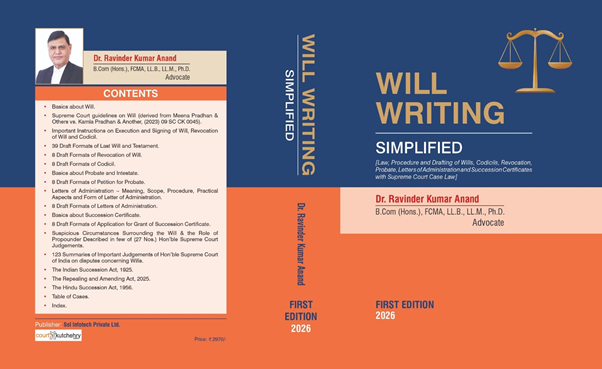
For readers seeking deeper understanding of legal procedures, drafting of wills, succession laws, and Supreme Court case law, the book Will Writing Simplified [Law, Procedure and Drafting of Wills, Codicils, Revocation, Probate, Letters of Administration and Succession Certificates with Supreme Court Case Law] is an excellent resource. It provides practical guidance and case references, making it invaluable for lawyers, law students, and researchers.
You can access it here: Amazon | Flipkart
Also Read: Allahabad High Court: Marriage Does Not Change a Woman’s Original Caste Status Under SC/ST Act
Case Background
- The ruling came in the case of Sumit vs. State of Uttar Pradesh & Anr. (2026).
- The accused had already been granted bail, but during investigation, additional serious offences were added to the charge sheet.
- The investigating agency sought to arrest the accused again without approaching the court.
- The Supreme Court intervened, clarifying that such re-arrest cannot be automatic and requires judicial sanction.
Supreme Court’s Key Observations
- Judicial Oversight: The Court emphasized that once bail has been granted, the investigating authority cannot bypass the court by re-arresting the accused for newly added offences.
- Reference to Precedents: The bench referred to earlier rulings such as Pradeep Ram v. State of Jharkhand and Prahlad Singh Bhati v. NCT of Delhi, which highlighted the importance of judicial control over bail and arrest.
- Balance of Interests: The Court noted that while investigating agencies must be allowed to probe serious offences, the liberty of an individual cannot be compromised without judicial scrutiny.
- Protection of Rights: The ruling reinforces the constitutional value of personal liberty and prevents misuse of investigative powers.
Implications of the Judgment
- For Accused Persons: Provides stronger protection against arbitrary re-arrest after bail.
- For Investigating Agencies: They must seek court approval before arresting an accused for newly added offences.
- For Courts: Places greater responsibility on courts to balance liberty with investigative needs.
- For Criminal Justice System: Ensures fairness and prevents harassment of accused individuals through repeated arrests.
Broader Legal Significance
This ruling is part of a larger judicial trend where the Supreme Court has consistently emphasized the importance of personal liberty and judicial oversight in criminal proceedings. It aligns with earlier judgments on anticipatory bail and bail conditions, reinforcing that liberty cannot be curtailed without due process.
Conclusion
The Supreme Court’s ruling ensures that bail remains a meaningful safeguard of liberty. By requiring investigating agencies to seek court permission before re-arresting an accused for newly added offences, the Court has reinforced the principle of judicial oversight. This judgment not only protects individuals from arbitrary state action but also strengthens the credibility of the criminal justice system.
Suggested Keywords for Faster Searches
Also Read: Supreme Court Criticizes Tribunal for Handwritten Orders Despite E-Courts Project
- Supreme Court bail re-arrest ruling
- Court permission needed for arrest after bail
- Sumit vs State of Uttar Pradesh Supreme Court case
- Bail and new offence Supreme Court judgment
- Supreme Court personal liberty bail case
- Investigating agency re-arrest after bail India
- Supreme Court bail protection ruling
- Criminal justice bail re-arrest India