
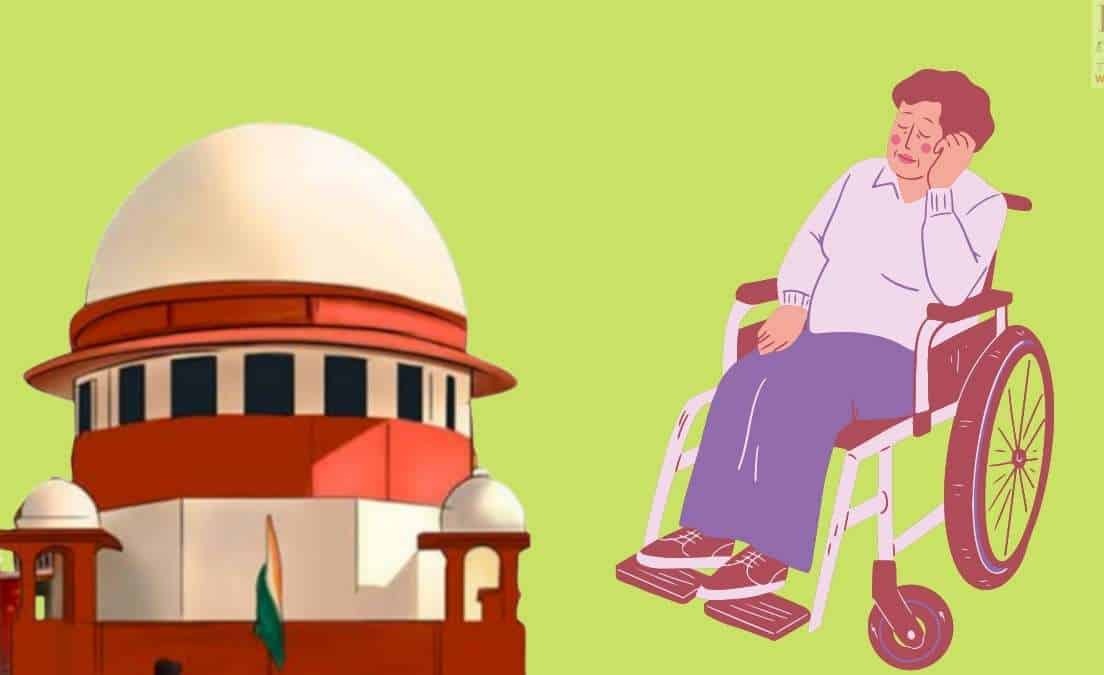
Supreme Court Clarifies Disability Quota: Horizontal Reservation Opens Doors Wider
PWD Candidates Can Compete in Unreserved Posts
SC/ST/OBC with Disabilities Gain Equal Access
By Legal Reporter
New Delhi: April 08, 2026:
The Supreme Court of India has delivered a significant ruling on the interpretation of horizontal reservation for Persons with Disabilities (PWDs) under the Rights of Persons with Disabilities Act, 2016 and the Constitutional framework of reservations. The judgment clarifies that PWD candidates belonging to Scheduled Castes (SC), Scheduled Tribes (ST), or Other Backward Classes (OBC) are entitled to compete for posts reserved under the unreserved category when horizontal reservation is applied.
Relevant legal principles on testamentary disputes are highlighted in this important Supreme Court judgment on wills and succession disputes in the case of Palanivelayutham Pillai and Others vs Ramachandran and Others, which examines key aspects of validity, execution, and proof of wills in India.
Understanding Horizontal vs. Vertical Reservation
- Vertical Reservation: Applies to social categories such as SC, ST, and OBC. It is exclusive and compartmentalized.
- Horizontal Reservation: Cuts across vertical categories, applying to groups like women, PWDs, or ex‑servicemen. It ensures representation within each vertical category.
The Court emphasized that horizontal reservation is not a separate vertical category but an overlay. Thus, a PWD candidate from SC/ST/OBC can be considered in the unreserved category if they qualify on merit.
Key Legal Provisions Discussed
- Rights of Persons with Disabilities Act, 2016
- Mandates 4% reservation in government jobs for PWDs.
- Ensures equal opportunity and prohibits discrimination.
- Articles 14, 16, and 21 of the Constitution
- Guarantee equality before law, equality of opportunity in public employment, and protection of life and dignity.
- The Court linked horizontal reservation to these constitutional guarantees.
- Precedents on Reservation
- Earlier rulings had clarified the distinction between vertical and horizontal reservations.
- The present judgment builds on this jurisprudence, ensuring clarity in implementation.
Implications of the Ruling
- For PWD Candidates:
- Greater access to unreserved posts, reducing barriers.
- Recognition of merit alongside reservation benefits.
- For SC/ST/OBC PWD Candidates:
- They are not confined to their vertical category; they can compete in unreserved slots.
- This widens opportunities and prevents double disadvantage.
- For Government Recruitment:
- Recruitment agencies must adjust selection processes to reflect this interpretation.
- Transparent implementation will be critical to avoid litigation.
Broader Social Impact
The ruling strengthens inclusivity in public employment. It acknowledges that disability cuts across caste and community lines, and that merit should not be undermined by rigid categorization. By clarifying the scope of horizontal reservation, the Court has reinforced India’s commitment to equality and social justice.
[RECOMMENDED RESEARCH RESOURCES]
📘 Legal professionals and students alike will benefit from Will Writing Simplified, which covers procedure and case law in detail.
🔹 Buy on Amazon
🔹 Buy on Flipkart
Explore will litigation rulings here. Click the link here: https://www.courtkutchehry.com/pages/blog/123-supreme-court-judgments-on-wills/
FAQ: Supreme Court Ruling on Horizontal Reservation
Q1. What is horizontal reservation?
Horizontal reservation applies across all categories (SC/ST/OBC/General) to ensure representation for groups like PWDs, women, or ex‑servicemen.
Q2. How is it different from vertical reservation?
Vertical reservation is exclusive to social categories (SC/ST/OBC). Horizontal reservation overlaps, ensuring representation within each vertical category.
Q3. What did the Supreme Court decide?
The Court held that PWD candidates from SC/ST/OBC backgrounds can also compete for unreserved posts under horizontal reservation.
Q4. Which law governs PWD reservation?
The Rights of Persons with Disabilities Act, 2016 mandates 4% reservation in government jobs for PWDs.
Q5. Does this mean PWD candidates get double benefits?
No. They are entitled to compete in unreserved posts on merit, but their disability reservation applies horizontally, not as an additional vertical quota.
Q6. How does this affect recruitment exams?
Recruitment agencies must ensure that PWD candidates are considered across categories, including unreserved slots, in line with the judgment.
Q7. What constitutional provisions support this ruling?
Articles 14 (equality), 16 (equal opportunity in employment), and 21 (dignity of life) underpin the Court’s reasoning.
Q8. Why is this ruling significant?
It prevents exclusion of PWD candidates from unreserved posts, ensuring fairness and broadening opportunities.
In summary: The Supreme Court’s ruling on horizontal reservation for PWDs is a landmark clarification. It ensures that disability is recognized as a cross‑cutting identity, enabling candidates to compete fairly across categories. This strengthens India’s constitutional promise of equality and inclusivity in public employment.