
Beyond the Shariat: Supreme Court Notice Opens Watershed Constitutional Debate on Polygamy, Bigamy Laws, and Gender Justice in India
CJI Surya Kant Bench Seeks Union Response on Uniform Enforcement of Section 82 Bharatiya Nyaya Sanhita Across All Religious Faiths
Gender Rights Activists Demand Compulsory Marriage Registration, Legal Codification, and Invalidation of 1937 Shariat Act Exemptions Under Constitutional Morality
By Legal Editor
New Delhi: August 01, 2026:
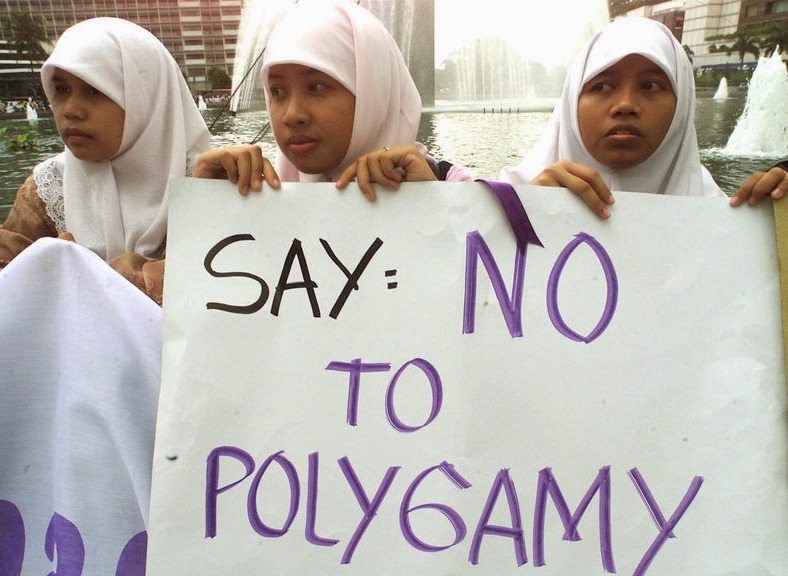
The Supreme Court of India, under a Bench headed by Chief Justice Surya Kant, recently initiated a profound constitutional review by issuing a formal notice to the Union Government regarding a public interest petition challenging the legal validity of polygamy among Muslims. Spearheaded by prominent gender rights activist Zakia Soman along with co-petitioners, this litigation reopens one of the most fundamental legal debates in post-independence Indian jurisprudence: the delicate equilibrium between individual fundamental rights and community-based personal law exemptions. The petitioners contend that permitting polygamous arrangements under statutory personal law protections constitutes an indefensible violation of constitutional guarantees, specifically gender equality, personal liberty, and non-discrimination. By seeking the uniform application of penal provisions against bigamy and demanding mandatory administrative registration of all marriages and divorces, the petition prompts a thorough re-examination of India’s legal architecture governing matrimonial practices.
At the core of this legal push is the argument that historical concessions granted through personal laws must yield to the overarching primacy of constitutional morality. In India's pluralistic legal framework, civil matters such as marriage, divorce, inheritance, and adoption have historically been governed by religious personal codes rather than a single unified civil standard. While penal codes and procedural laws operate uniformly across citizens regardless of faith, matrimonial rights remain divided along religious lines. The recent litigation asserts that exempting specific religious groups from general bigamy statutes penalizes vulnerable citizens, predominantly women and children, thereby denying them equal protection before the law.
Statutory Intersections: BNS Section 82 vs. The 1937 Shariat Act
To understand the legal mechanics of the petition, one must analyze the statutory tension between modern penal legislation and colonial-era personal law statutes. Under India’s criminal jurisprudence, bigamy—the act of contracting a second marriage while a first spouse is still living—is explicitly criminalized. Previously codified under Section 494 of the Indian Penal Code (IPC), the law has been re-enacted and modernized under Section 82 of the Bharatiya Nyaya Sanhita (BNS). Section 82 prescribes severe penalties, including imprisonment up to seven years and mandatory fines, for anyone who marries during the lifetime of a husband or wife, provided the prior marriage is legally valid.
However, the criminal enforceability of Section 82 BNS has historically been circumscribed by personal laws. Section 2 of the Muslim Personal Law (Shariat) Application Act, 1937 explicitly dictates that in matters concerning marriage, dissolution of marriage, maintenance, and guardianship, the rule of decision for Muslim citizens shall be the Muslim Personal Law (Shariat). Under classical interpretations of Muslim personal law codified by this 1937 statute, a Muslim male is permitted to contract up to four contemporaneous marriages subject to specific religious preconditions. Consequently, Section 82 of the BNS cannot currently be invoked against Muslim men who take additional wives, as their personal law legally validates the subsequent unions, neutralizing the criminal element of bigamy.
The petition directly challenges this statutory carve-out, asserting that Section 2 of the 1937 Shariat Act operates as an unconstitutional shield. By exempting one religious community from a criminal statute designed to preserve matrimonial dignity and prevent fraud, the legislative framework creates an unconstitutional distinction based solely on religion. The petitioners request the apex court to declare that Section 82 of the Bharatiya Nyaya Sanhita applies uniformly to all Indian citizens, thereby effectively criminalizing polygamous unions across every religious denomination.
Constitutional Foundations: Testing Articles 14, 15, 21, and 25
The constitutional argument presented before the Supreme Court relies on a multi-pronged invocation of Part III fundamental rights. The primary anchor is Article 14, which guarantees equality before the law and equal protection of the laws within the territory of India. The petitioners contend that allowing bigamy for men of one religion while criminalizing the exact same act for men of Hindu, Christian, Parsi, or secular affiliations violates Article 14's prohibition against arbitrary state classification. Furthermore, because polygamy in practice operates as a gender-exclusive privilege—permitting men to have multiple wives while denying women the corresponding right to have multiple husbands—it violates Article 15(1), which prohibits state discrimination on grounds of sex.
Equally pivotal is Article 21, which secures the right to life and personal liberty. The Supreme Court has repeatedly expanded Article 21 to encompass the right to live with human dignity, the right to mental and physical health, and protection against gender-based violence or humiliation. In their submission, the petitioners argue that living in a polygamous marriage inflicts severe psychological trauma, social stigmatization, and economic insecurity upon women, eroding their fundamental dignity.
In response, defenders of personal law autonomy frequently invoke Article 25, which guarantees freedom of conscience and the right freely to profess, practice, and propagate religion. However, the petition systematically dismantles this defence using the Supreme Court’s established "Essential Religious Practices" (ERP) doctrine. Under this doctrine, only practices that are foundational and indispensable to a religion enjoy constitutional protection under Article 25. The petition emphasizes that polygamy is merely a permissive conditional allowance within Islamic jurisprudence—traditionally permitted only under extraordinary historical circumstances with strict mandates of equal treatment—and is by no means a mandatory religious duty. Because polygamy is non-essential, it remains fully subject to state regulation and social welfare reform under Article 25(2)(b), which explicitly empowers the State to enact legislation providing for social welfare and reform.
Judicial History, Precedents, and Global Reform Context
The current challenge builds upon decades of progressive judicial rulings in Indian constitutional law. In the landmark Shayara Bano v. Union of India (2017) judgment, a Constitution Bench struck down the practice of instantaneous talaq-e-biddat (triple talaq) as unconstitutional, establishing that personal law practices that are arbitrary and contrary to constitutional morality can be invalidated by the judiciary. Earlier, in Sarla Mudgal v. Union of India (1995) and Lily Thomas v. Union of India (2000), the Supreme Court addressed the fraudulent practice of non-Muslim men converting to Islam solely to contract a second marriage without dissolving their first Hindu marriage. In both cases, the court ruled that such second marriages were void and punishable under bigamy laws, holding that personal law cannot be abused to defeat statutory justice.
Globally, the petition highlights that several sovereign nations with predominantly Muslim populations have already enacted legislative reforms to abolish or restrict polygamy. Countries such as Tunisia and Turkey have comprehensively prohibited polygamous marriages under their civil codes, declaring second marriages illegal and subject to criminal sanctions. Other jurisdictions, including Morocco, Egypt, Syria, and Pakistan, have introduced severe statutory restrictions, requiring judicial permission, proof of financial capacity, and consent from existing wives prior to any subsequent union. The petitioners argue that India, as a secular democratic republic committed to constitutional equality, should not lag behind sovereign Islamic states in guaranteeing gender justice.
Compulsory Registration, Financial Safeguards, and Codification
Beyond seeking a direct ban, the petition outlines comprehensive procedural and welfare mechanisms designed to protect women and children. A primary prayer is the mandatory, compulsory registration of all Muslim marriages and divorces with designated State authorities. Currently, many Muslim marriages are recorded solely through local religious functionaries (Qazis) via traditional marriage deeds (Nikahnama). The absence of centralized, state-maintained civil records enables clandestine second marriages and leaves women without verifiable documentation when seeking judicial redress for desertion or maintenance.
Recognizing the complex socio-economic realities of existing non-standard unions, the petition requests transitionary safeguards. It urges the court to mandate guaranteed maintenance, inheritance rights, and housing protections for women and children currently trapped in polygamous arrangements. Crucially, the petition demands an immediate, enforceable right for the first wife and her children to reside in the matrimonial home, alongside expedited judicial protocols for securing monthly financial support. Simultaneously, it advocates for protecting the property and legitimacy rights of children born out of second marriages, ensuring they are not unfairly penalized or delegitimized.
Finally, the litigation urges the Supreme Court to direct the Union Government or the Law Commission of India to prepare a draft codification of Muslim Personal Law governing marriage, divorce, and succession. Citing comprehensive codification frameworks prepared by grassroots organizations like the Bharatiya Muslim Mahila Andolan (BMMA), the petition argues that statutory clarity is essential to eliminate ambiguities, replace patriarchal interpretations, and harmonize personal rights with constitutional values.
Synthesis and The Path Ahead
The Supreme Court's decision to issue notice to the Centre marks the beginning of a decisive legal proceeding. As a multi-judge bench evaluates the petition, the Union Government will be required to submit its formal affidavit outlining its legislative intent and constitutional position. The case represents a significant test for Indian constitutional jurisprudence: deciding whether personal law codes established during colonial rule can continue to operate outside the scope of fundamental rights guarantees. By linking Section 82 of the Bharatiya Nyaya Sanhita with Articles 14, 15, and 21, the petitioners have framed polygamy not as a matter of religious liberty, but as an urgent issue of human rights, equal citizenship, and structural gender justice.
FREQUENTLY ASKED QUESTIONS (FAQ) INDEX
SEARCHABLE FAQ INDEX
├── SECTION 1: STATUTORY FRAMEWORK & BIGAMY LAWS (Q1 - Q3)
├── SECTION 2: CONSTITUTIONAL GUARANTEES & DOCTRINES (Q4 - Q6)
└── SECTION 3: REGISTRATION, SOCIAL WELFARE & GLOBAL PRECEDENTS (Q7 - Q9)
Section 1: Statutory Framework & Bigamy Laws
Q1: What is the current statutory status of polygamy under Indian matrimonial law?
Answer: Matrimonial law in India is categorized by religious identity. Under codified personal laws such as the Hindu Marriage Act, 1955, the Special Marriage Act, 1954, the Indian Christian Marriage Act, 1872, and the Parsi Marriage and Divorce Act, 1936, monogamy is strictly mandatory. Contracting a second marriage while a spouse is alive renders the subsequent union null and void and invites criminal prosecution for bigamy. Conversely, under Section 2 of the Muslim Personal Law (Shariat) Application Act, 1937, Muslim males are permitted up to four wives simultaneously under uncodified personal law provisions.
Q2: How does Section 82 of the Bharatiya Nyaya Sanhita (BNS), 2023 treat bigamy and polygamy?
Answer: Section 82 of the Bharatiya Nyaya Sanhita (BNS), which replaced Section 494 of the Indian Penal Code (IPC), defines bigamy as a non-bailable, punishable offense. It stipulates that whoever, having a husband or wife living, marries in any case in which such marriage is void by reason of its taking place during the life of such husband or wife, shall be punished with imprisonment for a term extending up to seven years and fine. However, because Section 82 relies on the subsequent marriage being "void," it does not currently apply to Muslim men whose personal law validates multiple concurrent marriages.
Q3: What specific legal provisions are challenged in the current Supreme Court petition?
Answer: The petition primarily challenges Section 2 of the Muslim Personal Law (Shariat) Application Act, 1937, insofar as it validates and protects polygamy and non-formalized marital structures. The petition prays for a judicial declaration extending Section 82 of the Bharatiya Nyaya Sanhita (BNS) uniformly across all citizens regardless of religious faith, thereby eliminating personal law exemptions that permit bigamy.
Section 2: Constitutional Guarantees & Doctrines
Q4: Which fundamental rights under the Indian Constitution are invoked against polygamy?
Answer: The petition relies on three foundational articles of Part III:
Article 14 (Equality Before Law): Challenges the arbitrary statutory distinction that criminalizes bigamy for citizens of certain religions while permitting it for others.
Article 15 (Prohibition of Sex Discrimination): Argues that allowing men to take multiple wives while denying women reciprocal rights constitutes unconstitutional gender discrimination.
Article 21 (Right to Life and Personal Dignity): Contends that living in a polygamous marriage violates a woman's right to live with human dignity, economic safety, and mental well-being.
Q5: How does the Essential Religious Practices (ERP) doctrine apply to polygamy in Islam?
Answer: Under Indian constitutional jurisprudence, Article 25 protects freedom of religion, but protection is limited strictly to practices that are essential and integral to the faith. In the petition, it is submitted that polygamy is not a mandatory or essential religious duty in Islam, but rather a permissive allowance subject to strict conditions of equitable treatment. Because polygamy is non-essential, the State possesses full legislative and judicial authority under Article 25(2)(b) to reform or prohibit it in the interest of social welfare and public order.
Q6: What precedent was established in the Shayara Bano case regarding personal laws?
Answer: In Shayara Bano v. Union of India (2017), the Supreme Court ruled that personal law practices that are arbitrary, oppressive, or contrary to constitutional morality are subject to judicial review and can be declared void. This landmark judgment established that religious personal laws do not enjoy absolute immunity from Part III fundamental rights, creating a strong legal foundation for challenging polygamy.
Section 3: Registration, Social Welfare & Global Precedents
Q7: Why is compulsory registration of Muslim marriages and divorces being demanded?
Answer: Currently, non-registration of Muslim marriages permits secret subsequent unions, leaving former wives without proof of marriage when claiming maintenance, housing, or inheritance. Mandatory registration with state authorities creates an official public record, prevents bigamous fraud, protects women's legal status, and simplifies legal proceedings in matrimonial disputes.
Q8: What interim protections does the petition seek for affected women and children?
Answer: The petition prays for comprehensive interim protections, including:
An immediate legal right for the first wife and her children to reside in the matrimonial home.
Fast-tracked judicial mechanisms to enforce financial maintenance and maintenance arrears.
Full statutory inheritance and property rights for children born of second or subsequent marriages.
Expanded access to legal aid, crisis shelters, and government counseling services.
Q9: How have other nations handled personal law reforms regarding polygamy?
Answer: Several sovereign nations with majority Muslim populations have banned or severely restricted polygamy. For instance, Tunisia (under its Code of Personal Status) and Turkey fully criminalized polygamy, treating second marriages as illegal and void. Countries like Morocco, Egypt, Syria, and Pakistan require prior judicial approval, proof of financial equality, and consent from existing wives, demonstrating that statutory reform is consistent with modern legal governance.