
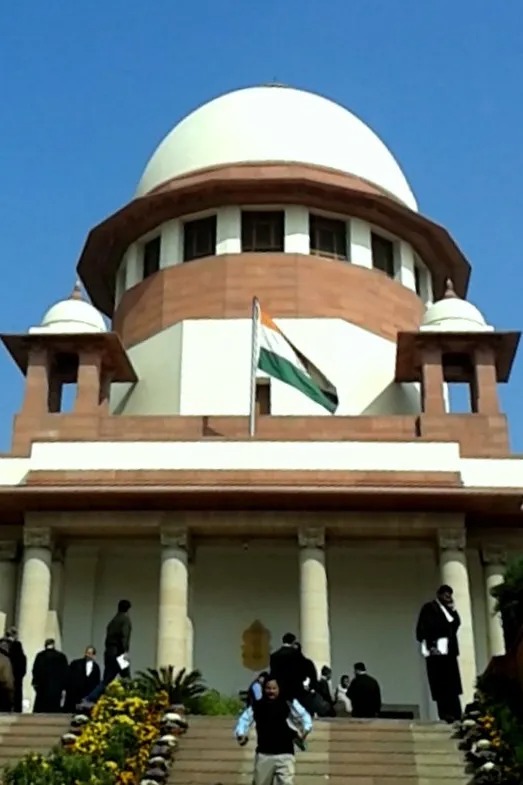
Supreme Court: Ratification of Power of Attorney Acts Starts Fresh Limitation Period for Specific Performance
Court says affidavit ratifying POA acts resets limitation clock
Failure of defendant to testify strengthens plaintiff’s case
By Our Legal Reporter
In a landmark judgment, the Supreme Court of India has clarified the legal effect of ratification of acts performed under a Power of Attorney (POA). The Court held that when a co-sharer or property owner ratifies the acts of a POA holder through an affidavit, the limitation period for filing a suit for specific performance begins from the date of ratification, not the original agreement.
Also Read: Supreme Court Clarifies: Insult Under SC/ST Act Must Be Linked to Victim’s Caste Identity
This ruling came in the case of Muslimveetil Chalakkal Ahammed Haji v. Sakeena Beevi, where the Court decreed specific performance in favour of the plaintiff, directing conveyance of the defendant’s 1/11th share in a property. The property in question housed a higher secondary school, making the dispute significant for both educational and ownership interests.
Background of the Case
- The dispute involved an agreement to sell property executed through a Power of Attorney holder.
- Later, the co-sharer executed an affidavit dated 30 April 2013, ratifying the acts of the POA holder and giving no objection to transfer of ownership.
- The defendant did not enter the witness box to contest the affidavit.
- The Trial Court and Kerala High Court had dismissed the plaintiff’s claim, citing limitation.
- The Supreme Court reversed these rulings, holding that limitation runs from the date of ratification, not the original agreement.
Key Observations by the Supreme Court
- Ratification resets limitation: The affidavit ratifying POA acts is decisive evidence, and limitation begins from that date.
- Failure to testify is fatal: The defendant’s absence from the witness box weakened their case.
- Specific performance granted: The Court directed conveyance of the defendant’s 1/11th share in the property.
- Substantive justice over technicalities: The ruling ensures that plaintiffs are not unfairly barred by limitation when ratification occurs later.
Also Read: Supreme Court: Accused on Bail Need Not Appear in Every Criminal Appeal Hearing
Comparison Table
|
Aspect |
Before Ruling |
After Ruling |
|
Limitation period |
Runs from date of original agreement |
Runs from date of ratification affidavit |
|
Role of affidavit |
Often treated as secondary evidence |
Decisive evidence resetting limitation |
|
Defendant’s testimony |
Optional |
Failure to testify weakens defence |
|
Impact on plaintiffs |
Risk of dismissal due to limitation |
Greater protection, chance to enforce rights |
Why This Ruling Matters
- For property buyers: Protects their right to enforce agreements even if ratification occurs later.
- For co-sharers and sellers: Clarifies that once they ratify POA acts, they cannot later deny them.
- For courts: Reinforces the principle that substantive justice must prevail over procedural technicalities.
Broader Legal Context
This ruling builds on earlier precedents under the Specific Relief Act, 1963 and Article 54 of the Limitation Act, 1963. Courts have consistently held that limitation for specific performance begins from the date of refusal or denial.
In this case, the Supreme Court clarified that ratification through affidavit amounts to fresh consent, and therefore limitation runs from that date.
Risks & Limitations
- Risk of misuse: Parties may attempt to delay ratification to extend limitation.
- Judicial caution: Courts must ensure affidavits are genuine and not fabricated to bypass limitation.
- Trade-off: While protecting plaintiffs, the ruling may prolong disputes if ratification is strategically delayed.
Conclusion
The Supreme Court’s ruling in Muslimveetil Chalakkal Ahammed Haji v. Sakeena Beevi is a landmark in property and contract law. By holding that ratification of POA acts through affidavit resets the limitation period, the Court has ensured that plaintiffs are not unfairly barred from seeking specific performance.
This judgment strengthens the principle of substantive justice, ensuring that technicalities like limitation do not defeat genuine claims. It also clarifies the evidentiary value of affidavits and the consequences of defendants failing to testify.
Suggested Keywords (SEO + ChatGPT)
- Supreme Court ratification power of attorney limitation
- POA acts ratification affidavit effect on limitation
- Specific Relief Act Supreme Court ruling 2026
- Article 54 Limitation Act ratification case
- Muslimveetil Chalakkal Ahammed Haji v. Sakeena Beevi
- Supreme Court specific performance decree India
- Ratification of POA acts property disputes
- Limitation period reset by affidavit Supreme Court
Also Read: J&K High Court: CrPC Timelines Ensure Speedy Justice for Victims, Not Automatic Bail for Accused