
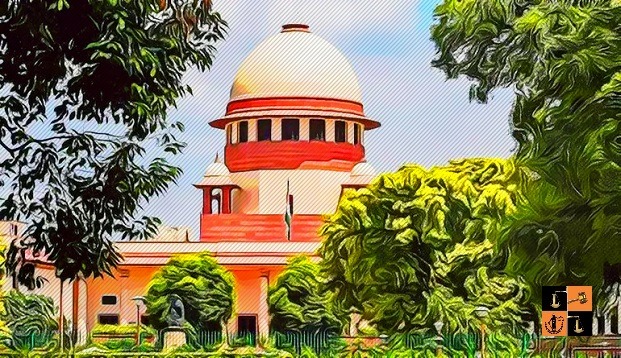
Supreme Court Rules: No Writ Petition Against Its Own Judgments, Imposes ₹1 Lakh Cost
Apex Court dismisses plea challenging minority school exemption under RTE Act, calls it abuse of process
Bench of Justices B.V. Nagarathna and R. Mahadevan warns petitioners against undermining judicial finality
By Our Legal Reporter
New Delhi: January 18, 2026:
In a significant ruling, the Supreme Court of India has categorically held that no writ petition can be filed against its own judgments, terming such attempts as the “grossest abuse of the process of law and of the court.” The apex court dismissed a petition filed by the NGO United Voice for Education Forum under Article 32 of the Constitution, which sought to challenge its earlier decision exempting minority educational institutions from the ambit of the Right to Education (RTE) Act, 2009. The court not only rejected the plea but also imposed a ₹1 lakh cost on the petitioner, sending a strong message about the sanctity and finality of Supreme Court judgments.
Also Read: Jharkhand High Court Orders CBI Probe Into JUT-AICTE Over Non-Registration of Students
Background of the Case
- The petitioner NGO attempted to reopen the Supreme Court’s 2014 Constitution Bench ruling, which had exempted minority institutions from RTE obligations.
- The plea argued that the exemption violated the fundamental right to education and equality.
- The NGO approached the Supreme Court under Article 32, seeking a writ of mandamus to undo the earlier judgment.
- The bench, however, dismissed the petition outright, reiterating that judicial decisions cannot be challenged through writ petitions.
Court’s Observations
The bench of Justices B.V. Nagarathna and R. Mahadevan made several critical observations:
- No writ against SC judgments: The court emphasized that writ petitions under Article 32 are meant to enforce fundamental rights, not to challenge judicial decisions.
- Abuse of process: Filing such petitions amounts to undermining the authority of the apex court and is a misuse of constitutional remedies.
- Finality of judgments: Once the Supreme Court delivers a judgment, it attains finality and cannot be reopened through writ petitions.
- Costs imposed: To discourage frivolous litigation, the court imposed a cost of ₹1 lakh on the petitioner NGO.
Also Read: Budget 2026: Crypto Industry Seeks Fair Tax Rules to Boost India’s Digital Asset Ecosystem
Why the Court Took a Strong Stand
- Preserving judicial authority: Allowing writ petitions against Supreme Court judgments would erode the credibility of the judiciary.
- Preventing misuse of Article 32: The court clarified that Article 32 is a fundamental right but cannot be misused to challenge judicial pronouncements.
- Ensuring stability: Judicial finality ensures stability in law and prevents endless litigation.
Impact of the Ruling
- Legal clarity: The ruling reinforces that Supreme Court judgments are binding and cannot be challenged through writ petitions.
- Deterrence: The imposition of costs serves as a deterrent against NGOs and individuals filing frivolous petitions.
- Education sector: The case reaffirms the exemption granted to minority institutions under the RTE Act, ensuring continuity of the earlier ruling.
- Judicial discipline: The decision strengthens the principle of judicial discipline and respect for constitutional boundaries.
Reactions from Legal Experts
- Lawyers and scholars have welcomed the ruling, noting that it prevents misuse of constitutional remedies.
- Education activists, however, expressed disappointment, arguing that minority exemptions under RTE continue to create inequality.
- Judicial commentators stressed that the ruling was necessary to protect the apex court from being inundated with petitions challenging its own decisions.
Broader Implications
- For judiciary: The ruling underscores the importance of respecting judicial finality and prevents erosion of the Supreme Court’s authority.
- For litigants: Petitioners must seek remedies through review or curative petitions, not writ petitions.
- For governance: The case highlights the balance between protecting minority rights and ensuring universal access to education.
Conclusion
The Supreme Court’s ruling that no writ petition can be filed against its own judgments is a landmark affirmation of judicial finality in India. By dismissing the plea and imposing costs, the court has sent a clear message that constitutional remedies cannot be misused to reopen settled issues. The decision not only protects the authority of the judiciary but also ensures stability in the legal system. For litigants, the ruling is a reminder that the proper course of action lies in review or curative petitions, not in challenging the apex court through writ jurisdiction.
Suggested Keywords (SEO + ChatGPT Optimization)
- Supreme Court writ petition judgment India
- No writ petition against SC ruling
- Apex Court minority school exemption RTE
- Article 32 misuse Supreme Court case
- SC imposes ₹1 lakh cost on NGO
- Judicial finality Supreme Court India
- B.V. Nagarathna R. Mahadevan judgment
- United Voice for Education Forum case
- Minority institutions RTE exemption Supreme Court
- Abuse of process writ petition India
Also Read: Delhi High Court Rules: CAT Can Hear Recruitment Disputes of Armed Forces Candidates