
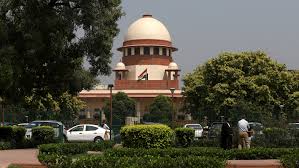
Supreme Court Says No Second Chance: Compassion Has No Place in Public Employment
Bench overturns Delhi High Court and CAT orders granting relief to police aspirant
Court emphasizes merit, discipline, and fairness in recruitment processes
By Legal Reporter
New Delhi: April 06, 2026:
In a landmark judgment, the Supreme Court of India has held that grace, charity, or compassion must stay at a distance in matters of public employment. The ruling came in a case involving a Delhi Police constable aspirant who failed to appear for his scheduled Physical Endurance and Measurement Test (PE&MT) due to illness.
To better understand how courts determine the validity and execution of wills under Indian law, refer to this landmark Supreme Court judgment on proof and execution of wills (Rani Purnima Devi and Another vs Kumar Khagendra Narayan Dev and Another) .
The Court’s decision underscores the principle that public employment is a scarce resource and must be governed strictly by merit and adherence to rules, not by sympathy or discretionary relief.
Case Background
- Candidate’s plea: The aspirant sought a second chance to appear for the physical test, citing illness.
- CAT & Delhi High Court: Both tribunals granted relief, directing authorities to reschedule the test.
- Supreme Court ruling: A bench of Justice Dipankar Datta and Justice Satish Chandra Sharma overturned these orders, stating that compassion cannot substitute compliance with recruitment rules.
Court’s Observations
- Scarcity of jobs: Public employment opportunities are limited; candidates must seize them with discipline.
- No rescheduling right: Missing a scheduled test cannot create a right to rescheduling.
- Merit over sympathy: Recruitment must be based on merit, not compassion.
- Judicial restraint: Courts should avoid interfering in recruitment processes unless rules are violated.
Legal Context
- Service law principles: Recruitment is governed by strict rules to ensure fairness.
- Article 14 (Equality before law): Compassionate relief to one candidate could unfairly disadvantage others.
- Precedents: The Court has consistently held that sympathy cannot override statutory requirements in public employment.
Case Study Example
Imagine two candidates applying for the same police post. One attends the physical test despite minor illness, while the other skips it and later seeks a second chance. Granting relief to the latter would unfairly penalize the former, who followed rules. This illustrates why the Court insists on discipline and fairness.
Implications for Society, Families, and Courts
- Candidates: Must prepare thoroughly and attend scheduled tests without expecting leniency.
- Families: Encouraged to support aspirants in meeting deadlines and requirements.
- Courts: Reinforced principle of judicial restraint in recruitment matters.
- Society: Ensures fairness and meritocracy in public employment.
Book Reference
Legal professionals and students alike will benefit from Will Writing Simplified, which covers procedure and case law in detail. Amazon.
📘 Buy Will Writing Simplified online: 🔹 Flipkart
FAQ Section
1. Can a missed physical test be rescheduled?
No. The Supreme Court held that missing a scheduled test does not create a right to rescheduling.
2. Does compassion play a role in recruitment?
No. Recruitment must be based on merit and rules, not sympathy.
3. What if illness prevents attendance?
Candidates must still attend or risk losing the opportunity. Illness is not a valid ground for relief.
4. Why did the Court overturn CAT and High Court orders?
Because granting relief would undermine fairness and discipline in public employment.
5. What principle governs public employment?
Scarcity of jobs means recruitment must be rule-bound and merit-based.
6. Does this apply to all government jobs?
Yes. The principle applies across public employment sectors.
Conclusion
The Supreme Court’s ruling in the Delhi Police constable aspirant case sends a strong message: public employment demands discipline, merit, and fairness, not compassion or charity. By setting aside relief granted by lower courts, the apex court has reinforced the principle that government jobs are scarce and must be earned through strict adherence to rules.
This judgment will serve as a precedent, reminding aspirants that opportunities in public employment are precious and must be seized with diligence.