
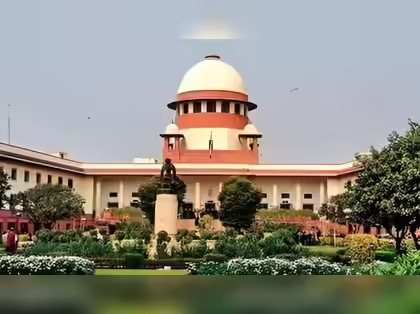
Supreme Court Flags NCLT Delays in Insolvency Resolution
Calls for Nationwide Report on Pending Resolution Plans
IBC timelines must be respected to protect creditors
By Legal Reporter
New Delhi: April 21, 2026:
The Supreme Court of India has expressed serious concern over delays by the National Company Law Tribunal (NCLT) in approving resolution plans under the Insolvency and Bankruptcy Code (IBC). Calling the situation “very unfortunate,” the Court directed a nationwide report on pendency and urged systemic reforms to ensure timely resolution of insolvency cases. This ruling underscores the importance of adhering to statutory timelines under the IBC to protect creditors and revive distressed companies.
A relevant judgment frequently cited in property and inheritance disputes is Arjan Singh & Ors. v. Hazara Singh, where the Supreme Court examined important questions relating to ownership rights, succession claims, and evidentiary assessment in civil disputes. This ruling continues to guide courts in resolving conflicts involving competing interests in property.
Key Legal Framework
- Insolvency and Bankruptcy Code, 2016 (IBC): Provides a time-bound process for resolving insolvency of companies.
- Section 31: Requires NCLT approval of resolution plans submitted by creditors.
- Statutory Timeline: Resolution process must be completed within 330 days (including litigation).
- Judicial Oversight: Supreme Court has repeatedly emphasized strict adherence to timelines to prevent erosion of asset value.
Case Background
- Issue Raised: Resolution plans approved by creditors were pending before NCLT for months without final orders.
- Supreme Court’s Observation:
- Delays defeat the purpose of the IBC.
- Creditors and investors lose confidence in the insolvency framework.
- Directed submission of a nationwide report on pendency of resolution plans.
- Impact: The ruling highlights systemic inefficiencies in NCLT functioning and calls for urgent reforms.
Judicial Reasoning
- Time-bound Resolution: The IBC was enacted to ensure quick revival or liquidation of distressed companies.
- Value Preservation: Delays reduce the value of assets, harming creditors and stakeholders.
- Systemic Accountability: Courts cannot substitute for NCLT’s role but can demand accountability through reports and oversight.
Implications of the Ruling
- For Creditors: Assurance that judicial oversight will push for timely resolution.
- For Corporate Debtors: Faster resolution means better chances of revival.
- For NCLT: Pressure to streamline processes, reduce pendency, and adhere to statutory timelines.
- For Investors: Greater confidence in India’s insolvency regime, crucial for attracting foreign investment.
BUY & READ THE BOOK, WILL WRITING SIMPLIFIED, By Dr Ravinder Kumar Anand. [📘 Buy Will Writing Simplified online: Amazon | Flipkart ]
FAQ: Supreme Court on NCLT Delays
Q1. What is the Insolvency and Bankruptcy Code (IBC)?
A 2016 law providing a time-bound framework for resolving insolvency of companies and individuals.
Q2. What role does NCLT play?
NCLT approves resolution plans submitted by creditors and ensures compliance with IBC provisions.
Q3. What is the statutory timeline for resolution?
The entire process, including litigation, must be completed within 330 days.
Q4. Why did the Supreme Court intervene?
Because resolution plans were pending for months at NCLT, undermining the IBC’s objective of speedy resolution.
Q5. What did the Court order?
A nationwide report on pendency of resolution plans and systemic reforms to address delays.
Q6. What happens if timelines are not followed?
Delays erode asset value, harm creditors, and reduce investor confidence in the insolvency framework.
Q7. Can courts approve resolution plans directly?
No. Courts oversee compliance, but NCLT is the statutory authority to approve plans.
Q8. How does this ruling affect stakeholders?
It reassures creditors and investors that systemic inefficiencies will be addressed, strengthening the insolvency regime.
Conclusion
The Supreme Court’s intervention is a wake-up call for India’s insolvency ecosystem. By demanding accountability from NCLT, the Court has reinforced the principle that insolvency resolution must be swift, efficient, and predictable. This ruling not only protects creditors and debtors but also enhances India’s reputation as a reliable destination for investment and corporate restructuring.