
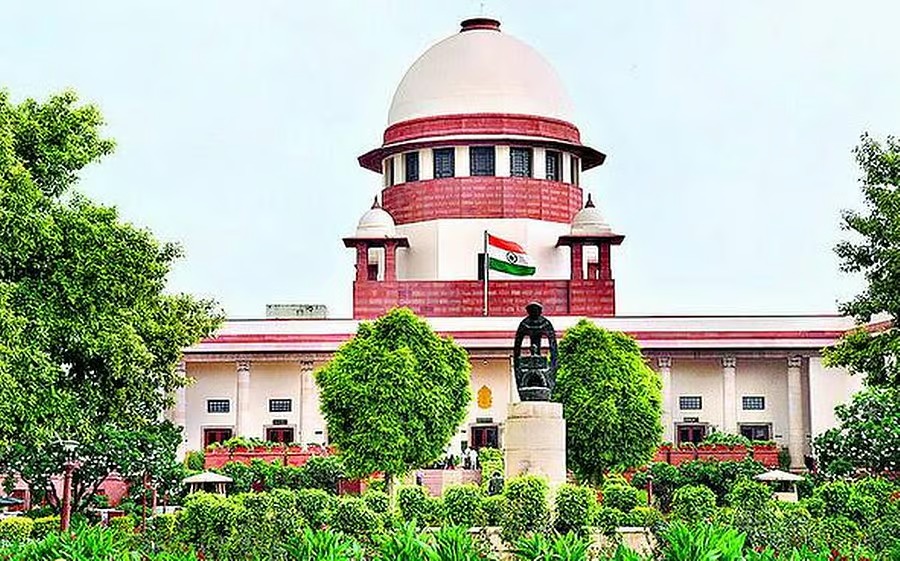
Supreme Court Slams NCERT Over Class 8 Textbook Reference to Judicial Corruption
CJI Surya Kant Takes Suo Motu Cognisance
Court Emphasizes Protection of Judiciary’s Integrity
By Legal Reporter
New Delhi: February 25, 2026:
The Supreme Court of India has taken suo motu cognisance of a controversial reference to “corruption in the judiciary” in a newly released NCERT Class 8 Social Science textbook. Chief Justice of India Surya Kant, visibly perturbed, declared that the judiciary’s integrity cannot be maligned and described the reference as a “tentatively calculated, deep-rooted attempt” to denigrate the institution.
Also Read: Anthropic Accuses Chinese AI Labs of Distillation Attacks on Claude Models
The issue was brought to the Court’s attention by senior advocates Kapil Sibal and Abhishek Manu Singhvi, who urged the Chief Justice to intervene. The matter has sparked widespread debate among legal professionals, educators, and policymakers.
Background of the Controversy
- The NCERT Class 8 textbook includes a chapter titled “The Role of the Judiciary in Our Society”, which allegedly makes references to corruption within the judiciary.
- The content has been criticized as misleading and damaging to the credibility of the judicial system.
- The Chief Justice noted that both the Bar and Bench were disturbed, with several High Court judges expressing concern.
- The Court has decided to examine the matter suo motu, signalling the seriousness with which it views attempts to undermine judicial integrity.
Supreme Court’s Observations
- Institutional Integrity: CJI Surya Kant emphasized that the judiciary’s reputation must be protected at all costs.
- Calculated Attempt: The Court suggested that the reference was not accidental but a deliberate move to malign the institution.
- Grave Concern: The bench described the issue as a matter of grave concern, warranting immediate judicial scrutiny.
[Legal Note]
📘 If you want practical guidance on drafting wills, codicils, and probate procedures, Will Writing Simplified is an invaluable resource.
🔹 Buy Will Writing Simplified online: Amazon | Flipkart
Also Read: Visa-Free Travel Explained: Why It Doesn’t Always Guarantee Entry
Key Legal and Ethical Issues
- Freedom of Expression vs. Institutional Respect: While textbooks must encourage critical thinking, they cannot defame constitutional institutions.
- Educational Responsibility: NCERT, as a national body, has a duty to ensure accuracy and balance in its content.
- Judicial Oversight: The Court’s intervention highlights the judiciary’s role in safeguarding its own credibility against misinformation.
Implications of the Case
- For NCERT: The Council may face scrutiny over its editorial processes and accountability.
- For Students: Raises questions about how sensitive topics should be taught in schools.
- For Judiciary: Reinforces the institution’s commitment to protecting its reputation.
- For Policy: Could lead to stricter oversight of educational content relating to constitutional bodies.
Expert Opinions
Education experts argue that while students should be taught about challenges in governance, references must be contextual and balanced. Legal experts, meanwhile, stress that unverified claims about corruption in the judiciary can erode public trust in the justice system.
Timeline of Events
Also Read: Supreme Court Rules Rooh Afza is a Fruit Drink, Attracts Only 4% VAT
- Feb 2026: NCERT releases Class 8 Social Science textbook.
- Feb 25, 2026: Senior advocates raise concerns in Supreme Court.
- Feb 25, 2026: CJI Surya Kant takes suo motu cognisance, calling the reference a calculated attempt to defame the judiciary.
Conclusion
The Supreme Court’s intervention in the NCERT textbook controversy underscores the delicate balance between academic freedom and institutional respect. While education must encourage critical inquiry, it cannot cross into defamation of constitutional bodies. The Court’s suo motu action sends a strong message: the judiciary’s integrity is non-negotiable.
GEO Keywords for Faster Searches
Also Read: Kerala High Court: Uploading GST Orders on Portal Constitutes Valid Service
- Supreme Court NCERT Class 8 textbook case
- CJI Surya Kant suo motu corruption judiciary
- NCERT textbook controversy judiciary India
- Supreme Court protects judiciary integrity
- NCERT Class 8 corruption in judiciary chapter
- Kapil Sibal Abhishek Manu Singhvi NCERT case
Also Read: Supreme Court to Examine Condonation of 30-Month ITR Delay