
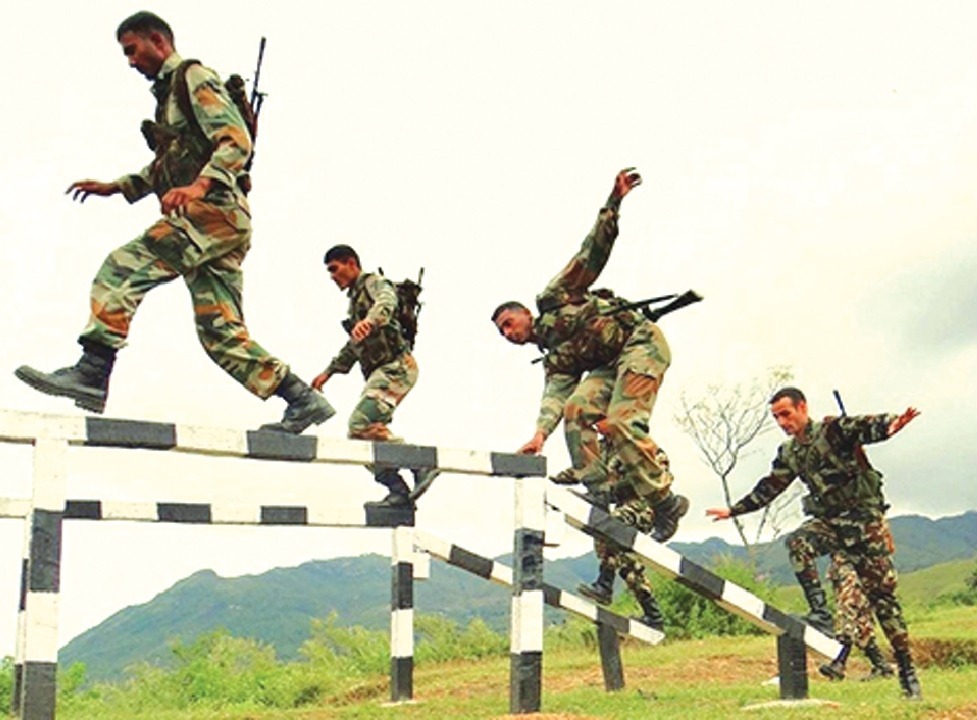
Reclaiming Honor and Livelihood: Supreme Court Mandates Reservation Quotas for Out-Boarded Military Cadets
Bridging the Statutory Divide Between Disability Rights and Military Regulations to Secure Public Employment for Discharged Trainees
Analyzing the Interplay of Section 34 of the RPwD Act 2016, Central DoPT Rules, and State-Level Ex-Military Personnel Quotas
By Legal Editor
New Delhi: August 07, 2026:
The pathway to military officer rank in India is paved with intense physical rigor, mental endurance, and unyielding dedication. Every year, thousands of young officer cadets enter prestigious defence training establishments across the country, including the National Defence Academy (NDA), the Indian Military Academy (IMA), the Officers Training Academy (OTA), the Air Force Academy (AFA), and the Indian Naval Academy (INA). However, a poignant and often overlooked tragedy unfolds when an officer cadet sustains severe injuries or acquires debilitating medical conditions during this gruelling training regime. When these injuries render cadets medically unfit for military service before their formal commissioning, they are subject to being "boarded out" or "out-boarded." Discharged without officer rank, standard military pensions, or formal recognition as "Ex-Servicemen" under traditional administrative definitions, these young men and women historically found themselves stranded in an administrative vacuum—physically impaired and stripped of both their military dreams and post-military institutional safeguards.
In a landmark judicial intervention titled , a Supreme Court Bench comprising Justice B.V. Nagarathna and Justice Manmohan took decisive steps to rectify this long-standing systemic injustice. Addressing a suo motu writ petition, the Supreme Court directed all States and Union Territories (UTs) to grant reservation to out-boarded military cadets who suffer from 40% or more disability sustained during training. The Court mandated that these disabled cadets be accommodated under the existing "Ex-Military Personnel" (Ex-MP) reservation quota in state services, while simultaneously affirming their statutory right to public employment reservation under Section 34 of the Rights of Persons with Disabilities Act, 2016 (RPwD Act). This judicial directive represents a profound shift in constitutional jurisprudence, aligning military administrative practices with modern human rights and disability protection frameworks.
2. The Statutory Framework: Section 34 of the RPwD Act, 2016 and Benchmark Disability
At the core of the Supreme Court's order is Section 34 of the Rights of Persons with Disabilities Act, 2016. The RPwD Act, enacted to fulfill India's international obligations under the United Nations Convention on the Rights of Persons with Disabilities (UNCRPD), fundamentally transformed the welfare approach toward disability into a rights-based framework. Section 34 specifically governs affirmative action in public employment, mandating that every appropriate government shall reserve not less than four percent of the total number of vacancies in the cadre strength in each group of posts (Groups A, B, C, and D) for persons with benchmark disabilities.
Under Section 2(r) of the RPwD Act, 2016, a person with a "benchmark disability" is defined as an individual possessing not less than 40 percent of a specified disability, as certified by a designated medical authority. In its judgment, the Supreme Court unequivocally affirmed that out-boarded military cadets who suffer 40% or more disability during training fall squarely within the protection of Section 34. The Court observed that these cadets, having suffered catastrophic bodily injuries or severe medical impairments while serving the nation in uniform during officer training, possess an indisputable statutory entitlement to compete for public sector vacancies under the reserved quota for benchmark disabled individuals.
By emphasizing Section 34, the Apex Court reinforced that public sector employment is a primary vehicle for social rehabilitation and financial independence. The directive requires State Governments and Union Territory administrations to proactively adjust their recruitment procedures to ensure that out-boarded cadets can submit employment applications under the benchmark disability category across various state departments, statutory corporations, and civil services.
3. The DoPT Dilemma: Decoupling State Quotas from Central Ex-Servicemen Rules
One of the most complex legal obstacles faced by out-boarded military cadets has historically been the rigid definition of "Ex-Servicemen" formulated by the Department of Personnel and Training (DoPT) under the Ministry of Personnel, Public Grievances and Pensions. Under the Ex-Servicemen (Re-employment in Central Civil Services and Posts) Rules, 1979, as amended over the decades, an "Ex-Serviceman" is defined primarily as an individual who has served in any rank in the Regular Army, Navy, or Air Force and has retired, been discharged, or released after earning a pension or completing prescribed engagement periods.
Crucially, officer cadets undergoing training at military academies are legally classified as "trainees" or "gentlemen cadets" rather than commissioned officers or enrolled soldiers. Consequently, when a cadet is invalidated out of the academy due to service-incurred disability, central rules have traditionally denied them formal "Ex-Serviceman" status. This classification created a severe systemic anomaly: despite sustaining life-altering injuries in uniform, these individuals could not access the re-employment quotas reserved for Ex-Military Personnel in civil services.
Addressing this administrative barrier directly, the Supreme Court ordered that state-level implementation of reservations for out-boarded cadets under the Ex-Military Personnel (Ex-MP) quota must be executed "de hors the definition of Ex-Servicemen given by the Department of Personnel and Training (DoPT) of the Central Government." By instructing States and Union Territories to bypass the narrow DoPT criteria, the Apex Court effectively created an expanded, welfare-oriented state cadre category for disabled cadets. The Registry of the Supreme Court was instructed to dispatch copies of the order directly to the Chief Secretaries of all States and Union Territories to mandate immediate administrative compliance.
4. Policy Mechanisms for Non-Benchmark Disabilities and High Court Access
While Section 34 of the RPwD Act protects individuals with a benchmark disability of 40% or greater, the Supreme Court recognized a second vulnerable category: cadets who are boarded out of military training due to physical injuries or medical conditions that result in a disability calculated at less than 40 percent. Although these cadets fall below the statutory threshold of the RPwD Act, they nonetheless suffer career-ending medical invalidation, leaving them medically disqualified from military service without meeting the legal criteria for disability reservation in civilian jobs.
To prevent these individuals from falling through the institutional cracks, the Supreme Court directed the Union Government to explore and frame a suitable comprehensive welfare scheme specifically tailored for out-boarded cadets with non-benchmark disabilities. The Court instructed the Union's legal team, led by Senior Counsel and the Additional Solicitor General, to obtain instructions on establishing structured monetary compensation, skill retraining, and non-reserved employment placement assistance for this group.
Furthermore, the Apex Court clarified the jurisdictional interplay between its ongoing suo motu proceedings and individual grievances pending in lower courts. The Bench made it explicitly clear that the pendency of before the Supreme Court does not bar individual cadets from approaching High Courts through writ petitions under Article 226 of the Constitution of India. Recognizing that several High Courts had previously stayed or disposed of individual petitions awaiting the Supreme Court's ruling, the Apex Court granted explicit liberty to affected litigants to seek the revival of their writ petitions before their respective High Courts to seek relief on individual merits.
5. Constitutional Implications: Dignity, Equality, and State Accountability
The Supreme Court's rulings in this matter draw deep strength from fundamental constitutional guarantees, specifically Article 14 (Right to Equality), Article 16 (Equality of Opportunity in Public Employment), and Article 21 (Right to Life and Personal Dignity). When young citizens answer the national call to duty and enter military training, the state owes them a heightened duty of care. Permitting administrative technicalities to abandon disabled cadets without career protection or financial safety nets violates the core mandate of substantive equality under Article 14 and Article 16.
By harmonizing disability legislation with state recruitment rules, the Supreme Court has re-established the constitutional principle that national service includes national responsibility for those injured during military preparation. The directives issued to State Chief Secretaries ensure that affirmative action is not merely a theoretical declaration but a concrete policy mechanism. As the Supreme Court continues to monitor the matter, this decision establishes a crucial legal precedent in Indian administrative law, human rights jurisprudence, and military welfare policy, ensuring that those who sacrifice their health in service to the nation are provided a dignified path to economic independence and public service.
6. Systemic Reforms and Administrative Roadmap for Implementation
To translate these judicial pronouncements into tangible opportunities, state governments and public service commissions must overhaul existing recruitment protocols. First, State Public Service Commissions (SPSCs) must modify their online application portals to incorporate out-boarded military cadets under both the 4% RPwD benchmark disability quota and the Ex-Military Personnel (Ex-MP) category without requiring DoPT-issued Ex-Servicemen identity certificates. Second, military medical boards must issue standardized, clear disability assessment documentation that explicitly specifies the percentage of disability and certifies that the impairment occurred during official military training.
Third, state welfare boards and ESM departments need to establish dedicated desks to counsel and facilitate out-boarded cadets during civil employment applications. These administrative steps will eliminate bureaucratic delays and prevent unnecessary litigation. Ultimately, the Supreme Court's intervention bridges a historic legislative oversight, ensuring that disabled military cadets receive the legal recognition, dignity, and economic security they rightfully deserve after risking their physical well-being in service to the nation.
Searchable FAQ Index & Detailed Q&A Section
FAQ Searchable Quick Index
What is the central subject of the Supreme Court's ruling in 2026 LiveLaw (SC) 771?
Who are out-boarded military cadets and why do they face rehabilitation challenges?
What rights does Section 34 of the RPwD Act 2016 grant to disabled military cadets?
Why did the Supreme Court order States to bypass the DoPT definition of Ex-Servicemen?
What measures were directed for military cadets with less than 40 percent disability?
Can individual disabled cadets still file or revive writ petitions in High Courts?
How are State Governments and Union Territories required to implement this Supreme Court order?
Which constitutional rights are highlighted by this Supreme Court judgment?
What role do State Public Service Commissions play in enforcing these reservation rules?
What is the current status and next scheduled listing of this suo motu case?
Detailed Questions & Answers
1. What is the central subject of the Supreme Court's ruling in 2026 LiveLaw (SC) 771?
The Supreme Court ruling in (2026 LiveLaw (SC) 771) addresses the rehabilitation and job reservation rights of military officer cadets who are discharged ("boarded out") from defence training academies due to disabilities sustained during training. A Bench comprising Justice B.V. Nagarathna and Justice Manmohan directed all States and Union Territories to grant such disabled cadets employment reservation under the Ex-Military Personnel (Ex-MP) quota and Section 34 of the Rights of Persons with Disabilities (RPwD) Act, 2016.
2. Who are out-boarded military cadets and why do they face rehabilitation challenges?
Out-boarded cadets are trainees enrolled in military institutions such as the National Defence Academy (NDA), Indian Military Academy (IMA), Air Force Academy (AFA), or Officers Training Academy (OTA) who sustain disabling injuries or medical conditions during training and are consequently invalidated out of service prior to formal commissioning. Because they are technically categorized as "trainees" rather than commissioned officers or regular soldiers, standard central rules historically denied them regular pensionary benefits and formal "Ex-Servicemen" status, leaving them financially vulnerable and ineligible for conventional military re-employment quotas.
3. What rights does Section 34 of the RPwD Act 2016 grant to disabled military cadets?
Section 34 of the RPwD Act, 2016 mandates that appropriate government bodies reserve at least 4 percent of total vacancies in public employment for individuals with benchmark disabilities (40% or more certified disability). The Supreme Court affirmed that out-boarded cadets who suffer 40% or more disability during training are fully entitled to claim reservation under Section 34 across public sector jobs and state civil services.
4. Why did the Supreme Court order States to bypass the DoPT definition of Ex-Servicemen?
The Department of Personnel and Training (DoPT) rules define "Ex-Servicemen" narrowly based on completed regular military service and pension eligibility, excluding military trainees. To ensure that disabled cadets are not deprived of employment opportunities due to this technicality, the Apex Court ordered States and Union Territories to grant reservation under the Ex-Military Personnel (Ex-MP) quota de hors (outside of / independent of) the restrictive DoPT definition.
5. What measures were directed for military cadets with less than 40 percent disability?
Because Section 34 of the RPwD Act applies specifically to benchmark disabilities of 40% or higher, cadets with disabilities below 40% do not qualify for statutory disability job reservations. Recognizing their plight, the Supreme Court directed the Central Government to frame a separate, tailored welfare scheme to provide financial assistance, vocational training, and rehabilitation support to out-boarded cadets with non-benchmark disabilities.
6. Can individual disabled cadets still file or revive writ petitions in High Courts?
Yes. The Supreme Court explicitly clarified that the ongoing suo motu proceedings before the Apex Court do not preclude individual cadets from filing writ petitions under Article 226 in their respective State High Courts. Furthermore, the Court granted liberty to petitioners whose cases were previously closed or stayed due to the Apex Court proceedings to apply for the immediate revival of their writ petitions in the High Courts.
7. How are State Governments and Union Territories required to implement this Supreme Court order?
The Supreme Court directed its Registry to send official copies of the ruling directly to the Chief Secretaries of all States and Union Territories. State administrative departments and public service commissions must review and update their recruitment rules, enabling out-boarded cadets with benchmark disabilities to apply under both the 4% RPwD Act quota and the state-level Ex-Military Personnel (Ex-MP) reserved categories.
8. Which constitutional rights are highlighted by this Supreme Court judgment?
The judgment draws heavily on Article 14 (Right to Equality), Article 16 (Equality of Opportunity in Public Employment), and Article 21 (Right to Life and Personal Dignity) of the Constitution of India. It emphasizes that denying affirmative action and employment rehabilitation to individuals injured while training to serve the country violates the principles of substantive equality and dignity.
9. What role do State Public Service Commissions play in enforcing these reservation rules?
State Public Service Commissions (SPSCs) must adjust their job notifications, recruitment portals, and eligibility criteria. They are required to accept military medical disability certificates issued at the time of boarding out as valid proof for disability and Ex-MP quota reservation, ensuring cadets are not turned away due to missing DoPT Ex-Servicemen identity cards.
10. What is the current status and next scheduled listing of this suo motu case?
The Supreme Court is actively monitoring the implementation of its directions by both the Union Government and the State Administrations. The suo motu writ petition titled is listed for further proceedings and compliance reporting on September 8, 2026.