
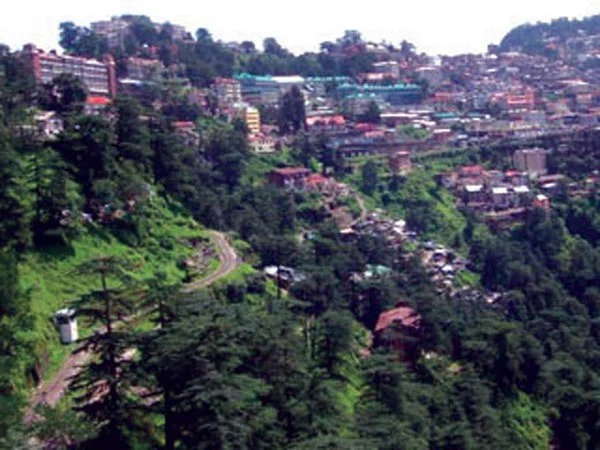
Looming Mountain Crisis: Supreme Court Intervener Probe Exposes Shimla’s Green Belt Violations
Unchecked Urbanization vs. Environmental Mandates: High Court, NGT, and Apex Court Directives Under the Scanner
Central Empowered Committee Tasked with Phased Scrutiny as Fragile Himalayan Ecology Reaches Breaking Point
By Legal Editor
New Delhi: August 05, 2026:
The Himalayas are witnessing an unprecedented ecological upheaval. The recurring landslides, sudden river course diversions, road subsidence, and severe flooding across Himachal Pradesh are no longer viewed by judicial forums as purely natural calamities. Instead, they represent the devastating culmination of unchecked human intervention, aggressive tourism-driven commercialization, unscientific slope cutting, and systemic regulatory oversight failures.
In a significant judicial development, the Supreme Court of India reactivated its suo motu proceedings concerning the environmental degradation in Himachal Pradesh. Expressing deep concern over administrative delays and procedural lapses that kept the matter unlisted for nearly a year, a Bench comprising Justice Vikram Nath and Justice Sandeep Mehta signalled a rigid stance against illegal structural developments. The Court specifically authorized the Central Empowered Committee (CEC) to investigate alleged unauthorized multi-storey constructions across Shimla’s protected Green Belt areas. This judicial intervention underlines a critical intersection of constitutional provisions, statutory environmental frameworks, municipal regulations, and landmark legal precedents governing ecological conservation in fragile mountainous regions.
1. Constitutional Foundations of Environmental Protection
The judicial oversight exercised by the Supreme Court in this matter derives directly from the constitutional jurisprudence established over decades of environmental litigation in India.
Article 32 and Suo Motu Jurisdiction
The Supreme Court initiated these proceedings by invoking its extraordinary original jurisdiction under .
Introduction: The Fragile Equilibrium of the Western Himalayas
The Indian Himalayan Region (IHR), particularly the state of Himachal Pradesh, has long occupied a precarious intersection between economic development and ecological preservation. The year 2025 witnessed unprecedented meteorological distress in the state, characterized by torrential rains, flash floods, land subsidence, and devastating landslides that disrupted entire communities. The severity of these disasters prompted the Hon’ble Supreme Court of India to initiate suo motu proceedings under Article 32 of the Constitution of India in the matter titled .
During the latest proceedings on July 30, 2026, a Division Bench comprising Justice Vikram Nath and Justice Sandeep Mehta raised serious concerns regarding procedural delays in hearing this landmark environmental matter. Observing that the case had languished for nearly a year despite explicit instructions for earlier listing, the Apex Court restructured its approach to address the sprawling ecological concerns. To process the complex web of over thirty specific technical queries, the Court directed the Central Empowered Committee (CEC) to conduct targeted field investigations, hold local workshops, and submit phased reports focused on three critical issues at a time. Furthermore, the Bench extended the CEC's scope to investigate recent allegations of illegal multi-storey constructions within Shimla’s designated "Green Belt," an area ostensibly protected by past judgments of the Supreme Court, the Himachal Pradesh High Court, and the National Green Tribunal (NGT).
This analytical review examines the constitutional, statutory, and regulatory mechanisms governing environmental protection in Himachal Pradesh, contextualizing the recent directives within India’s broader environmental jurisprudence.
Constitutional Foundations: Judicial Mandate and Procedural Activism
The legal framework governing ecological conservation in India is rooted in fundamental constitutional provisions. The Supreme Court’s invocation of its suo motu jurisdiction in environmental matters reflects the expansive interpretation of Article 21 of the Constitution of India, which guarantees the right to life and personal liberty. Through landmark judgments such as Subhash Kumar v. State of Bihar (1991) and Virender Gaur v. State of Haryana (1995), the judiciary firmly established that the right to life encompasses the right to a clean, healthy, and ecologically balanced environment.
Complementing this fundamental right are the Directive Principles of State Policy and Fundamental Duties:
Article 48A: Directs the State to protect and improve the environment and to safeguard the forests and wildlife of the country.
Article 51A(g): Imposes a fundamental duty on every citizen to protect and improve the natural environment, including forests, lakes, rivers, and wildlife.
In the Himachal Pradesh proceedings, the Apex Court's frustration over listing delays highlights a recurrent operational challenge in environmental litigation: the disparity between judicial orders and administrative implementation. By re-engaging Senior Advocate K. Parameshwar as amicus curiae and utilizing the Central Empowered Committee (CEC), the Court seeks to bridge the gap between abstract constitutional mandates and ground-level compliance.
Regulatory Architecture: Urban Planning and Green Belt Protections
Central to the recent hearing is the intervention application alleging unauthorized construction activity within Shimla’s designated Green Belt area. The urban planning matrix of Shimla is primarily regulated by the Himachal Pradesh Town and Country Planning Act, 1977 (HP TCP Act), along with the Shimla Development Plan (Master Plan).
────────────┐
│ CONSTITUTION OF INDIA │
│ Article 21 | Article 48A | Article 51A(g) │
│ STATUTORY & ENVIRONMENTAL FRAMEWORKS │
│ Environment (Protection) Act, 1986 | HP TCP Act, 1977 │
│ Forest (Conservation) Act, 1980 / VAN │
──────────────┐
│ JUDICIAL & ADVISORY MECHANISMS │
│ Central Empowered Committee (CEC) Field Probes │
│ Phased Reporting & NGT / Apex Court Guidelines │
─────────────┘
The Legal Status of the Shimla Green Belt
The Shimla Green Belt was delineated to preserve the remaining contiguous forest patches within the municipal boundaries of the state capital, acting as a natural buffer against soil erosion, landslips, and urban heat island effects. Over the past two decades, strict prohibitions were instituted by judicial and quasi-judicial authorities:
National Green Tribunal Mandates: In Yogendra Mohan Sengupta v. Union of India (2017), the NGT placed a complete ban on new construction in Shimla's core and green areas, observing that the carrying capacity of the hill station had been severely exceeded.
Supreme Court Affirmations: Subsequent appeals before the Supreme Court reaffirmed the primary mandate to protect non-buildable, eco-sensitive zones from commercial real estate expansion.
Despite these established prohibitions, the intervention application presented before the Bench—supported by Right to Information (RTI) disclosures—alleged that sanction approvals had been granted for multi-storey structures in forbidden zones. This reveals potential gaps in municipal administration under the HP TCP Act, where statutory power to grant relaxations or variances may conflict with binding environmental injunctions issued by superior courts.
The Central Empowered Committee (CEC): Role and Phased Methodology
The Central Empowered Committee (CEC) was originally constituted by the Supreme Court in 2002 under Section 3(3) of the Environment (Protection) Act, 1986, as a specialized advisory body to assist in monitoring compliance with judicial orders in forest and wildlife matters (originating from the landmark T.N. Godavarman Thirumulpad v. Union of India case).
Modern Structure and Statutory Status
In recent years, the Ministry of Environment, Forest and Climate Change (MoEFCC) institutionalized the CEC as a permanent statutory authority. In the ongoing Himachal Pradesh proceedings, the CEC’s role is critical due to the following factors:
Data Updating and Verification: The court noted that existing baseline data presented by statutory authorities was four to five years old, rendering it insufficient for evaluating contemporary risk levels.
The Phased Inquiry Strategy: Given that the amicus curiae framed nearly thirty comprehensive queries—ranging from hill-cutting regulations and riverbed mining to carrying-capacity assessments and hydropower tunnel blasting—the CEC proposed a phased approach. By examining two to three issues per phase through local workshops and stakeholder hearings in Himachal Pradesh, the CEC aims to provide actionable interim reports without overwhelming the judicial calendar.
Eco-Legal Friction: Hydroelectric Projects, Infrastructure, and Environmental Law
The broader context of the suo motu petition draws attention to systemic environmental law violations across the state. In previous observations, such as those made by the Bench of Justices J.B. Pardiwala and R. Mahadevan in July 2025 regarding the Shri Tara Mata Hill green notification, the Court emphasized that severe ecological imbalances are driven by human intervention rather than natural anomalies alone.
─────────────────────┐
│ CATALYSTS OF ECOLOGICAL FRAGILITY │
▼ ▼ ▼
┌─────────────────────────┐
│ HYDROPOWER & │ │ INFRASTRUCTURE & │ │ UNREGULATED URBAN │
│ TUNNEL BLASTING │ │ 4-LANE HIGHWAYS │ │ DEVELOPMENT │
│ Unstudied geological │ │ Unscientific slope │ │ Multi-storey structures │
│ impact on aquifers. │ │ cutting & soil erosion. │ │ in core/green belts. │
└─────────────────────────┘
Key Statutory Provisions in Focus:
The Environment (Protection) Act, 1986 & EIA Notification 2006: Requires rigorous Environmental Impact Assessments (EIA) for large-scale infrastructure, four-lane highway expansions, and hydroelectric power plants. The court noted that cumulative impact assessments are frequently bypassed in favor of piecemeal project clearances.
The Van (Sanrakshan Evam Samvardhan) Adhiniyam, 1980 (Forest Conservation Act): Regulates the diversion of forest land for non-forest purposes. High-density infrastructure projects in steep terrain frequently necessitate forest clearance, altering the slope stability of fragile catchment basins.
The Disaster Management Act, 2005: Mandates proactive mitigation plans at the state and district levels. The recurring failures of infrastructure during heavy precipitation suggest a disconnect between statutory disaster planning and actual land-use governance.
Synthesis and Future Outlook
The Supreme Court’s decision to schedule virtual hearings, engage in direct interactions with state administrators, and review staggered CEC reports commencing August 24, 2026, marks a structured turn in environmental jurisprudence. By combining local workshops, updated data acquisition, and strict oversight of urban green spaces, the judiciary aims to enforce accountability within state machinery.
Preserving the Western Himalayas requires balancing economic aspirations with ecological realities. The upcoming proceedings will test whether judicial intervention can effectively enforce statutory compliance, curb administrative drift, and protect fragile ecosystems from irreversible degradation.
Searchable Index & Comprehensive Legal FAQ
This searchable index and legal reference guide provides detailed answers to key statutory, procedural, and constitutional questions raised in In Re: Issues Relating to Ecology and Environmental Conditions Prevailing in the State of Himachal Pradesh.
SEARCHABLE INDEX OF LEGAL TOPICS
[1.0] CONSTITUTIONAL JURISDICTION & SUO MOTU PROCEEDINGS
├─ [1.1] Source of Authority (Article 32 & 21)
└─ [1.2] Amicus Curiae Framework
[2.0] CENTRAL EMPOWERED COMMITTEE (CEC) & EVIDENTIARY STANDARDS
├─ [2.1] Statutory Mandate under EPA 1986
└─ [2.2] Remedying Stale / Outdated Environmental Data
[3.0] URBAN PLANNING & GREEN BELT LAW
├─ [3.1] Himachal Pradesh Town and Country Planning Act, 1977
└─ [3.2] Precedential Status of NGT Injunctions
[4.0] INFRASTRUCTURE, HYDROPOWER & FOREST CONSERVATION
├─ [4.1] EIA Notification 2006 & Cumulative Impact
└─ [4.2] Van (Sanrakshan Evam Samvardhan) Adhiniyam, 1980
[1.0] Constitutional Jurisdiction & Suo Motu Proceedings
Q1.1: What is the constitutional basis for the Supreme Court initiating suo motu proceedings regarding Himachal Pradesh's ecological crisis?
Answer: The Supreme Court derives its authority to initiate suo motu proceedings primarily from Article 32 of the Constitution of India, which empowers the Court to issue directions, orders, or writs for the enforcement of Fundamental Rights. In environmental matters, Article 32 is read alongside Article 21 (Right to Life and Personal Liberty). The Court has repeatedly affirmed that the right to live in a clean, safe, and ecologically balanced environment is an integral component of Article 21. Furthermore, the Court references Directive Principles (Article 48A) and Fundamental Duties (Article 51A(g)) to hold state actors accountable for structural ecological neglect.
Q1.2: What is the official role of an Amicus Curiae in complex environmental litigation?
Answer: An Amicus Curiae ("friend of the court") is an independent legal practitioner appointed by the judiciary to assist in neutral fact-finding, research, and technical analysis. In large-scale environmental litigation involving multiple municipal and statutory authorities, the Amicus Curiae synthesizes voluminous state reports, drafts comprehensive questionnaires to identify regulatory failures, coordinates with specialized bodies like the CEC, and proposes structured procedural roadmaps to ensure effective judicial review.
[2.0] Central Empowered Committee (CEC) & Evidentiary Standards
Q2.1: What is the Central Empowered Committee (CEC) and what authority does it possess?
Answer: The Central Empowered Committee (CEC) was originally set up as an advisory body by the Supreme Court in 2002 under the T.N. Godavarman litigation and was later institutionalized as a statutory body under Section 3(3) of the Environment (Protection) Act, 1986. The CEC possesses statutory powers to inspect project sites, investigate illegal forest diversions, conduct stakeholder hearings, examine state land records, and submit authoritative recommendations directly to the Apex Court to assist in resolving complex eco-legal disputes.
Q2.2: Why did the Court reject reliance on existing environmental reports in this matter?
Answer: The Court flagged that much of the empirical data provided by authorities was four to five years old. In dynamic eco-sensitive zones subject to rapid climate shifts, construction density, and landscape changes, outdated data fails to reflect current environmental risks. Consequently, the Apex Court approved a new, phased evidentiary process involving on-ground workshops, updated multi-departmental data collection, and physical inspections.
[3.0] Urban Planning & Green Belt Law
Q3.1: How are "Green Belts" legally created and protected in Himachal Pradesh?
Answer: Green Belts are defined and regulated under the Himachal Pradesh Town and Country Planning Act, 1977 in tandem with regional development plans (such as the Shimla Development Plan) and state notifications issued under environmental legislation. Once an area is formally designated as a Green Belt or Eco-Sensitive Zone, structural construction, sub-division of land, and commercial tree-felling are restricted or prohibited to maintain natural drainage, prevent landslips, and protect catchment ecosystems.
Q3.2: Can a municipal authority or state department override judicial bans on construction in Green Belts?
Answer: No. Under Article 141 of the Constitution of India, the law declared by the Supreme Court is binding on all courts and authorities within the territory of India. Furthermore, directives issued by the National Green Tribunal (NGT) under the National Green Tribunal Act, 2010 remain legally enforceable unless stayed or set aside by a superior court. Municipal permissions granted in violation of binding court orders or statutory prohibitions are ultra vires (beyond legal power) and subject to revocation and demolition.
[4.0] Infrastructure, Hydropower & Forest Conservation
Q4.1: What legal requirements govern highway expansion and hydropower projects in fragile mountain zones?
Answer: Large-scale infrastructure and energy projects must comply with the Environmental Impact Assessment (EIA) Notification, 2006 issued under the Environment (Protection) Act, 1986. This requires carrying out baseline EIA studies, public consultations, and securing formal Environmental Clearance (EC). Furthermore, projects that alter natural river channels, involve deep underground blasting, or require large-scale hill-cutting must demonstrate that they will not destabilize slope geology or deplete local hydrological aquifers.
Q4.2: What statutory framework governs the diversion of mountain forest land for non-forest development?
Answer: The diversion of forest land is governed by the Van (Sanrakshan Evam Samvardhan) Adhiniyam, 1980 (formerly the Forest Conservation Act, 1980). Prior approval from the Central Government (via MoEFCC) is mandatory before any state government or private entity can clear forest land for non-forest purposes such as roads, dams, or multi-storey buildings. Any non-compliance constitutes a breach of federal forestry laws and invites judicial intervention.