
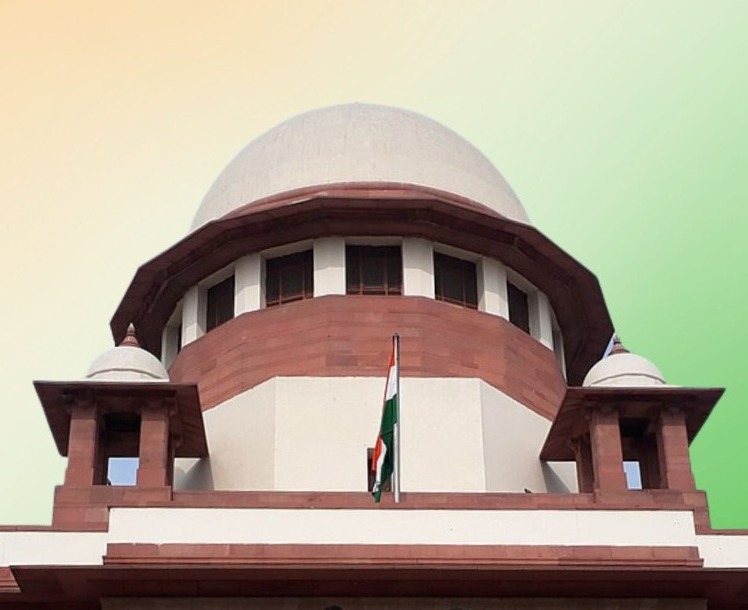
Supreme Court Affirms Heirs’ Right to Amend Eviction Suits
Bona fide need can be added even after landlord’s death
Court balances procedural law with substantive justice in tenancy disputes
By Legal Reporter
New Delhi: April 26, 2026:
In April 2026, the Supreme Court of India delivered a significant ruling clarifying that the legal heirs of a deceased landlord can amend an ongoing eviction suit to include their own bona fide requirement for the premises. This judgment strengthens the principle that eviction proceedings under rent control laws are not extinguished upon the death of the original landlord but continue as a living cause of action for successors.
A noteworthy ruling in the area of property and inheritance disputes is Bhagat Ram & Anr. v. Suresh & Ors., where the Supreme Court dealt with important issues relating to succession rights, evaluation of evidence, and resolution of competing claims among family members. This judgment continues to guide courts in adjudicating complex civil disputes involving ownership and inheritance.
The Core Issue
The dispute revolved around whether heirs could amend an eviction petition originally filed by the landlord to reflect their own bona fide need. Tenants often argued that the landlord’s death nullifies the original claim, while heirs contended that their rights and needs survive.
Statutory Framework
- Rent Control Acts (various states): Provide grounds for eviction, including bona fide requirement of the landlord.
- Order VI Rule 17, Code of Civil Procedure (CPC): Governs amendment of pleadings, allowing courts to permit changes necessary for determining the real controversy.
- Section 21, Rent Control Laws: Typically recognizes bona fide requirement as a valid ground for eviction.
Judicial Reasoning
The Supreme Court emphasized that:
- Eviction suits are not personal to the landlord. They are property-related disputes that survive to heirs.
- Amendment of pleadings is permissible under Order VI Rule 17 CPC to reflect changed circumstances, including the landlord’s death.
- Bona fide requirement is a continuing cause of action. The heirs’ need is as legitimate as the original landlords.
Key Precedents Considered
- Shantilal Thakordas v. Chimanlal Maganlal (1976): Recognized heirs’ right to continue eviction suits.
- Phool Rani v. Naubat Rai Ahluwalia (1973): Earlier view that eviction suits abated on landlord’s death, later overruled.
- Recent High Court rulings: Varied interpretations prompted the Supreme Court to settle the law.
Analytical Insights
- Procedural vs. Substantive Justice: The ruling prioritizes substantive justice (heirs’ genuine need) over procedural rigidity.
- Tenant Protection vs. Landlord Rights: While rent control laws protect tenants, they cannot deny landlords’ heirs the right to housing.
- Flexibility in Pleadings: Courts must allow amendments to reflect reality, preventing technicalities from defeating justice.
Constitutional Dimension
The Court linked the ruling to Article 21 (Right to Life), noting that housing is integral to dignity. Denying heirs the ability to claim bona fide need would unjustly restrict their right to shelter.
Broader Implications
- For Landlords’ Heirs: Provides clarity and legal backing to pursue eviction based on their own needs.
- For Tenants: Ensures protection remains but recognizes heirs’ legitimate claims.
- For Courts: Reinforces the principle of liberal amendment of pleadings to reflect evolving circumstances.
This ruling harmonizes decades of conflicting jurisprudence, ensuring eviction suits remain relevant even after the landlord’s death.
[RESEARCH RESOURCES]
BUY & READ THE BOOK, WILL WRITING SIMPLIFIED, By Dr Ravinder Kumar Anand. [📘 Buy Will Writing Simplified online: Amazon | Flipkart ]
Detailed FAQ
Q1: What is “bona fide requirement” in eviction law?
A: It refers to the genuine need of the landlord (or heirs) to occupy the premises, recognized as a valid ground for eviction under rent control statutes.
Q2: Can heirs continue an eviction suit after the landlord’s death?
A: Yes. The Supreme Court confirmed that heirs inherit the right to continue the suit and can amend pleadings to reflect their own need.
Q3: What legal provision allows amendment of pleadings?
A: Order VI Rule 17 of the CPC permits amendments necessary to determine the real controversy.
Q4: Does the landlord’s death nullify the eviction claim?
A: No. The claim survives to heirs, as eviction suits are property-related and not purely personal.
Q5: How does this ruling affect tenants?
A: Tenants remain protected under rent control laws but cannot resist eviction solely on the ground that the landlord has died.
Q6: What constitutional principle supports this ruling?
A: Article 21, which guarantees dignity and shelter, supports heirs’ right to claim bona fide need.
Q7: Why is this ruling significant?
A: It resolves conflicting precedents and ensures eviction suits remain viable, preventing injustice to heirs.
In conclusion, the Supreme Court’s 2026 ruling affirms that eviction suits are not extinguished by the landlord’s death. By allowing heirs to amend pleadings to include their own bona fide requirement, the Court ensures that justice reflects lived realities rather than procedural technicalities.