

Supreme Court Warns: Grave Offenses Cannot Be Absolved by Paying Compensation
Apex Court Says Custodial Punishment Essential for Justice
Leniency in Sentencing Risks Eroding Public Trust
By Legal Reporter
New Delhi: February 19, 2026:
In a landmark ruling, the Supreme Court of India has cautioned courts against the growing practice of reducing jail sentences in grave offenses by enhancing compensation payable to victims. The apex court stressed that compensation is not a substitute for punishment, and offenders cannot absolve themselves of liability by merely paying money. The ruling sends a strong message to trial courts and High Courts that undue sympathy for convicts undermines justice and erodes public confidence in the legal system.
[Recommended Research Resources]
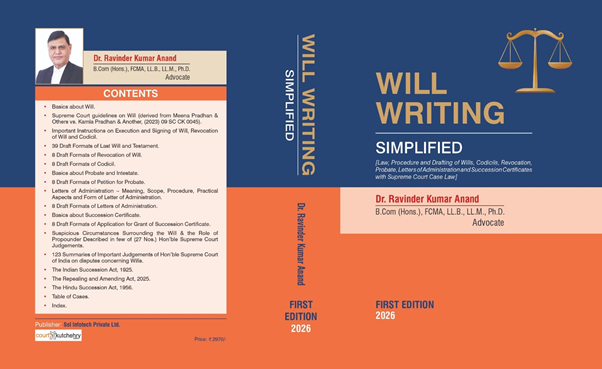
📘 Legal professionals and students alike will benefit from Will Writing Simplified, which covers procedure and case law in detail.
🔹 Buy online: Amazon | Flipkart
Background of the Case
- The matter arose when the Madras High Court reduced a convict’s three-year jail sentence in an attempt-to-murder case, while increasing the fine payable.
- The Supreme Court bench of Justices Rajesh Bindal and Vijay Bishnoi set aside the High Court’s order, restoring the custodial sentence.
- The apex court observed that such leniency in sentencing, especially in serious crimes, sends a wrong message to society.
Also Read: IRDAI Tightens Rules on Health Insurance Claim Rejections Over Pre-Existing Diseases
Court’s Observations
The Supreme Court made several critical points:
- Punishment Must Fit the Crime: Grave offenses cannot be absolved by monetary compensation.
- Social Message: The object of punishment is to send a deterrent message that violations of law and morality will have serious consequences.
- No Excessive Leniency: Courts must avoid misplaced sympathy for convicts, as it harms society.
- Compensation vs. Custody: While victim compensation is important, it cannot replace custodial punishment in serious crimes.
The bench emphasized that sentencing must balance justice for victims, deterrence for society, and accountability for offenders.
Legal Significance
This ruling strengthens the principles of criminal jurisprudence in India:
- Reinforces Deterrence: Custodial punishment remains the cornerstone of criminal justice.
- Guidelines for Sentencing: Courts must avoid reducing sentences in grave crimes merely by enhancing fines.
- Victim Rights: Compensation is supplementary, not a substitute for punishment.
- Judicial Accountability: High Courts and trial courts must align sentencing with constitutional principles of justice.
Reactions from Legal Experts
- Criminal law experts welcomed the ruling, saying it restores balance in sentencing.
- Victim rights advocates noted that while compensation is necessary, justice demands punishment.
- Critics argued that courts sometimes reduce sentences due to overcrowded prisons, but most agreed that grave crimes require custodial punishment.
Also Read: Hyderabad Biryani Probe Uncovers ₹70,000 Crore Tax Evasion Across India
Broader Implications
The ruling has wide-ranging implications:
- Trial courts may now hesitate to reduce sentences in serious crimes.
- Victims will receive both compensation and justice through punishment.
- The judiciary has reinforced its role in maintaining public trust in the justice system.
Why Awareness Matters
For citizens, this ruling is a reminder that justice cannot be bought. For legal professionals and students, it provides a valuable case study in sentencing jurisprudence and constitutional principles.
Conclusion
The Supreme Court’s warning against replacing jail sentences with compensation marks a crucial step in safeguarding justice. By clarifying that grave offenses cannot be absolved by money, the apex court has reinforced the principle that punishment must reflect the seriousness of the crime. This ruling will shape future sentencing practices, ensuring that justice remains both fair and firm.
Suggested Keywords for SEO & Faster Searches
Also Read: ED Issues Biggest-Ever Attachment Order Worth ₹10,000 Crore in PACL Ponzi Scam
- Supreme Court compensation vs jail ruling India
- Grave offenses sentencing Supreme Court India
- Custodial punishment vs compensation India
- Madras High Court attempt to murder case sentencing
- Supreme Court sentencing guidelines India
- Victim compensation criminal law India
- Judicial leniency sentencing India
- Criminal jurisprudence Supreme Court ruling
- Will Writing Simplified book
- Sentencing law precedent India
Also Read: CESTAT Rules Service Tax Penalty under Section 78 Unsustainable When Liability Was Unclear