

Supreme Court Slams ‘Consider Jurisprudence’: Relief Must Be Granted Without Endless Remands
Top Court criticizes routine remand of disputes to authorities
Judges stress on final adjudication to prevent litigation delays
By Legal Reporter
New Delhi: February 26, 2026:
In a landmark ruling, the Supreme Court of India has strongly criticized the growing practice of courts remanding matters back to government authorities for “consideration” instead of delivering a final judgment. The bench, comprising Justice P.S. Narasimha and Justice Alok Aradhe, observed that this trend—often referred to as “consider jurisprudence”—creates endless cycles of litigation and denies timely justice to litigants.
Also Read: Anthropic Accuses Chinese AI Labs of Distillation Attacks on Claude Models
The Court emphasized that when relief is clearly deserved, it should be granted immediately rather than being left to languish in procedural formalities. This ruling is expected to reshape judicial practice across India, ensuring that courts take responsibility for final adjudication rather than passing the burden back to administrative bodies.
[Additional Legal Resource]
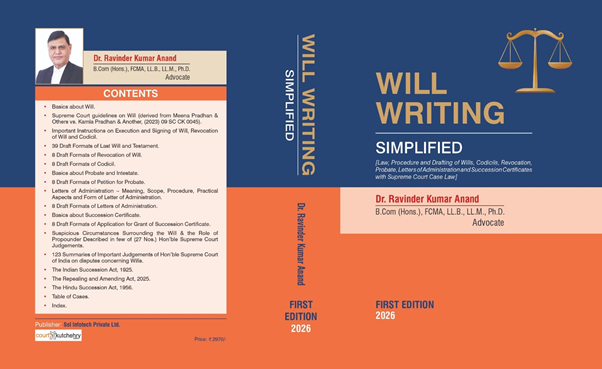
If you want practical guidance on drafting wills, codicils, and probate procedures, Will Writing Simplified is an invaluable resource. BUY HERE: Amazon 🔹 Flipkart
Background of the Case
- The matter arose in the case of Mahendra Prasad Agarwal v. Arvind Kumar Singh, where the lower courts had remanded the dispute to authorities for reconsideration.
- The Supreme Court noted that such remands often result in prolonged litigation, forcing litigants to repeatedly approach courts without resolution.
- The bench highlighted that courts must issue clear and categorical directions about the existence of a right, its violation, and the relief to be granted, instead of leaving matters open-ended.
Also Read: Visa-Free Travel Explained: Why It Doesn’t Always Guarantee Entry
Key Observations by the Supreme Court
- Relief must be immediate: If a litigant is entitled to relief, courts should grant it “then and there.”
- Avoid procedural delays: Endless remands only add to the backlog of cases and undermine the justice delivery system.
- Judicial responsibility: Courts must take responsibility for final adjudication rather than shifting the burden to authorities.
- Litigant’s rights: The ruling underscores that justice delayed is justice denied, and procedural technicalities should not obstruct substantive relief.
Why This Judgment Matters
- For litigants: It ensures faster resolution of disputes and reduces the frustration of repeated litigation.
- For judiciary: It sets a precedent that courts must deliver final judgments rather than remanding matters unnecessarily.
- For governance: It prevents administrative authorities from being burdened with repetitive reconsiderations that often lack clarity.
Expert Views
Legal experts have welcomed the ruling, noting that it strengthens the principle of judicial accountability.
- Senior advocates argue that the Supreme Court has rightly emphasized the need for courts to decide disputes conclusively rather than leaving litigants in limbo.
- Commentators believe this ruling will discourage lower courts from adopting the “easy way out” of remanding matters and instead encourage them to deliver substantive judgments.
Broader Implications
- Reduction in case backlog: By discouraging remands, courts can help reduce the mounting backlog of cases in India.
- Strengthening rule of law: Clear judicial directions ensure that rights are protected without unnecessary delays.
- Litigant confidence: The ruling is likely to restore faith in the justice system by ensuring timely and effective relief.
Also Read: Supreme Court Rules Rooh Afza is a Fruit Drink, Attracts Only 4% VAT
Conclusion
The Supreme Court’s strong words against “consider jurisprudence” mark a turning point in India’s judicial practice. By insisting that relief must be granted immediately when deserved, the Court has reinforced the principle that justice should be substantive, not procedural.
This ruling will serve as a guiding precedent for courts across the country, ensuring that litigants receive timely justice and that the judiciary fulfils its responsibility of final adjudication.
Keywords for SEO & Faster Searches
Also Read: Kerala High Court: Uploading GST Orders on Portal Constitutes Valid Service
- Supreme Court India consider jurisprudence
- Remanding matters to authorities ruling
- Justice P.S. Narasimha judgment
- Mahendra Prasad Agarwal v Arvind Kumar Singh case
- Supreme Court litigation delays India
- Judicial accountability Supreme Court India
- Relief must be granted immediately ruling
- Supreme Court remand jurisprudence
Also Read: Supreme Court to Examine Condonation of 30-Month ITR Delay