
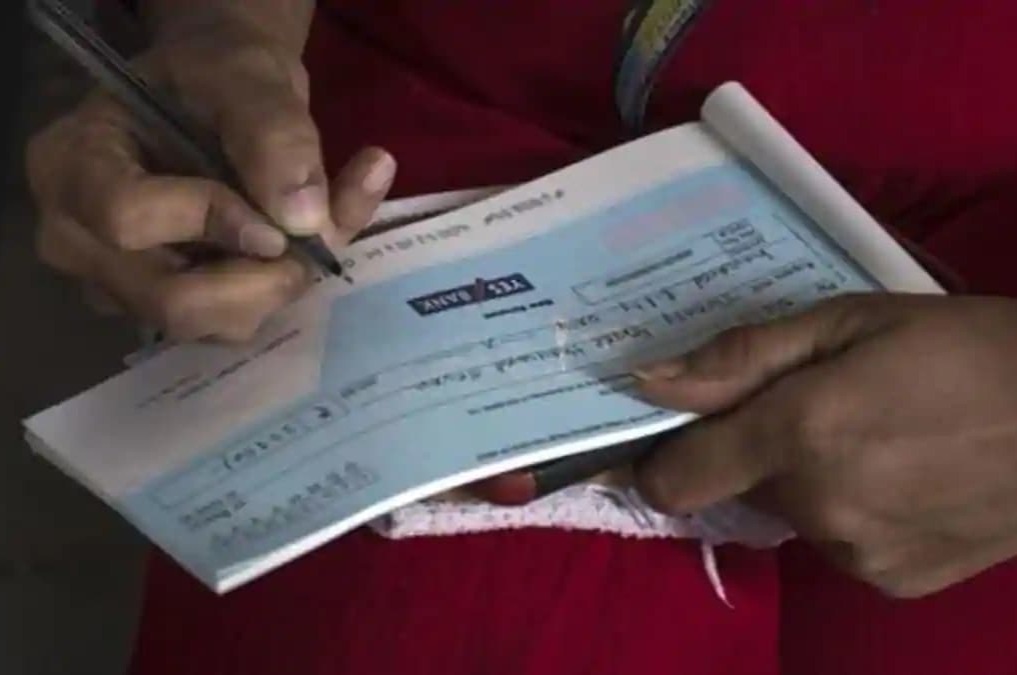
Sanctity of the Cheque Preserved: Supreme Court Rules Income Tax Breaches Do Not Void Commercial Liabilities
Supreme Court Clarifies Dual Liability Framework Between Tax Penalties and Enforceable Debts
Statutory Presumptions Under Section 139 NI Act Remain Intact Despite Cash Transaction Limits
By Legal Editor
New Delhi: July 21, 2026:
A bench of the Supreme Court of India, comprising Justices Manoj Misra and Vijay Bishnoi, delivered a landmark judgment reconciling a longstanding conflict between revenue laws and commercial jurisprudence. The Court ruled that accepting cash loans in excess of statutory limits under the Income Tax Act, 1961 (IT Act) does not render the underlying financial obligation legally unenforceable under Section 138 of the Negotiable Instruments Act, 1881 (NI Act).
This decision marks a pivotal moment in Indian commercial law, effectively disentangling the enforcement of private debts from regulatory tax compliance and reinforcing the credibility of negotiable instruments in trade and commerce.
The Intersection of Commercial Law and Tax Regulation
The core controversy before the Supreme Court revolved around whether a cash loan granted in violation of Section 269SS of the IT Act could constitute a "legally enforceable debt or other liability" for the purpose of initiating criminal proceedings under Section 138 of the NI Act following a cheque dishonour.
Key Statutory Provisions Under Consideration
Section 138 of the Negotiable Instruments Act, 1881: Penalises the dishonour of a cheque issued for the discharge, in whole or in part, of any debt or other liability. The explanation to the section explicitly restricts its applicability to a "legally enforceable debt or other liability."
Sections 118 & 139 of the Negotiable Instruments Act, 1881: Establish statutory presumptions in favour of the holder. Section 118 presumes that every negotiable instrument was made or drawn for consideration, while Section 139 mandates a presumption that the holder received the cheque for the discharge of a debt or liability.
Section 269SS of the Income Tax Act, 1961: Mandates that no person shall accept or take any loan or deposit or specified sum exceeding ₹20,000 otherwise than by an account payee cheque, account payee bank draft, or electronic clearing system.
Section 271D of the Income Tax Act, 1961: Imposes a financial penalty equal to the amount of the loan or deposit accepted in contravention of Section 269SS.
Section 273B of the Income Tax Act, 1961: Provides relief from penalties under Section 271D if the taxpayer proves that there was a "reasonable cause" for the non-compliance.
Reconciling Fiscal Infractions and Contractual Validity
The legal dispute stemmed from conflicting interpretations across various High Courts, notably the position taken by the , which had held that enforcing debts originating from prohibited cash transactions would amount to legalising unaccounted funds through criminal courts.
The Supreme Court decisively rejected this premise, establishing a sharp distinction between an act that is void ab initio due to statutory illegality and an act that merely triggers a regulatory monetary penalty.
"Neither Section 269SS nor Section 271D of the IT Act, 1961 says that any transaction in violation thereof shall be illegal, invalid, or void by statute."
— Supreme Court of India
The Apex Court observed that Section 269SS is a fiscal regulatory provision designed to curb the circulation of black money and maintain an audit trail for income tax assessments. It does not contain any clause declaring the contract or the underlying transaction void under contract law. Therefore, while a breach of Section 269SS exposes the recipient to a 100% penalty under Section 271D, it does not extinguish the civil existence of the debt or invalidate the cheque issued to discharge it.
Establishing the Dual Liability Framework
The judgment introduces a structured "Dual Liability Framework" to ensure that commercial certainty and revenue regulation operate in parallel without undermining one another:
┌─────────────────────────────────────────┐
│ Cash Loan Accepted Exceeding ₹20,000 │
└────────────────────┬────────────────────┘
│
┌──────────────────────┴──────────────────────┐
│ │
▼ ▼
┌─────────────────────────────┐ ┌─────────────────────────────┐
│ Commercial Domain │ │ Fiscal Domain │
│ (Section 138 NI Act) │ │ (Section 269SS/271D IT Act) │
├─────────────────────────────┤ ├─────────────────────────────┤
│ • Debt remains enforceable │ │ • Statutory breach occurs │
│ • Presumptions 118/139 apply│ │ • 100% penalty under 271D │
│ • Drawer liable for dishonour│ │ • Subject to 273B relief │
Commercial Enforceability (NI Act): The drawer of the dishonoured cheque remains criminally liable under Section 138. The payee retains full right to enforce the debt, and the statutory presumptions under Sections 118 and 139 continue to operate in the payee's favour.
Fiscal Liability (IT Act): The party accepting the cash loan remains liable to proceedings by the Income Tax Department and may be penalised under Section 271D, unless they demonstrate "reasonable cause" under Section 273B.
Impact on Statutory Presumptions and Evidence Burden
Under Section 139 of the NI Act, once the execution of the cheque is admitted or proved, the court must presume that the cheque was issued for a legally enforceable debt. The Supreme Court clarified that an accused cannot rebut this presumption merely by proving that the loan was advanced in cash in violation of Section 269SS.
To successfully rebut the presumption under Section 139, the drawer/accused must present cogent evidence establishing either:
The complete non-existence of consideration or debt,
The lack of financial capacity of the lender (beyond mere technical non-compliance with tax laws), or
That the cheque was issued under coercion, fraud, or misuse.
Frequently Asked Questions (FAQ)
Searchable Index
Does taking a cash loan over ₹20,000 make the loan illegal?
Can a cheque issued for a cash loan be enforced under Section 138 of the NI Act?
What is the penalty for violating Section 269SS of the Income Tax Act?
How can an assessee avoid the penalty under Section 271D?
Does proving a Section 269SS violation help the accused in a cheque bounce case?
What is the difference between an illegal contract and a fiscal penalty?
Key Legal Questions & Answers
1. Does taking a cash loan over ₹20,000 make the loan illegal?
No. While accepting a cash loan or deposit exceeding ₹20,000 violates Section 269SS of the Income Tax Act, 1961, it does not render the transaction illegal, invalid, or void ab initio. The transaction remains a valid civil obligation, though it attracts specific penalties under tax law.
2. Can a cheque issued for a cash loan be enforced under Section 138 of the NI Act?
Yes. The Supreme Court confirmed that a cheque issued to repay a cash loan represents a "legally enforceable debt or liability" under Section 138 of the Negotiable Instruments Act, 1881. The payee can initiate criminal prosecution if the cheque is dishonoured.
3. What is the penalty for violating Section 269SS of the Income Tax Act?
Under Section 271D of the Income Tax Act, any person who takes or accepts a loan or deposit in cash exceeding ₹20,000 is liable to pay a penalty equal to 100% of the loan or deposit amount.
4. How can an assessee avoid the penalty under Section 271D?
Under Section 273B of the Income Tax Act, no penalty shall be imposed under Section 271D if the taxpayer proves to the satisfaction of the tax authority that there was a reasonable cause for accepting the loan in cash (e.g., medical emergencies, lack of banking infrastructure, or urgent business necessity).
5. Does proving a Section 269SS violation help the accused in a cheque bounce case?
No. Merely demonstrating that the complainant advanced the loan in cash in violation of Section 269SS is not sufficient to rebut the statutory presumption under Section 139 of the NI Act. The accused must prove the non-existence of debt or financial incapacity with substantive evidence.
6. What is the difference between an illegal contract and a fiscal penalty?
An illegal contract (governed by Section 23 of the Indian Contract Act, 1872) is forbidden by law or opposed to public policy, making it completely void and unenforceable in court. A fiscal penalty, on the other hand, is a regulatory compliance measure imposed by the State; it penalises the mode of transaction without destroying the enforceability of the underlying civil contract.