
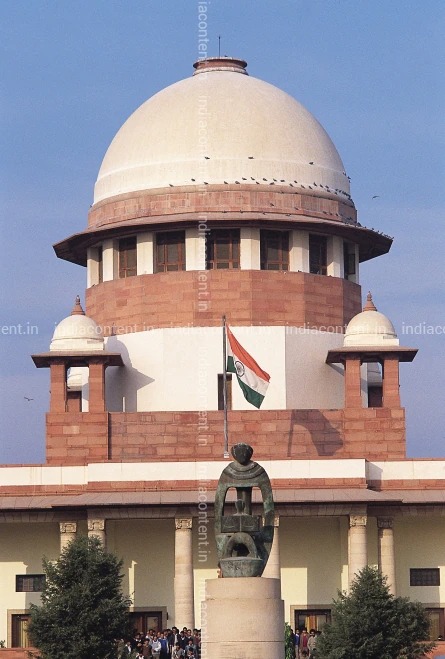
COURTKUTCHEHRY SPECIAL SERIES ON LANDMARKS JUDGEMENTS ON WILLS, CODICIL & PROBATE
S.R. Srinivasa & Ors. v. S. Padmavathamma: Supreme Court Rules Will Not Proved, Property Reverts to Mother’s Heirs
High Court Erred in Accepting Admissions Without Proof
Sections 63 & 68 of Succession Law Reaffirmed by Apex Court
By Vishwas Kumar
New Delhi: March 23, 2026:
On 22 April 2010, the Supreme Court of India delivered a crucial judgment in S.R. Srinivasa & Ors. v. S. Padmavathamma (Civil Appeal No. 4623 of 2005), clarifying the evidentiary requirements for proving a Will under succession law. The dispute revolved around whether property inherited by an issueless daughter through a Will could pass to her husband’s heirs or revert to the heirs of her mother, Puttathayamma.
must-know Supreme Court decisions on wills of S.R. Srinivasa Case
The appellants argued that the daughter’s estate should devolve upon her husband’s family, relying on the alleged Will. The plaintiffs, however, contended that the Will was not genuine and that the property should revert to Puttathayamma’s heirs. The High Court had accepted the Will, relying heavily on supposed admissions, without insisting on strict proof.
A Division Bench comprising Justice V.S. Sirpurkar and Justice S.S. Nijjar examined the matter and held that the Will was not duly proved. The Court emphasized that under Section 63 of the Indian Succession Act and Section 68 of the Indian Evidence Act, a Will must be proved by attesting witnesses, and mere admissions or assumptions cannot substitute for statutory compliance.
By rejecting the High Court’s approach, the Supreme Court restored the rights of Puttathayamma’s heirs, ruling that the property would revert to them. This decision underscores the judiciary’s insistence on strict adherence to procedural requirements in succession disputes, ensuring that testamentary documents are not accepted without proper proof.
The ruling in S.R. Srinivasa v. S. Padmavathamma remains a significant precedent, reinforcing the principle that inheritance claims based on Wills must withstand rigorous evidentiary scrutiny. It also highlights the Court’s role in protecting rightful heirs from claims founded on unproven documents.
For More, Read Here the Summary of the Judgement from the Book: WILL WRITING SIMPLIFIED, read below or open page no 436, Chapter 14.1 in the book. (Online book purchase link available here on: Buy online: Amazon | Flipkart
|
|
Case Summary |
: |
S.R. Srinivasa & Ors. v. S. Padmavathamma. |
|
|
Court |
: |
Supreme Court of India |
|
|
Citations |
: |
(2010) 04 SC CK 0083: Civil Appeal No. 4623 of 2005. |
|
|
Link |
: |
https://www.courtkutchehry.com/judgements/665477/sr-srinivasa-and-others-vs-s-padmavathamma/
|
|
|
Decided on |
: |
22 April 2010 |
|
|
Coram |
: |
Hon’ble Mr. Justice V.S. Sirpurkar and Hon’ble Mr. Justice S.S. Nijjar. (Division Bench) |
|
|
Relevant Paragraphs |
: |
Para Nos.18–44 |
1. Facts of the Case:
Plaintiff Lalithamma sought declaration of ownership and possession of property inherited from her mother Puttathayamma. Defendant No.1, a nephew (son of Puttathayamma’s sister), claimed ownership based on a Will (18.6.1974) allegedly executed by Puttathayamma in favour of her daughter Indiramma. Trial Court dismissed the suit upholding the Will; First Appellate Court reversed, finding the Will unproven and surrounded by suspicious circumstances; High Court reinstated Trial Court’s dismissal relying on supposed admissions of Will’s execution by plaintiffs. Plaintiffs appealed to the Supreme Court.
2. Law Points Involved:
(i). Proof of Will under Section 63, Indian Succession Act, 1925 & Section 68, Evidence Act, 1872.
(ii). Scope of Section 15(1) & (2), Hindu Succession Act, 1956 regarding devolution of property of an issueless female Hindu.
(iii). Effect of admissions under Section 58, Evidence Act and Order 12 Rule 6 & Order 8 Rule 5 CPC.
(iv). Suspicious circumstances surrounding Wills and the burden on propounder.
3. Acts / Provisions / Articles Referred:
(i). Indian Succession Act, 1925 — Sec. 63
(ii). Indian Evidence Act, 1872 — Secs. 58, 68
(iii). Hindu Succession Act, 1956 — Secs. 15(1), 15(2), 16
(iv). Civil Procedure Code, 1908 — Order 12 Rule 6; Order 8 Rule 5
4. Judgments Referred:
(i). H. Venkatachala Iyengar v. B.N. Thimmajamma (1958) 11 SC CK 0008;
(ii). Ramchandra Rambux v. Champabai, (1964) 02 SC CK 0018.
(iii). State of Punjab v. Balwant Singh, (1991) 10 SC CK 0023.
(iv). N. Kamalam v. Ayyasamy, (2001) 08 SC CK 0033.
(v). Bharpur Singh v. Shamsher Singh, (2008) 12 SC CK 0067.
https://www.courtkutchehry.com/judgements/661748/bharpur-singh-and-others-vs-shamsher-singh/]
5. Obiter Dicta:
(i). Presence of the principal beneficiary during execution and registration of a Will can itself constitute a suspicious circumstance requiring strict scrutiny.
(ii). Registration of a Will does not, by itself, dispel suspicion or prove due execution.
6. Ratio Decidendi:
Where execution of a Will is surrounded by suspicious circumstances and no attesting witness is examined, the Will cannot be treated as proved merely due to its registration or alleged admissions. Suspicious circumstances such as active participation of beneficiary, exclusion of natural heirs without reason, non-examination of attesting witnesses, and unexplained custody of the Will vitiate proof.
7. Final Ruling:
Appeal allowed. Judgment of the High Court set aside. Judgment and decree of the First Appellate Court restored—holding that the Will dated 18.6.1974 was not proved and surrounded by suspicious circumstances. Plaintiffs held entitled to succeed under Section 15(2)(a) of the Hindu Succession Act, 1956.
8. Gist / Dispute & Final Decision:
Dispute concerned whether property inherited by an issueless daughter through Will could pass to husband’s heirs or revert to heirs of her mother. Supreme Court held that the Will was not duly proved; property would revert to the heirs of Puttathayamma (plaintiffs). The High Court erred in relying on supposed admissions without requiring proof under Sections 63 & 68.
Read full Judgement Here:
S.R. Srinivasa & Ors. v. S. Padmavathamma.
Supreme Court of India
(2010) 04 SC CK 0083: Civil Appeal No. 4623 of 2005.
https://www.courtkutchehry.com/judgements/665477/sr-srinivasa-and-others-vs-s-padmavathamma/
You Can Also Purchase the Book from here on: Buy online: Amazon | Flipkart
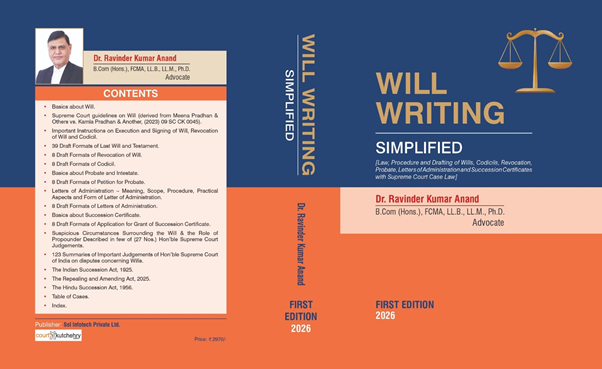
OUR RECOMMENDATION: Check out 123 Key Judgements, as highlighted in the book, WILL WRITING SIMPLIFIED, for the quick research and reference purposes. Click the link here: https://www.courtkutchehry.com/pages/blog/123-supreme-court-judgments-on-wills/
Keywords for SEO & Faster Searches
- S.R. Srinivasa v. S. Padmavathamma Supreme Court
- 2010 inheritance dispute judgment India
- Will proof requirements Supreme Court India
- Section 63 Succession Act Will validity
- Section 68 Evidence Act Will proof
- Civil Appeal No. 4623 of 2005 Supreme Court ruling