
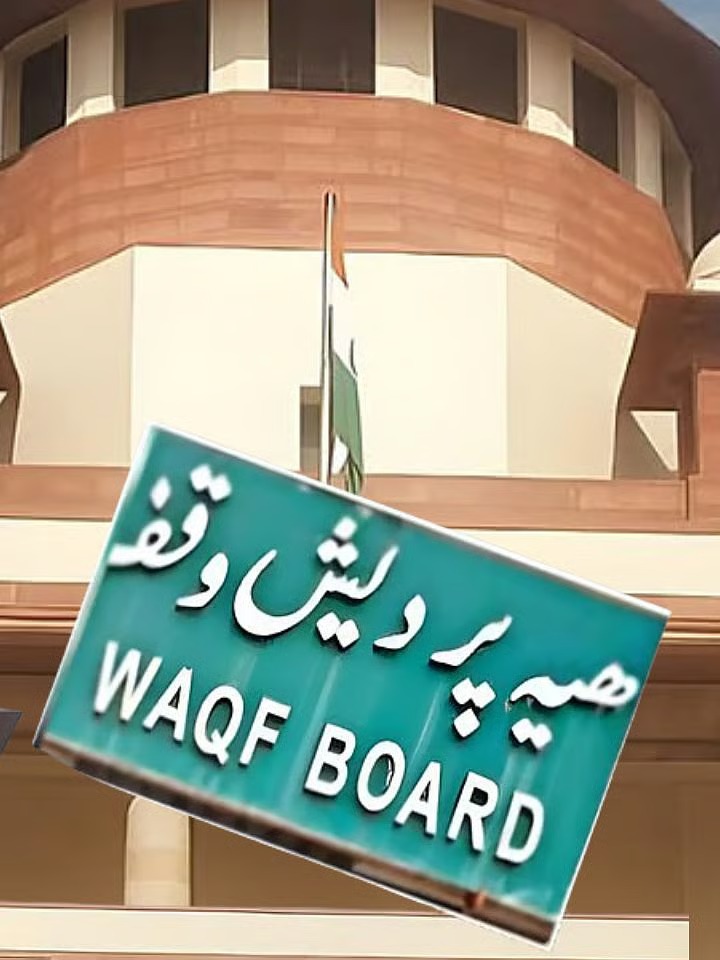
Supreme Court Declares Service Inam Lands as Inalienable Wakf Property
Religious grants carry perpetual trust obligations under Muslim law
Plaintiffs must prove title; weakness of defence no ground for relief
By Legal Reporter
New Delhi: April 25, 2026:
The Supreme Court has ruled that “service inam” lands attached to mosques are Wakf properties and cannot be alienated. This judgment clarifies that grants made for religious or charitable purposes are impressed with a public trust and remain inalienable, even if sale deeds exist.
In succession disputes, courts rigorously examine execution, intent, and surrounding circumstances to determine the authenticity of a will—this ruling offers important judicial clarity: Supreme Court judgment on validity of wills and inheritance disputes in India
Background of the Case
The dispute centered on a 3-acre parcel of land in Kurnool district, Andhra Pradesh, historically recorded as “service inam” land attached to a mosque. The plaintiffs claimed ownership based on sale deeds executed in 1985 and 1996, seeking injunction against the Wakf Board. The Wakf Board argued that the land was dedicated for religious purposes and thus constituted Wakf property.
The Wakf Tribunal dismissed the plaintiffs’ suit, holding the land to be Wakf property. However, the Andhra Pradesh High Court overturned this decision, ruling in favor of the plaintiffs. The matter reached the Supreme Court on appeal by the State Wakf Board.
Supreme Court’s Observations
A bench of Justice M.M. Sundresh and Justice Augustine George Masih restored the Tribunal’s order, holding that service inam lands are Wakf property and cannot be alienated. The Court emphasized:
- Service Inam Lands: Grants made for religious or charitable services are endowed properties, impressed with a trust.
- Alienability Restriction: Such lands cannot be transferred through sale deeds, as they are perpetually tied to religious obligations.
- Burden of Proof: Plaintiffs must succeed on the strength of their own title, not on the weakness of the defendant’s case.
The Court relied on the precedent Sayyed Ali v. A.P. Wakf Board (1998) 2 SCC 642, which held that grants for religious services acquire the character of Wakf property under Muslim law.
Key Legal Principles
- Wakf Act, 1995
- Defines Wakf property as permanent dedication for religious, pious, or charitable purposes.
- Wakf properties are inalienable unless permitted under specific statutory provisions.
- Service Inam vs. Personal Inam
- Service Inam: Granted for religious/charitable services; becomes Wakf property.
- Personal Inam: Granted for personal benefit; transferable.
- Burden of Proof in Title Suits
- Plaintiffs must establish lawful title.
- Reliance on documents that themselves record the land as “service inam” undermines their claim.
- Principle of Public Trust
- Religious grants are impressed with public trust obligations, restricting alienability.
Court’s Final Ruling
- The Supreme Court set aside the High Court’s judgment.
- Restored the Wakf Tribunal’s finding that the land is Wakf property.
- Held that plaintiffs failed to establish valid title or lawful possession.
Implications
- Protection of Wakf Properties: Reinforces inalienability of lands dedicated to religious institutions.
- Clarity in Property Law: Distinguishes service inam from personal inam, preventing misuse of sale deeds.
- Burden on Claimants: Plaintiffs must prove title independently; cannot rely on weaknesses in the defence.
FAQ: Key Legal Points
Q1. What is a “service inam” land?
A grant made for rendering religious or charitable services to an institution like a mosque. It becomes Wakf property.
Q2. Can service inam lands be sold or transferred?
No. They are inalienable as they are perpetually tied to religious obligations.
Q3. What is the difference between service inam and personal inam?
- Service inam: Religious/charitable purpose, becomes Wakf property.
- Personal inam: For individual benefit, transferable.
Q4. What precedent did the Supreme Court rely on?
Sayyed Ali v. A.P. Wakf Board (1998), which held that religious grants acquire Wakf character.
Q5. Who bears the burden of proof in title disputes?
The plaintiff must prove lawful title; cannot rely on defendant’s weakness.
Q6. What happens if sale deeds exist for Wakf property?
They are invalid, as Wakf property cannot be alienated.
Context for Citations
- Case Title: A.P. State Wakf Board through Chairperson vs. Janaki Busappa
- Bench: Justice M.M. Sundresh & Justice Augustine George Masih
- Date: April 24, 2026
- Key Finding: Service inam lands attached to mosques are Wakf property and cannot be alienated.
This ruling strengthens the protection of Wakf properties, ensuring that lands dedicated to mosques and religious institutions remain perpetually tied to their intended purpose, immune from alienation through sale deeds.