
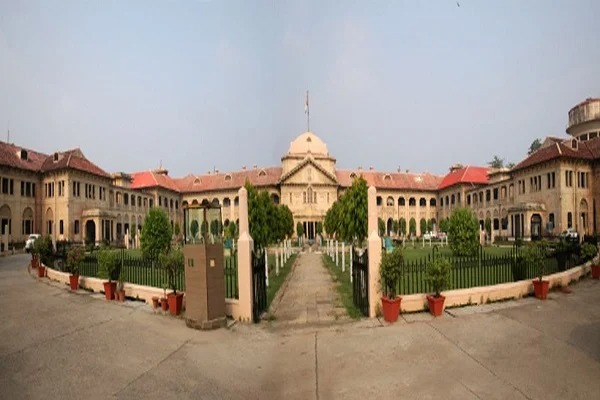
Allahabad HC Expands Complainant’s Role in Criminal Trials
Section 311 CrPC Plea Maintainable Without Prosecutor’s Nod
Court Upholds Power to Summon Witnesses for Justice
By Our Legal Correspondent
New Delhi: April 16, 2026:
The Allahabad High Court has clarified that a complainant can move an application under Section 311 CrPC (now Section 348 BNSS) to summon witnesses or exhibit documents in a state case, and such a plea does not require prior filing by the Public Prosecutor. This ruling strengthens the complainant’s role in criminal trials and reinforces judicial discretion in ensuring justice.
In matters involving wills, succession, and inheritance disputes, courts have consistently emphasized the importance of proving due execution, attestation, and the absence of suspicious circumstances. A significant ruling in this area is Benga Behera and Another vs. Braja Kishore Nanda and Others , where the Supreme Court examined key principles governing proof of wills and succession rights. This judgment is highly relevant for understanding how courts determine the validity and genuineness of testamentary documents.
The Allahabad High Court’s ruling in Shubhra Tiwari vs. State of U.P. (2026) addresses a critical procedural question: Can a complainant independently move an application under Section 311 CrPC to summon witnesses or exhibit documents in a state case?
The Court answered affirmatively, holding that judicial discretion under Section 311 CrPC is not contingent upon the Public Prosecutor’s application. This decision has far-reaching implications for criminal jurisprudence, particularly in cases where crucial evidence surfaces after closure of prosecution evidence.
Key Legal Provisions Discussed
- Section 311 CrPC (now Section 348 BNSS, 2023)
- Empowers courts to summon any person as a witness or recall/re-examine witnesses at any stage of trial.
- Objective: To ensure that justice is not defeated by technicalities or inadvertent omissions.
- Section 482 CrPC (Inherent Powers of High Court)
- Allows High Courts to intervene to prevent abuse of process and secure justice.
- The HC emphasized that invoking Section 311 by a complainant is not an abuse of process.
- Supreme Court Precedents
- P. Chhagan Lal v. M. Sanjay Saw (2003): Courts can exercise Section 311 powers even after closure of evidence if essential for justice.
- Dhariwal Industries Ltd. v. Kishore Wadhwani: Trial courts may permit complainants to conduct prosecution independently.
Case Context
- The complainant sought to exhibit Google search history, WhatsApp chats, and media statements already on record.
- Additional witnesses (accused’s sister and neighbour) were requested to explain the accused’s mental condition.
- The accused objected, arguing that only the Public Prosecutor could file such applications and that the documents were inadmissible.
- The trial court allowed the application, noting that admissibility and probative value are assessed later, not at the stage of Section 311.
- The High Court upheld this reasoning, dismissing the accused’s petition.
[RESEARCH RESOURCES]
The jurisprudence on wills in India has been shaped by numerous Supreme Court rulings that clarify execution, attestation, and the role of suspicious circumstances in testamentary disputes. To explore these principles in depth, refer to this comprehensive compilation of important Supreme Court judgments on wills and probate law , covering the most authoritative precedents in succession law.
BUY & READ BOOK, WILL WRITING SIMPLIFIED, By Dr Ravinder Kumar Anand. [📘 Buy Will Writing Simplified online: Amazon | Flipkart ]
FAQ: Quick Legal Understanding
Q1. What is Section 311 CrPC?
It empowers courts to summon or recall witnesses at any stage of trial if their evidence is essential for justice.
Q2. Can a complainant file a Section 311 application in a state case?
Yes. The Allahabad HC clarified that a complainant has locus standi to move such an application.
Q3. Is the Public Prosecutor’s application mandatory for Section 311?
No. The Court held that filing by the Public Prosecutor is not a precondition.
Q4. What happens if new evidence surfaces after closure of prosecution evidence?
Section 311 allows courts to admit such evidence if it is necessary for justice, even at a late stage.
Q5. Does Section 311 decide admissibility of evidence?
No. At this stage, the court only decides whether evidence should be brought on record. Admissibility and reliability are assessed later.
Q6. How does Section 482 CrPC relate here?
It gives High Courts inherent powers to prevent abuse of process. The HC used this to uphold the complainant’s right to file under Section 311.
Q7. What precedent supports this ruling?
The Supreme Court in P. Chhagan Lal and Dhariwal Industries recognized broad judicial discretion under Section 311 and complainant’s role in prosecution.
Key Takeaways
- Complainant empowerment: Victims and complainants can actively ensure crucial evidence is considered.
- Judicial discretion: Courts retain wide latitude to summon witnesses at any stage for justice.
- No procedural rigidity: Public Prosecutor’s application is not mandatory under Section 311.
- Safeguard against injustice: The ruling prevents technicalities from obstructing truth-finding.
This judgment strengthens the participatory role of complainants in criminal trials, ensuring that justice is not compromised by procedural hurdles. By affirming that Section 311 CrPC can be invoked without the Public Prosecutor’s nod, the Allahabad High Court has reinforced the principle that truth and fairness must prevail over technical objections.