
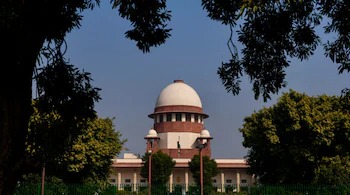
Supreme Court Precedents on Limits of Second Appeals
Erroneous factual findings not open to review
Only substantial questions of law can be examined
By Legal Reporter
New Delhi: April 21, 2026:
The Supreme Court has reaffirmed that under Section 100 of the Code of Civil Procedure (CPC), second appeals are strictly limited to substantial questions of law, and factual findings—even if erroneous—cannot be disturbed. Recent precedents such as State of Uttar Pradesh v. Mayoor Ahuja (2026), C.P. Francis v. C.P. Augustine (2025) have consistently reinforced this principle.
For a complete understanding of inheritance disputes and legal principles governing wills, read our detailed guide on Supreme Court Judgments on Wills in India , covering landmark rulings on validity, succession, and property rights.
Analytical Overview
Context
- Section 100 CPC was amended to restrict second appeals to substantial questions of law, ensuring finality in litigation.
- The Supreme Court has repeatedly cautioned High Courts against reappraising evidence in second appeals.
Key Precedents
- State of Uttar Pradesh v. Mayoor Ahuja (2026)
- Court held that even erroneous factual findings cannot justify interference unless a substantial legal issue arises.
- C.P. Francis v. C.P. Augustine (2025)
- Bench clarified that High Courts must record reasons before framing additional questions of law in second appeals.
- Unnamed case (2025, Lawbeat report)
- Justices Sanjay Karol and Prashant Kumar Mishra emphasized that disturbing factual findings in second appeal is “like stating the obvious” prohibition.
- Recent ruling (2026)
- Bench of Justices Pankaj Mithal and Prasanna B. Varale reiterated that second appeals are not a forum for factual reappraisal.
Legal Principle
- First Appeal (Section 96 CPC): Both facts and law can be revisited.
- Second Appeal (Section 100 CPC): Only substantial questions of law can be examined.
- Erroneous factual findings: Do not automatically qualify as substantial questions of law.
Comparison Table: First vs Second Appeal
| Aspect | First Appeal | Second Appeal |
| Scope | Facts + Law | Only substantial questions of law |
| Evidence reappraisal | Permitted | Not permitted |
| Findings of fact | Can be revisited | Binding, even if erroneous |
| Purpose | Correct factual/legal errors | Ensure legal consistency |
[RESEARCH RESOURCES]
BUY & READ THE BOOK, WILL WRITING SIMPLIFIED, By Dr Ravinder Kumar Anand. [📘 Buy Will Writing Simplified online: Amazon | Flipkart ]
FAQs on Section 100 CPC
Q1. What does Section 100 CPC provide?
It restricts second appeals to substantial questions of law, not factual disputes.
Q2. Can findings of fact be challenged in second appeal?
No. They are binding once affirmed by trial and first appellate courts.
Q3. What qualifies as a substantial question of law?
Interpretation of statutes, jurisdictional errors, or principles of law—not mere factual mistakes.
Q4. Which recent cases clarified this?
- State of UP v. Mayoor Ahuja (2026)
- C.P. Francis v. C.P. Augustine (2025)
Q5. Why did the Supreme Court intervene in these cases?
Because High Courts exceeded jurisdiction by reassessing evidence in second appeals.
Q6. Does this mean factual errors can never be corrected?
They can be corrected in first appeal, but not in second appeal unless they raise a legal issue.
Key Takeaway
The Supreme Court has consistently reinforced that second appeals under Section 100 CPC are confined to substantial questions of law. This ensures judicial discipline, finality in litigation, and prevents misuse of appellate jurisdiction by litigants seeking to reopen factual disputes.