
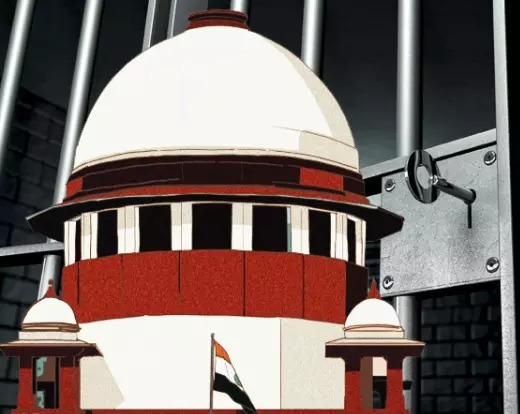
Supreme Court Clarifies Remission Law: Heinous Crimes Alone Not Enough to Deny Release
SC orders release of Madhumita murder convict after 22 years
Judges stress reformative justice and reasoned executive decisions
By Legal Reporter
New Delhi: May 16, 2026:
The Supreme Court of India has ruled that the heinousness of a crime cannot be the sole ground to deny remission, ordering the release of Rohit Chaturvedi, convicted in the 2003 Madhumita murder case, after 22 years of incarceration. This judgment underscores the constitutional principles of fair consideration, reformative justice, and the requirement for reasoned executive orders.
The Shivakumar Ors vs Sharanabasappa Ors judgment provides valuable legal perspective on civil property disputes, inheritance issues, and the judicial approach toward resolving competing ownership and succession claims through documentary and oral evidence.
Key Legal Principles and Rules Discussed
1. Remission as an Executive Function
- The Court emphasized that remission is distinct from sentencing.
- It is an executive decision based on present conduct, evidence of reformation, and prospects of reintegration.
- Legal Basis: Article 72 and 161 of the Constitution empower the President and Governors to grant remission, while states frame remission policies under prison rules.
2. Heinousness of Crime Not Sole Ground
- The Ministry of Home Affairs (MHA) rejected Chaturvedi’s plea citing the seriousness of the crime.
- The SC held this reasoning unsustainable, stating that heinousness cannot collapse the distinction between sentencing and remission.
3. Requirement of Reasoned Orders
- The Court criticized the MHA’s rejection as a non-speaking order.
- Legal Principle: Any order affecting personal liberty must be reasoned and transparent, ensuring fairness under Article 21 of the Constitution.
4. Reformative Justice Philosophy
- The Court cited Mohd. Giasuddin v. State of A.P. (1977), where Justice Krishna Iyer stressed reform over retribution.
- The ruling reinforces that remission policies aim to rehabilitate prisoners, not perpetuate punishment.
5. State vs. Centre Conflict
- Uttarakhand Government recommended release based on good conduct.
- MHA overruled without adequate reasoning.
- The SC clarified that executive discretion must align with constitutional safeguards and cannot be arbitrary.
6. Case Specifics
- Conviction under Sections 120B and 302 IPC (criminal conspiracy and murder).
- Chaturvedi had already served 22 years.
- His co-accused had been released earlier, strengthening his claim for parity.
FAQ: Quick Legal Understanding
Q1. What is remission in criminal law?
Remission reduces the sentence period based on good conduct, reformation, and rehabilitation prospects. It is an executive decision, not a judicial one.
Q2. Can heinous crimes never get remission?
No. Heinousness can be a factor but cannot be the sole ground. Courts require a holistic assessment of the prisoner’s conduct and reformation.
Q3. Why was the MHA’s order struck down?
Because it was cryptic, unreasoned, and non-speaking, violating the principle that liberty-affecting decisions must be transparent and justified.
Q4. Who decides remission — State or Centre?
Both have roles. States recommend remission under prison rules, but the Centre may intervene in certain cases. However, decisions must be reasoned and fair.
Q5. What constitutional provisions govern remission?
- Article 72: President’s power to grant pardons/remission.
- Article 161: Governor’s power to grant remission.
- Prison manuals and remission policies supplement these powers.
Q6. How does this case impact future remission pleas?
It sets a precedent that executive authorities must provide reasoned orders and cannot deny remission solely on crime severity.
Q7. What philosophy guides remission?
The reformative justice model, which prioritizes rehabilitation and reintegration over punitive incarceration.
Conclusion
The Supreme Court’s ruling in the Madhumita murder case is a landmark in reaffirming constitutional safeguards for prisoners. By rejecting the MHA’s arbitrary denial, the Court reinforced that remission decisions must be fair, reasoned, and reform oriented. This judgment will likely influence future remission policies, ensuring that India’s criminal justice system balances societal interests with individual rights.