
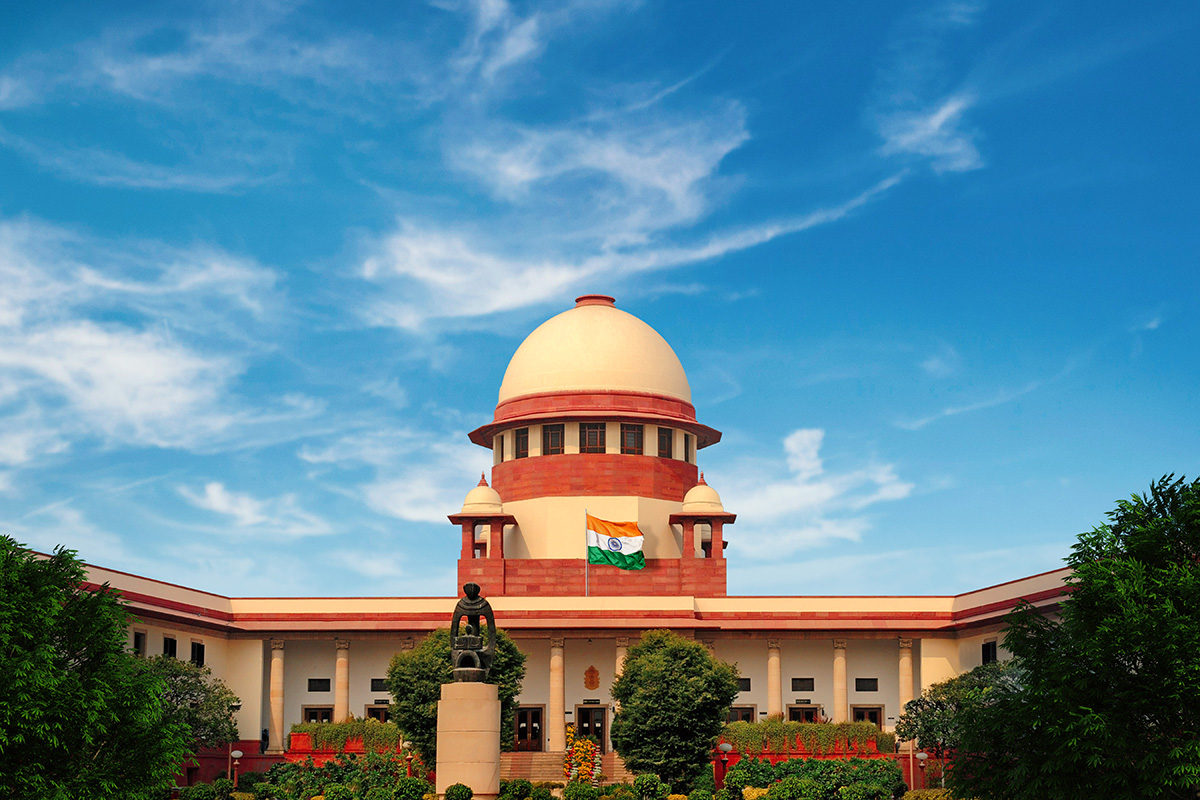
SC Upholds Haryana’s 2014 Regularisation Policy, Rejects Backdoor Entry Scheme
Transparent Criteria Saved 2014 Notifications
Arbitrary 2014 Extensions Declared Illegal
By Legal Reporter
New Delhi: April 22, 2026:
The Supreme Court has upheld Haryana’s 2014 regularisation policy for contractual employees while striking down later notifications that attempted to absorb backdoor appointees. The ruling balances humanitarian concerns with constitutional principles of fair recruitment, protecting genuine workers but rejecting arbitrary schemes.
In disputes involving wills and inheritance, courts carefully assess the authenticity of the document, proper attestation, and any suspicious circumstances before granting relief. A key precedent in this area is the 👉 Smt. Jaswant Kaur vs Smt. Amrit Kaur & Others judgment, which provides important guidance on how Indian courts determine the validity of wills and resolve succession disputes.
Background
The issue of regularisation of contractual, ad hoc, and daily wage employees has long troubled Indian service jurisprudence. Following the landmark State of Karnataka v. Umadevi (2006), which restricted regularisation of irregular appointments, states attempted “one-time measures” to protect long-serving employees. Haryana’s 2014 notifications became the subject of litigation, culminating in the Supreme Court’s April 2026 ruling.
The Court’s Findings
- 2014 Notifications Valid: The Court upheld the notifications dated 16 June 2014 and 18 June 2014, which sought to regularise Group B, C, and D employees with requisite qualifications, appointed against sanctioned posts, and serving for at least three years. These were seen as continuations of earlier valid policies and did not dilute recruitment norms.
- Backdoor Scheme Struck Down: The 7 July 2014 notifications were invalidated. They attempted to regularise employees by extending cut-off dates to 2018, even if initial appointments lacked transparency. The Court found this arbitrary, politically motivated, and contrary to Articles 14 and 16 of the Constitution.
- Humanitarian Relief: Using Article 142, the Court allowed employees under the invalidated scheme to continue in service but only at the lowest pay scale, ensuring fairness without legitimizing irregular appointments.
Key Issues
- Constitutional Mandate vs. Humanitarian Concerns
- The Court reaffirmed that open, transparent recruitment is the constitutional norm.
- Yet, it acknowledged the plight of employees who had served for years under interim orders, balancing justice with compassion.
- One-Time Measures
- The Court clarified that “one-time measures” can include left-out employees from earlier valid schemes (M.L. Kesari principle).
- However, repeated extensions styled as “one-time” are impermissible and amount to perpetuating illegality.
- Impact on Governance
- The ruling prevents states from using regularisation policies as political tools.
- It ensures that genuine employees are protected while discouraging arbitrary absorption of irregular entrants.
Implications
- For Employees: Those covered under the 2014 notifications gain permanent status, while backdoor entrants retain jobs but at lower pay scales.
- For States: Governments must design policies consistent with constitutional principles, avoiding arbitrary cut-off dates or opaque recruitment.
- For Judiciary: The ruling strengthens judicial oversight of service regularisation, ensuring balance between fairness and compassion.
Conclusion
The Supreme Court’s decision is a landmark in service law, reaffirming constitutional recruitment norms while providing humanitarian relief. It sends a clear message: regularisation cannot be a political tool, but genuine employees deserve protection.
[RESEARCH RESOURCES]
BUY & READ THE BOOK, WILL WRITING SIMPLIFIED, By Dr Ravinder Kumar Anand. [📘 Buy Will Writing Simplified online: Amazon | Flipkart ]
FAQ for Quick Understanding
Q1: What was upheld by the Supreme Court?
The 16 June 2014 and 18 June 2014 notifications regularising Group B, C, and D employees were upheld.
Q2: What was struck down?
The 7 July 2014 notifications were invalidated as they sought to regularise backdoor appointees without transparent recruitment.
Q3: Why were the July 2014 notifications invalid?
They lacked transparency, fixed arbitrary future cut-off dates, and violated Articles 14 and 16 of the Constitution.
Q4: What relief was given to affected employees?
They were allowed to continue in service but only at the lowest pay scale, under Article 142.
Q5: What principle guided the Court?
The Umadevi ruling requiring constitutional recruitment norms, balanced with humanitarian considerations under M.L. Kesari.
Q6: Does this mean all contractual employees are regularised?
No. Only those meeting prescribed qualifications and appointed against sanctioned posts under valid policies are regularised.
Q7: What is the broader impact?
States must avoid arbitrary schemes and ensure recruitment policies comply with constitutional mandates.
In short, the Supreme Court has drawn a sharp line between legitimate regularisation and unconstitutional backdoor entry, protecting genuine workers while curbing political misuse of service policies.