
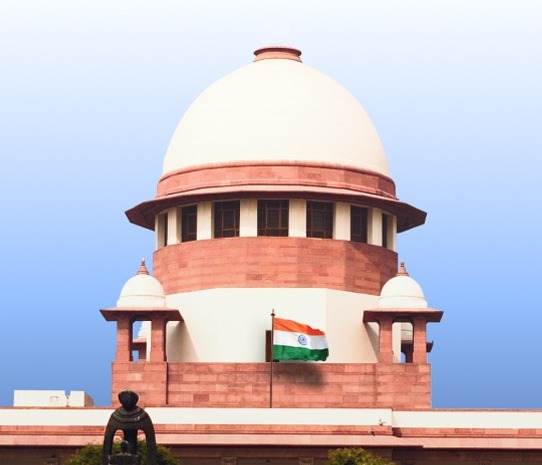
Supreme Court: No Automatic Rescission for Delay in Deposit
Section 28 empowers courts to extend time for compliance
Fairness and equity guide decrees of specific performance
By Legal Reporter
New Delhi: May 11, 2026:
The Supreme Court has clarified that contracts decreed for specific performance under Section 28 of the Specific Relief Act, 1963 are not automatically rescinded if the purchaser fails to deposit the balance consideration within the stipulated time. Courts retain jurisdiction to extend time for compliance, ensuring fairness and preventing undue forfeiture of contractual rights.
For readers researching ancestral property disputes, succession rights, and validity of transfer transactions involving joint family assets, the Supreme Court decision in Jagmail Singh & Anr vs Karamjit Singh & Ors provides important legal clarity. The Court discussed coparcenary rights, alienation of ancestral property, and the evidentiary principles governing partition and inheritance disputes under Hindu property law.
Background of the Case
In Anand Narayan Shukla v. Jagat Dhari, the Supreme Court examined whether failure to deposit the balance sale consideration within the time fixed by a decree for specific performance automatically rescinds the contract. The Court, led by Justices Manmohan and Manoj Misra, summarized principles under Section 28 of the Specific Relief Act, 1963, emphasizing judicial discretion in extending time.
Section 28 of the Specific Relief Act, 1963
- Provision: Governs rescission of contracts in decrees for specific performance.
- Key Rule: If the purchaser fails to comply with the decree terms, the vendor may apply for rescission.
- Judicial Discretion: Courts may extend time for deposit even after expiry of the period fixed in the decree.
Supreme Court’s Key Principles
- No Automatic Rescission
- Non-deposit within time does not automatically cancel the contract.
- Rescission requires a formal application by the vendor and judicial determination.
- Court’s Continuing Jurisdiction
- Courts retain jurisdiction to extend time for deposit, balancing equities between parties.
- Equitable Considerations
- Relief under Section 28 is discretionary and guided by fairness.
- Courts must consider whether delay was bona fide or intended to defeat contractual obligations.
- Vendor’s Rights
- Vendors can seek rescission if purchasers fail to comply, but rescission is not automatic.
Judicial Precedents
- Hungerford Investment Trust Ltd. v. Haridas Mundhra (SC): Established that courts can extend time for compliance in decrees of specific performance.
- K.S. Vidyanadam v. Vairavan (SC): Highlighted that equity governs specific performance, and relief may be denied if delay is unreasonable.
- Anand Narayan Shukla v. Jagat Dhari (SC): Reaffirmed that courts must balance equities and cannot mechanically rescind contracts.
Court’s Observations
- The decree for specific performance is not self-executing; judicial oversight is essential.
- Automatic rescission would unfairly penalize purchasers for minor or bona fide delays.
- Vendors must actively seek rescission, and courts must weigh circumstances before granting relief.
Implications of the Ruling
- For Purchasers: Provides protection against forfeiture due to minor delays, ensuring opportunity to comply.
- For Vendors: Confirms right to seek rescission but requires judicial approval.
- For Courts: Reinforces equitable discretion, preventing rigid application of timelines.
- For Contract Law: Strengthens principle that specific performance is an equitable remedy, not a mechanical one.
This ruling ensures that decrees of specific performance remain instruments of fairness, balancing contractual obligations with practical realities.
FAQ: Quick Legal Understanding
Q1. What is Section 28 of the Specific Relief Act?
It deals with rescission of contracts in decrees for specific performance, allowing courts to cancel contracts if purchasers fail to comply.
Q2. Does failure to deposit money within time automatically rescind the contract?
No. Rescission is not automatic; it requires a vendor’s application and judicial determination.
Q3. Can courts extend time for deposit after expiry?
Yes. Courts retain jurisdiction to extend time, even after the period fixed in the decree has lapsed.
Q4. What factors do courts consider before extending time?
Courts examine whether delay was bona fide, whether prejudice is caused to the vendor, and whether equities favor extension.
Q5. What rights do vendors have under Section 28?
Vendors can apply for rescission if purchasers fail to comply, but rescission is subject to judicial discretion.
Q6. Why is this ruling significant?
It prevents automatic forfeiture of contractual rights, ensuring fairness and equitable treatment in specific performance cases.
Q7. How does this affect contract enforcement in India?
It underscores that specific performance is an equitable remedy, requiring judicial balancing rather than rigid enforcement of timelines.
In conclusion, the Supreme Court’s ruling on Section 28 of the Specific Relief Act clarifies that contracts are not automatically rescinded for delayed deposits. Courts retain discretion to extend time, ensuring justice and equity in enforcing specific performance decrees.