
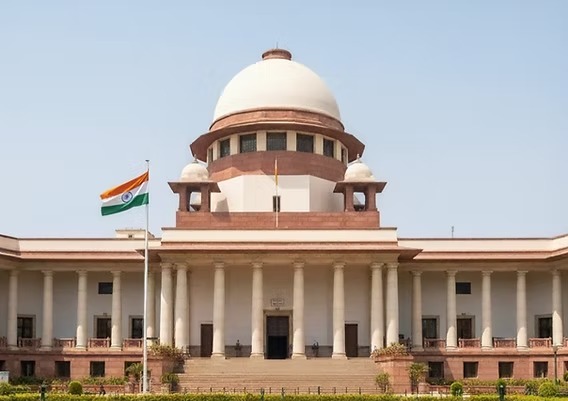
Supreme Court Bars Registrar General from Initiating Disciplinary Action Against Judges
Only Chief Justice or designated committee can authorize proceedings
Judgment strengthens constitutional safeguards under Article 235
By Legal Reporter
New Delhi: May 18, 2026:
The Supreme Court has ruled that a High Court Registrar General cannot suo motu initiate disciplinary proceedings against a judicial officer. Such action must be authorized by the Chief Justice or a committee of judges under Article 235 of the Constitution. This judgment reinforces judicial independence and clarifies the limits of administrative authority within High Courts.
For readers studying family settlement disputes, partition suits, coparcenary rights, and inheritance law in India, the Supreme Court judgment in S.R. Srinivasa and Others Vs S. Padmavathamma is an important legal authority. The Court examined the validity of family arrangements, oral partition claims, and evidentiary standards governing ancestral property disputes under Hindu law. This judgment provides valuable insight into how Indian courts interpret property settlements, succession rights, and long-standing possession in civil litigation.
Background
The Supreme Court recently addressed a case involving a Civil Judge in Uttarakhand who had been dismissed following departmental proceedings initiated by the High Court’s Registrar General. The allegations involved misconduct against a minor domestic worker. While the seriousness of the charges was acknowledged, the Court focused on the legality of the disciplinary process itself.
Constitutional Framework
- Article 235 of the Constitution of India:
Grants High Courts control over subordinate judiciary, including disciplinary authority.
The Supreme Court clarified that this control is collective, exercised by the Chief Justice and companion judges, not by individual officers like the Registrar General. - Jurisdictional Infirmity:
The Court held that proceedings initiated without approval of the Chief Justice or a duly constituted committee are void ab initio.
Court’s Observations
- Registrar General’s Role:
The Registrar General can act only on behalf of the Chief Justice, not independently. - Threshold Issue:
The Court did not examine the merits of the misconduct allegations but focused on whether the inquiry was lawfully initiated. - Reinstatement:
Since the disciplinary action was invalid, the Civil Judge was reinstated.
Implications
- Judicial Independence:
Prevents misuse of administrative powers against judicial officers. - Checks and Balances:
Ensures disciplinary proceedings are initiated only with judicial oversight. - Administrative Clarity:
Reinforces that Registrar Generals are facilitators, not autonomous authorities.
Comparative Note
This ruling aligns with earlier jurisprudence emphasizing judicial independence. By restricting administrative officers from initiating disciplinary action, the Court ensures that judges are accountable only through constitutionally sanctioned mechanisms.
FAQ: Key Legal Points
Q1. Who can initiate disciplinary proceedings against judicial officers?
Only the Chief Justice of the High Court or a committee of judges constituted by him.
Q2. Can the Registrar General act independently?
No. The Registrar General has no independent authority to initiate proceedings; he can only act on behalf of the Chief Justice.
Q3. What constitutional provision governs this?
Article 235 of the Constitution, which vests disciplinary control over subordinate judiciary in the High Court collectively.
Q4. What happens if proceedings are initiated without proper authority?
They are void ab initio (invalid from the outset).
Q5. Did the Supreme Court examine the misconduct allegations?
No. The Court focused only on the legality of the initiation process, not the merits of the allegations.
Q6. What was the outcome for the judicial officer?
She was reinstated, as the disciplinary proceedings suffered from a jurisdictional defect.
Q7. Why is this ruling significant?
It strengthens judicial independence and prevents arbitrary disciplinary action by administrative officers.
Q8. Does this affect future disciplinary cases?
Yes. All future proceedings must be authorized by the Chief Justice or a designated committee, ensuring compliance with Article 235.
In conclusion, the Supreme Court’s ruling underscores the constitutional principle that disciplinary control over judicial officers rests solely with the High Court’s judicial leadership. By barring Registrar Generals from acting independently, the judgment safeguards judicial independence and ensures due process in disciplinary matters.