
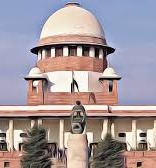
Supreme Court Bars Belated Objections in Decree Execution
Finality of Litigation Reaffirmed
Executing Courts Empowered Against Dilatory Tactics
By Legal Reporter
New Delhi: May 04, 2026:
The Supreme Court has ruled that execution of decrees cannot be obstructed by belated objections under Order XXI Rule 97 of the Code of Civil Procedure (CPC), reinforcing the principle that litigation must reach finality and cannot be endlessly stalled. This decision restores the authority of executing courts and curbs dilatory tactics.
Disputes involving community property, public rights, and religious or charitable interests often require courts to balance individual ownership claims with broader societal considerations. A key judicial reference in this area is Dr K S Palanisami (Dead) vs Hindu Community & Citizens of Gobichettipalayam community property rights judgment , where the court examined claims relating to property held for the benefit of the public and emphasized that such disputes must be resolved with due regard to legal principles, evidence, and the larger interest of the community. The ruling highlights the judiciary’s role in safeguarding both individual rights and collective interests in property matters.
Background of the Case
The dispute arose from a 2017 decree in favor of a creditor for recovery of dues from a loan taken for a family-run business. The judgment debtor defaulted, leading to execution proceedings against property jointly used by the family. Over nine years, multiple objections were raised and dismissed. At the brink of dispossession, the debtor’s mother filed a fresh objection under Order XXI Rule 97 CPC, claiming a one-third share in the property.
While the executing court and appellate court rejected this objection, the Bombay High Court allowed it. The decree-holder appealed to the Supreme Court, which set aside the High Court’s order.
Key Legal Principles Discussed
- Order XXI Rule 97 CPC
- This provision allows any person resisting or obstructing possession under a decree to raise objections.
- However, the Supreme Court clarified that objections must be timely and bona fide. Belated claims, especially when the objector had knowledge of proceedings, are impermissible.
- Doctrine of Finality of Litigation
- Courts emphasized that litigation cannot be perpetually stalled. Once a decree is passed and execution proceedings are underway, objections cannot be raised at the eleventh hour to derail enforcement.
- Role of Executing Courts
- Executing courts are not mere rubber stamps; they have authority to assess objections.
- The Supreme Court reinforced that executing courts’ decisions, when based on proper consideration, should not be lightly interfered with by appellate courts.
- Principle Against Abuse of Process
- The Court noted that raising objections after nine years, despite full knowledge of proceedings, was a deliberate attempt to stall recovery.
- Such conduct amounts to abuse of judicial process and undermines the rights of decree-holders.
Supreme Court’s Observations
- The mother of the debtor, having resided in the property and participated in the business, could not feign ignorance of the decree and execution.
- Allowing her objection would reward dilatory tactics and erode confidence in judicial enforcement.
- The Court ordered that the property be vacated and handed over to the decree-holder without further delay.
This ruling strengthens the enforceability of decrees and discourages frivolous objections that prolong litigation.
Citation: Challani Ginning and Pressing Factory v. Kamal, 2026
FAQ: Quick Legal Understanding
Q1. What is Order XXI Rule 97 CPC?
It allows any person resisting or obstructing possession under a decree to raise objections before the executing court.
Q2. Can objections be raised at any stage of execution?
No. The Supreme Court clarified that objections must be timely. Belated objections, especially when the objector had prior knowledge, are not permissible.
Q3. Why did the Supreme Court reject the mother’s claim?
Because she had lived in the property throughout, knew of the decree and execution proceedings, and raised her claim only when dispossession was imminent making it a deliberate delaying tactic.
Q4. What is the significance of this ruling?
It reinforces the finality of litigation and prevents decree-holders from being denied justice due to endless objections. It empowers executing courts to reject frivolous claims.
Q5. Does this mean third parties can never object?
No. Genuine third-party claims can be raised under Order XXI Rule 97 CPC, but they must be timely and supported by evidence. Courts will reject objections meant solely to delay execution.
Q6. What happens if the High Court interferes wrongly in execution matters?
As seen here, the Supreme Court can set aside such interference and restore the executing court’s order.
Conclusion
This judgment is a landmark reaffirmation of decree execution law. By curbing belated objections under Order XXI Rule 97 CPC, the Supreme Court has ensured that decree-holders are not trapped in endless litigation. It underscores the judiciary’s commitment to speedy enforcement of rights and discourages abuse of process.
The ruling will serve as a precedent for executing courts across India, strengthening their authority and ensuring that justice is not delayed by tactical objections.