
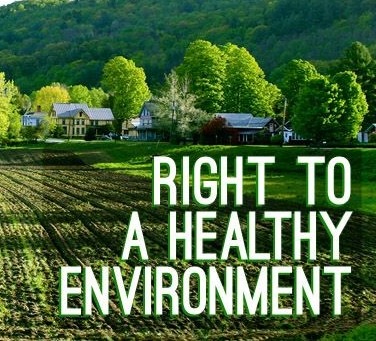
Right to Environment and Sustainable Development in India
From clean air to climate justice, courts are redefining environmental rights as fundamental to life.
How Articles 21, 48A, and 51A(g) shape India’s environmental jurisprudence, and what landmark cases reveal about sustainability in constitutional law.
By Vishwas Kumar
New Delhi: June 06, 2026:
Environmental protection has emerged as a constitutional imperative in India. While the Constitution does not explicitly mention a “right to environment,” the Supreme Court has interpreted Article 21 (Right to Life) to include the right to a clean and healthy environment. Directive Principles (Article 48A) and Fundamental Duties (Article 51A(g)) further emphasize the states and citizens’ responsibility to safeguard nature.
The principle of equality before law is a cornerstone of the Indian Constitution and serves as a safeguard against arbitrary state action. Through numerous landmark judgments, the Supreme Court has clarified the meaning of equality, equal protection of laws, reasonable classification, and the prohibition of discrimination. Readers interested in understanding how courts have interpreted these constitutional guarantees can explore this detailed guide on Article 14 of the Constitution of India, which examines the evolution of the right to equality through significant judicial precedents and constitutional developments.
Judicial activism has been central to this evolution. From river pollution to deforestation, courts have expanded environmental rights through Public Interest Litigations (PILs). Landmark cases like MC Mehta v. Union of India and Vellore Citizens Welfare Forum v. Union of India have established principles of sustainable development, polluter pays, and precautionary measures.
Globally, India’s environmental jurisprudence is studied for its proactive use of PILs and judicial creativity. As climate change intensifies, courts will increasingly face petitions on air quality, water scarcity, and ecological justice. This article explores constitutional foundations, landmark cases, judicial activism, global comparisons, citizen activism, and the future of environmental rights in India.
Landmark Environmental PILs.
1. MC Mehta v. Union of India (Oleum Gas Leak, 1986)
Triggered by a gas leak in Delhi, this case established absolute liability for hazardous industries. The Court ruled that enterprises engaged in dangerous activities must compensate victims, regardless of negligence. It expanded Article 21 to include environmental safety, setting a precedent for industrial accountability.
2. MC Mehta v. Union of India (Ganga Pollution, 1988)
This PIL targeted industries polluting the Ganga. The Court ordered closure of tanneries and mandated treatment plants. It affirmed that clean rivers are part of the right to life, linking ecology to dignity and health.
3. MC Mehta v. Union of India (Taj Trapezium, 1997)
Concerned about acid rain damaging the Taj Mahal, the Court ordered relocation of polluting industries and conversion to cleaner fuels. It applied the precautionary principle, protecting cultural heritage as part of environmental rights.
4. Vellore Citizens Welfare Forum v. Union of India (1996)
This case addressed pollution from tanneries in Tamil Nadu. The Court declared sustainable development a constitutional principle, balancing growth with ecology. It reinforced polluter pays and precautionary doctrines.
5. Subhash Kumar v. State of Bihar (1991)
A citizen petitioned against industrial pollution of rivers. The Court recognized clean water as part of Article 21, affirming that environmental quality is integral to life and dignity.
6. Indian Council for Enviro-Legal Action v. Union of India (1996)
This PIL challenged chemical industries causing ecological damage. The Court enforced the polluter pays principle, directing industries to compensate affected communities.
7. Rural Litigation and Entitlement Kendra v. State of UP (1985)
Villagers challenged limestone quarrying in Mussoorie hills. The Court banned quarrying, prioritizing ecology over commerce. It was India’s first environmental PIL, linking Article 21 to ecological balance.
8. T.N. Godavarman Thirumulpad v. Union of India (1997 onwards)
This continuing mandamus expanded forest protection nationwide. The Court interpreted “forest” broadly, halting deforestation and regulating timber industries. It remains a cornerstone of forest jurisprudence.
9. MC Mehta v. Union of India (Vehicular Pollution, 1998)
Concerned about Delhi’s air quality, the Court ordered conversion of buses to CNG. It recognized clean air as part of Article 21, reshaping urban transport policy.
10. MC Mehta v. Union of India (Delhi Industries Relocation, 1996)
This PIL addressed hazardous industries in residential areas. The Court ordered relocation, reinforcing that industrial growth cannot compromise public health.
11. MC Mehta v. Kamal Nath (1997)
A hotel diverted a river for commercial use. The Court applied the public trust doctrine, ruling that natural resources belong to the people and cannot be privatized.
12. Narmada Bachao Andolan v. Union of India (2000)
This case challenged the Sardar Sarovar Dam. The Court balanced development with rehabilitation, affirming that displacement must respect dignity and rights. It highlighted tensions between growth and ecology.
13. Centre for Environmental Law v. Union of India (2013)
This PIL sought protection of Asiatic lions. The Court directed relocation to new habitats, affirming that biodiversity protection is part of Article 21.
14. Lafarge Umiam Mining v. Union of India (2011)
This case involved mining in forest areas. The Court balanced economic needs with conservation, mandating strict clearances. It reinforced that development must respect ecological integrity.
Digital Environmental Monitoring and Constitutional Rights
Technology is transforming how environmental rights are enforced. Satellite imagery, AI‑driven pollution trackers, and real‑time air quality monitors are increasingly used in litigation. Courts may soon recognize digital environmental data as a constitutional tool, ensuring transparency and accountability. Citizens armed with mobile apps can document violations, making environmental justice more participatory. The future outlook suggests that constitutional rights will expand to include digital monitoring as a safeguard for ecological justice.
Climate Change and Sustainable Development
India’s constitutional framework will need to address climate change more explicitly. While principles like “polluter pays” and “precautionary principle” are well established, courts may face petitions demanding climate adaptation policies, renewable energy transitions, and carbon accountability. Judicial activism could push governments to integrate sustainability into every policy domain, from urban planning to agriculture. The challenge will be balancing economic growth with ecological survival, a tension that will define constitutional debates in the coming decades.
AI and Environmental Justice
Artificial intelligence is emerging as a powerful tool in environmental governance—predicting floods, modeling pollution, and optimizing resource use. Yet, AI also raises questions of equity and bias. If advanced technologies are accessible only to wealthy corporations or urban centers, rural and marginalized communities risk exclusion from environmental protections. Courts may soon face petitions arguing that AI‑driven environmental governance must be equitable, ensuring that technological innovation does not deepen ecological inequality.
Courts Addressing Petitions on Climate Refugees and Resource Access
As climate change intensifies, India may see rising numbers of climate refugees—communities displaced by floods, droughts, or rising seas. Courts will likely be asked to interpret Article 21 to include resettlement rights, livelihood protections, and ecological rehabilitation. Similarly, petitions on access to clean water, sustainable agriculture, and renewable energy will expand the scope of environmental rights. Judicial activism will be critical in ensuring that vulnerable populations are not left behind in the climate crisis.
India’s Potential to Lead Global Debates on Environmental Constitutionalism
India’s proactive use of PILs and judicial creativity has already made its environmental jurisprudence globally significant. The MC Mehta cases on pollution, Vellore Citizens Welfare Forum on sustainable development, and Ganga pollution PILs are studied worldwide. In the future, India could lead global debates on environmental constitutionalism, offering models for integrating ecological justice into fundamental rights. With its scale, diversity, and democratic framework, India is uniquely positioned to pioneer constitutional responses to climate change.
Towards a Green Constitution
The ultimate trajectory may be toward a Green Constitution, where environmental rights are explicitly enshrined alongside equality, liberty, and dignity. This could involve constitutional amendments recognizing the right to a stable climate, biodiversity protection, and intergenerational justice. Such a move would align India with global trends, where countries like South Africa and Ecuador have explicitly recognized environmental rights.
40 FAQs on Right to Environment
Basics
1. Is there a constitutional right to environment?
Yes, interpreted under Article 21 (Right to Life).
2. What does Article 48A say?
It directs the state to protect and improve the environment.
3. What does Article 51A(g) say?
It makes it a duty of citizens to protect nature.
4. Is environment explicitly a fundamental right?
Not textually, but judicially recognized under Article 21.
5. What is sustainable development?
Balancing economic growth with ecological protection.
Constitutional Dimensions
6. What is the polluter pays principle?
Polluters must bear the cost of environmental damage.
7. What is the precautionary principle?
Prevent harm even when scientific certainty is lacking.
8. Can courts stop industrial projects?
Yes, if they violate environmental rights.
9. Is clean air part of Article 21?
Yes, courts have explicitly recognized it.
10. Is clean water part of Article 21?
Yes, linked to dignity and health.
Landmark Cases
11. What was MC Mehta v. Union of India (Oleum Gas Leak, 1986)?
It expanded liability for hazardous industries.
12. What was MC Mehta v. Union of India (Ganga Pollution, 1988)?
It directed closure of polluting industries along the river.
13. What was Vellore Citizens Welfare Forum v. Union of India (1996)?
It established sustainable development as constitutional law.
14. What was Subhash Kumar v. State of Bihar (1991)?
It recognized clean water as part of Article 21.
15. What was Indian Council for Enviro-Legal Action v. Union of India (1996)?
It enforced polluter pays principle.
Citizens & Activism
16. Can NGOs file environmental PILs?
Yes, many landmark cases began as NGO petitions.
17. Do citizens campaign for environmental rights?
Yes, activism has driven constitutional change.
18. Was digital activism important in environment?
Yes, online campaigns amplify ecological justice.
19. Can villagers file PILs on pollution?
Yes, courts have entertained grassroots petitions.
20. Do courts recognize intergenerational equity?
Yes, protecting environment for future generations.
Global Comparisons
21. How does India compare to South Africa?
South Africa explicitly guarantees environmental rights.
22. How does India compare to Ecuador?
Ecuador recognizes rights of nature itself.
23. How does India compare to the US?
US relies on statutory protections, not constitutional rights.
24. Is India’s approach unique?
Yes, it judicially expanded Article 21 to include environment.
25. Is India studied globally?
Yes, for its proactive environmental PILs.
Challenges
26. Are enforcement gaps a problem?
Yes, rulings often face delays in implementation.
27. Do courts risk overreach?
Critics argue they sometimes encroach on policy domains.
28. Can environment rights slow development?
They can, but ensure sustainability.
29. Is climate change a challenge in India?
Yes, it intensifies environmental litigation.
30. Is balancing growth and ecology difficult?
Yes, courts often navigate this tension.
Future Outlook
31. Will climate refugees raise constitutional issues?
Yes, courts may interpret Article 21 to include resettlement.
32. Is digital monitoring part of environment rights?
Increasingly, yes, through apps and satellite data.
33. Will AI reshape environmental governance?
Yes, raising equity and bias concerns.
34. Can renewable energy be litigated?
Yes, as part of sustainable development.
35. Will India lead global debates on environment?
Likely, given its proactive judiciary.
Miscellaneous
36. Can courts mandate forest protection?
Yes, through PILs.
37. Is biodiversity part of Article 21?
Yes, linked to ecological balance.
38. Can wildlife protection be constitutional?
Yes, under Article 21 and 48A.
39. Is urban pollution a constitutional issue?
Yes, linked to health and dignity.
40. Why is environment vital for democracy?
Because without it, life and rights cannot flourish.