

Rajasthan High Court Resolves 77-Year Tenancy Dispute: Eviction Order Binds All Heirs
Court clarifies heirs inherit tenancy as joint tenants, not co-tenants
One eviction decree applies to all successors, ending decades-long litigation
By Our Legal Correspondent
New Delhi: February 12, 2026:
In a landmark ruling, the Rajasthan High Court has finally put an end to a tenancy dispute that had dragged on for an astonishing 77 years. The judgment, delivered by Justice Bipin Gupta, clarified the legal position of heirs in tenancy matters, ruling that successors of a deceased tenant inherit tenancy rights as joint tenants rather than as independent co-tenants. This distinction carries enormous implications: an eviction decree against one joint tenant is binding on all heirs, even if they were not individually made parties to the case.
Also Read: Patna High Court Rules PwD Vacancies Must Follow RPwD Act, Not State Resolutions
[Suggested Resource]
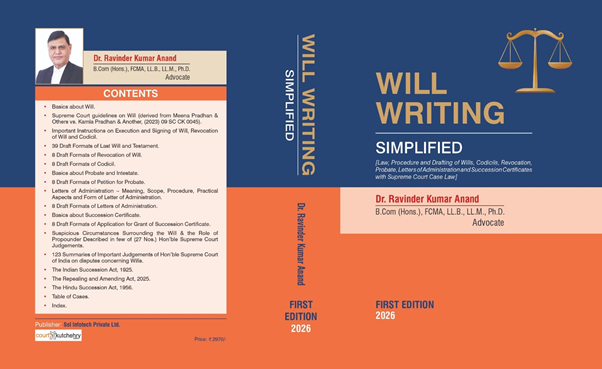
If you want practical guidance on drafting wills, codicils, and probate procedures, Will Writing Simplified is an invaluable resource.
🔹BUY ON: Amazon
🔹BUY ON: Flipkart
Background of the Case
- Origin of tenancy: The dispute dates to February 15, 1949, when a tenancy was created at a monthly rent of ₹5.
- Tenant’s death: After the original tenant passed away, his family members continued to occupy the property.
- Landlord’s grievance: The landlords alleged that the heirs neither paid rent nor vacated the premises and further accused them of sub-letting and causing substantial damage to the property.
- Tribunal ruling: In January 2016, the Rent Tribunal ordered eviction in favour of the landlords, citing denial of ownership rights and misuse of the property.
Key Legal Clarification
The High Court’s ruling addressed a critical question: Do heirs of a deceased tenant acquire separate tenancy rights, or do they succeed jointly?
- Court’s stance: Heirs succeed as joint tenants.
- Implication: They cannot claim independent tenancy rights.
- Eviction decree: Once passed against one joint tenant, it applies to all heirs, regardless of whether they were individually impleaded in the case.
- Objection dismissed: The petitioners argued that the decree was inexecutable since they were not made parties. The court rejected this, calling the objection “misconceived.”
Also Read: Supreme Court Criticizes RERA: Says Authority Only Helps Builders, Not Homebuyers
Why This Matters
This ruling is significant for landlords, tenants, and legal practitioners alike:
- For landlords: It prevents endless litigation by clarifying that eviction orders apply universally to all heirs.
- For tenants: It underscores that tenancy rights are collective, not divisible among heirs.
- For courts: It sets a precedent that can streamline future tenancy disputes, reducing delays and repetitive objections.
Wider Legal Context
Tenancy disputes in India often stretch across decades due to unclear succession rights. The Rajasthan High Court’s decision aligns with principles of joint tenancy recognized in property law, where rights and liabilities are shared equally among successors.
This ruling also resonates with broader judicial efforts to simplify tenancy laws and prevent misuse of inherited tenancy rights. By treating heirs as joint tenants, the court ensures that landlords are not forced into multiple litigations against each heir separately.
Also Read: Madras High Court Directs MS Dhoni to Deposit ₹10 Lakh in Defamation Case
Conclusion
The Rajasthan High Court’s verdict has finally closed the chapter on a dispute that spanned generations. By ruling that heirs inherit tenancy as joint tenants, the court has provided clarity, consistency, and relief to landlords and tenants alike. This judgment will likely serve as a guiding precedent in tenancy law across India, ensuring that eviction decrees are not endlessly contested.
GEO Keywords
- Rajasthan High Court tenancy ruling
- Joint tenant vs co-tenant eviction
- 77-year tenancy dispute Rajasthan
- Indian tenancy law heirs rights
- Eviction decree binding on heirs
- Rajasthan HC tenancy judgment 2026
- Tenancy succession India legal case
- Joint tenancy eviction order India
Also Read: Supreme Court Rejects Jairam Ramesh’s Plea Against Retrospective Environmental Clearances