

Punjab & Haryana HC Upholds Validity of Ballistic Evidence
Different Seals on Bullets Not Enough to Discredit FSL Report
Court Reinforces Reliability of Forensic Science in Criminal Trials
By Our Legal Correspondent
New Delhi: March 10, 2026:
Also Read: Bombay High Court Orders Transparency in Mundkar Cases
In a significant ruling, the Punjab and Haryana High Court clarified that forensic ballistic evidence, once admitted during trial, cannot be invalidated years later simply because the bullets examined bore different seals. The Court stressed that forensic science plays a crucial role in criminal justice and its credibility cannot be undermined by minor procedural discrepancies.
Justice Deepak Sibal observed that the FSL report had been duly considered during trial and attempts to challenge it after years amounted to an abuse of process. The Court’s decision strengthens the reliability of forensic evidence in criminal proceedings.
[Recommended Resource for Legal Readers]
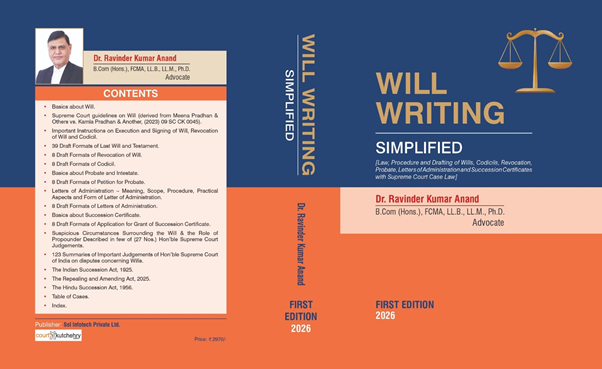
Legal professionals, families and students alike will benefit from Will Writing Simplified, which covers procedure and case law in detail. It is available on Amazon. 📘 Buy Will Writing Simplified online: 🔹 Flipkart.
Also Read: Bombay High Court Clarifies Jurisdiction in Debt Recovery Case
Background of the Case
- Incident: The case involved firearm use where bullets were recovered and sent for forensic examination.
- FSL Report: Confirmed ballistic matching between the weapon and bullets.
- Challenge: Years after trial, the defence argued that the bullets bore different seals, questioning the authenticity of the report.
- Court’s Decision: Rejected the challenge, holding that forensic evidence cannot be discredited on such grounds after trial conclusion.
The Court emphasized that forensic reports are prepared by experts and carry evidentiary value unless proven otherwise through cross-examination during trial.
Also Read: ITAT: Technical Errors Cannot Block Trust Registration
Court’s Observations
- Reliability of FSL Reports: Forensic experts are independent and their reports cannot be casually discarded.
- Procedural Discrepancies: Minor differences in seals or markings do not invalidate scientific findings.
- Judicial Principle: Evidence admitted and relied upon during trial cannot be reopened years later without strong grounds.
- Role of Forensics: Scientific evidence ensures objectivity in criminal justice and must be respected.
Impact of the Judgment
- For Criminal Trials: Reinforces the importance of forensic evidence in securing convictions.
- For Defence Strategy: Limits attempt to discredit forensic reports on technical grounds after trial.
- For Legal Practice: Strengthens jurisprudence on the admissibility and reliability of forensic science.
This ruling will have wide implications in criminal law, ensuring that scientific evidence remains a cornerstone of justice and cannot be undermined by procedural nitpicking.
Also Read: ITAT: Conversion of Company into LLP Means Dissolution
Conclusion
The Punjab and Haryana High Court’s ruling underscores the principle that forensic evidence cannot be casually discredited years after trial. By upholding the validity of ballistic reports despite minor seal discrepancies, the Court has reinforced the reliability of forensic science and ensured that justice is not derailed by technical objections. This judgment will serve as a precedent for future cases, strengthening the role of scientific evidence in India’s criminal justice system.
Suggested Keywords for SEO & Faster Searches
- Punjab Haryana High Court ballistic evidence case
- FSL report validity criminal trial India
- Different seals on bullets forensic ruling
- Punjab Haryana HC forensic science judgment
- Ballistic evidence admissibility India
- Criminal trial forensic report challenge
- Forensic science reliability High Court ruling
- Will Writing Simplified legal drafting book
Also Read: Gujarat High Court Declares Fraudulent Mutation Entry Void