
Taxation Framework for Corporates in India: Navigating Direct and Indirect Taxes
Understanding corporate income tax and compliance obligations
GST, transfer pricing, and global investor considerations
By Vishwas Kumar
New Delhi: June 08, 2026:
Taxation is one of the most critical aspects of doing business in India. For corporates, navigating India’s tax framework involves understanding both direct taxes—such as corporate income tax—and indirect taxes, most notably the Goods and Services Tax (GST). With India’s growing integration into global markets, tax compliance has become a key determinant of investor confidence, corporate governance, and long-term sustainability.
For readers researching succession and inheritance disputes, our detailed guide on Supreme Court judgments on Wills explains important legal principles on validity of wills, suspicious circumstances, probate, testamentary succession, and landmark decisions of the Supreme Court of India.
The Importance of Taxation in Business Strategy
Taxes are not merely a statutory obligation; they shape business decisions, investment strategies, and even corporate structures. For multinational corporations, India’s tax regime is often a deciding factor in whether to expand operations, set up subsidiaries, or enter into cross-border mergers. Investors view tax compliance as a proxy for transparency and risk management. A company that consistently meets its tax obligations signals reliability, while lapses can erode trust and trigger regulatory scrutiny.
Evolution of India’s Tax Framework
India’s taxation system has undergone significant transformation over the past three decades:
Pre-1991: Corporate tax rates were extremely high, discouraging foreign investment and limiting competitiveness.
Post-Liberalization (1991): Economic reforms reduced tax rates and introduced incentives to attract capital.
2000s: The government introduced Minimum Alternate Tax (MAT) to ensure companies with exemptions still paid a minimum tax, and transfer pricing regulations to monitor cross-border related-party transactions.
2017: The landmark introduction of GST unified indirect taxes, replacing excise duty, service tax, and VAT, creating a single national market.
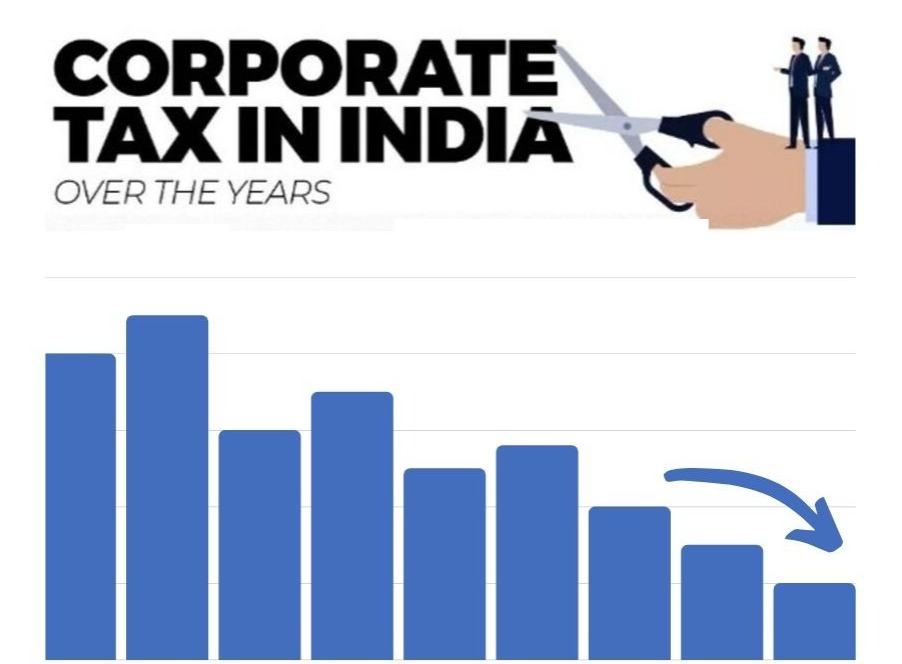
2019–2020: Corporate tax rates were slashed to make India globally competitive, with concessional rates for manufacturing companies.
This evolution reflects India’s balancing act: encouraging investment while safeguarding revenue.
Direct Taxes – Corporate Income Tax
Corporate income tax remains the backbone of India’s direct tax regime. Domestic companies are taxed at 22% under the simplified regime, while new manufacturing companies enjoy a concessional rate of 15%. Foreign companies, however, face a higher rate of 40%, plus surcharge and cess.
The abolition of Dividend Distribution Tax (DDT) in 2020 marked a significant reform, shifting the tax burden from companies to shareholders. This change aligned India with global practices and made dividend taxation more transparent.
Indirect Taxes – GST and Its Impact
The introduction of GST in 2017 was a watershed moment. By replacing multiple indirect taxes with a unified system, GST simplified compliance and created a seamless national market. Businesses now deal with four primary GST slabs—5%, 12%, 18%, and 28%—depending on the nature of goods or services.
While the rollout faced initial challenges, including IT glitches and compliance burdens for small businesses, GST has since stabilized. Digital tools like e-invoicing and e-way bills have enhanced transparency and reduced tax evasion. For corporates, GST compliance is now a central part of operational strategy.
Transfer Pricing and International Taxation
With India’s increasing integration into global supply chains, transfer pricing has become a critical area of compliance. The arm’s length principle requires related-party transactions across borders to be priced as if they were between independent entities. Documentation, comparables, and audits are mandatory, ensuring that profits are not artificially shifted to low-tax jurisdictions.
India’s commitment to international tax standards is evident in its adoption of OECD’s BEPS (Base Erosion and Profit Shifting) norms. Double Taxation Avoidance Agreements (DTAAs) with over 90 countries further protect investors from being taxed twice on the same income.
Compliance Obligations
Corporate tax compliance in India involves multiple layers:
Income Tax Filings: Annual returns with audited financials.
GST Filings: Monthly or quarterly returns, reconciliation, and payment of dues.
Transfer Pricing Reports: Mandatory for cross-border related transactions.
Tax Audits: Required for companies exceeding specified turnover thresholds.
Failure to comply can result in penalties, interest, and even criminal liability in cases of fraud.
Case Studies and Lessons
Several landmark cases illustrate the importance of tax compliance:
Vodafone Tax Dispute: A landmark case on indirect transfer of shares, which led to debates on retrospective taxation and eventually reforms to prevent investor uncertainty.
Infosys Transfer Pricing Case: Highlighted the importance of documentation and adherence to arm’s length principles.
GST Rollout Challenges: Initial compliance difficulties underscored the need for digital readiness and professional advisory support.
These cases show that proactive compliance and clear documentation are essential to avoid disputes.
Investor Confidence and Global Integration
For global investors, India’s taxation framework is both a challenge and an opportunity. On one hand, compliance obligations are complex; on the other, reforms have made India more competitive. Reduced corporate tax rates, GST simplification, and alignment with OECD norms signal India’s commitment to transparency and global integration.
Taxation is also increasingly linked to ESG (Environmental, Social, and Governance) considerations. Incentives for sustainable practices, green investments, and renewable energy projects reflect India’s effort to align taxation with broader development goals.
The Future of Corporate Taxation in India
Looking ahead, India’s tax framework is expected to evolve further:
Digital Taxation: Greater reliance on e-filing, AI-driven compliance monitoring, and blockchain-based reporting.
GST Rationalization: Simplification of rates to reduce complexity.
Global Harmonization: Closer alignment with OECD and WTO tax standards.
ESG Integration: Tax incentives tied to sustainability and climate goals.
Conclusion
Taxation in India has transformed from a deterrent to an enabler of investment. For corporates, mastering both direct and indirect taxes is essential not only for compliance but also for building investor confidence. The evolution of corporate tax rates, the introduction of GST, and alignment with global norms reflect India’s commitment to transparency and competitiveness.
For global investors, India’s tax framework is more than a set of rules—it is a roadmap to sustainable growth. By embracing compliance, companies can unlock opportunities in one of the world’s fastest-growing economies while contributing to its journey toward fairness, accountability, and global integration.
Evolution of Corporate Taxation in India
Pre-1991: High corporate tax rates discouraged foreign investment.
Post-Liberalization (1991): Gradual reduction in tax rates to attract capital.
2000s: Introduction of Minimum Alternate Tax (MAT) and transfer pricing regulations.
2017: Implementation of GST, replacing multiple indirect taxes with a unified system.
2019–2020: Corporate tax rate reductions to make India globally competitive.
Direct Taxes – Corporate Income Tax
1. Tax Rates
Domestic companies: 22% (with no exemptions) under new regime.
Manufacturing companies: 15% under concessional regime.
Foreign companies: 40% (plus surcharge and cess).
2. Minimum Alternate Tax (MAT)
Applies to companies with low taxable income due to exemptions.
Current MAT rate: 15%.
3. Dividend Distribution Tax (DDT)
Abolished in 2020; dividends now taxed in the hands of shareholders.
Indirect Taxes – Goods and Services Tax (GST)
Introduced in 2017, replacing excise, service tax, and VAT.
Unified tax structure across states.
GST rates: 5%, 12%, 18%, and 28% depending on goods/services.
Compliance requires monthly filings and e-invoicing for large companies.
Transfer Pricing and International Taxation
Applicable to transactions between related parties across borders.
Arm’s length principle ensures fair pricing.
Documentation and reporting mandatory.
India has signed Double Taxation Avoidance Agreements (DTAA) with over 90 countries.
Compliance Obligations
Income Tax Filings: Annual returns with audited financials.
GST Filings: Monthly/quarterly returns, e-way bills, and reconciliation.
Transfer Pricing Reports: Mandatory for cross-border related transactions.
Tax Audits: Required for companies above specified turnover thresholds.
Case Studies
1. Infosys Transfer Pricing Case
Infosys faced scrutiny over cross-border transactions, highlighting the importance of documentation.
2. Vodafone Tax Dispute
Vodafone’s acquisition of Hutchison led to a landmark case on indirect transfer of shares, shaping India’s tax jurisprudence.
3. GST Implementation Challenges
Companies initially struggled with compliance, but digital platforms streamlined processes over time.
Future Outlook
Digital Taxation: Greater reliance on e-filing and AI-driven compliance monitoring.
Global Alignment: Adoption of OECD’s BEPS (Base Erosion and Profit Shifting) norms.
Simplification: Expected rationalization of GST rates.
ESG Linkages: Tax incentives for sustainable practices.
40 FAQs on Corporate Taxation in India
General Framework
What is corporate income tax? It is a direct tax levied on the profits earned by companies in India.
How are tax rates determined? Rates are prescribed by the Income Tax Act and vary for domestic and foreign companies.
What is MAT? Minimum Alternate Tax ensures companies with exemptions still pay a minimum tax, currently 15%.
What is cess and surcharge? Additional levies on corporate tax to fund specific needs like health and education.
How are foreign companies taxed? Foreign companies are taxed at 40% plus applicable surcharge and cess on income earned in India.
GST
What is GST? Goods and Services Tax is a unified indirect tax replacing excise, VAT, and service tax.
When was GST introduced? GST was implemented in India on July 1, 2017.
What are GST rates? Rates are 5%, 12%, 18%, and 28%, depending on goods or services.
Who must register for GST? Businesses with turnover above prescribed thresholds or engaged in interstate supply.
What is e-invoicing? A system where invoices are electronically authenticated by GSTN for compliance and transparency.
Transfer Pricing
What is transfer pricing? Rules governing pricing of transactions between related parties across borders.
What is the arm’s length principle? It requires related party transactions to be priced as if they were between independent entities.
Who must comply with transfer pricing rules? Companies engaged in international transactions with associated enterprises.
What documentation is required? Detailed reports on pricing, comparables, and justification of arm’s length compliance.
What is a transfer pricing audit? An examination by tax authorities to verify compliance with transfer pricing rules.
Compliance
What are corporate tax filing requirements? Companies must file annual income tax returns with audited financials.
What is a tax audit? Mandatory audit of accounts for companies exceeding specified turnover thresholds.
What are GST filing obligations? Monthly or quarterly returns, reconciliation, and payment of GST dues.
What is an e-way bill? An electronic document required for movement of goods above a certain value.
What is DTAA? Double Taxation Avoidance Agreement prevents the same income from being taxed twice.
Investor Concerns
How does India protect investors from double taxation? Through DTAAs with over 90 countries, offering relief via exemptions or credits.
What are common tax risks? Transfer pricing disputes, GST compliance errors, and retrospective tax claims.
How are disputes resolved? Through tribunals like ITAT, courts, or alternative dispute resolution mechanisms.
What is the role of the Income Tax Appellate Tribunal (ITAT)? It hears appeals against orders of tax authorities and provides judicial resolution.
How does India align with OECD norms? By adopting BEPS recommendations and global transfer pricing standards.
Case Studies
What was the Vodafone tax dispute? A landmark case on indirect transfer of shares, leading to retrospective tax debates.
How did Infosys handle transfer pricing? Infosys faced scrutiny but complied with documentation and arm’s length principles.
What challenges arose during GST rollout? Initial compliance difficulties, IT system glitches, and adaptation by small businesses.
How do startups manage tax compliance? By using simplified regimes, digital tools, and professional advisory support.
What lessons come from tax disputes? Clear documentation, proactive compliance, and awareness of evolving laws are essential.
Enforcement & Penalties
What are penalties for non-compliance? Fines, interest on unpaid taxes, and prosecution in severe cases.
Can companies face criminal liability? Yes, for willful tax evasion or fraud.
What is compounding of offenses? A mechanism allowing companies to settle tax violations by paying penalties.
How does the tax department enforce compliance? Through audits, notices, and digital monitoring systems.
How are violations reported? By tax authorities, auditors, or whistleblowers, leading to investigations.
Global Investor Concerns
How does India align with BEPS? India implements OECD’s BEPS measures to curb tax avoidance and profit shifting.
Can foreign companies repatriate profits freely? Yes, subject to tax compliance and FEMA regulations.
How does India tax cross-border mergers? Taxed under specific provisions of the Income Tax Act and FEMA guidelines.
What reforms are expected in tax policy? Simplification of GST, rationalization of corporate tax rates, and digital compliance.
How does ESG link to taxation? Tax incentives are increasingly tied to sustainable practices and green investments.
Conclusion
India’s corporate taxation framework is complex but increasingly aligned with global standards. With reduced tax rates, GST simplification, and international tax treaties, India is positioning itself as a competitive destination for global capital. For investors, mastering compliance is essential to unlocking opportunities while minimizing risks.