
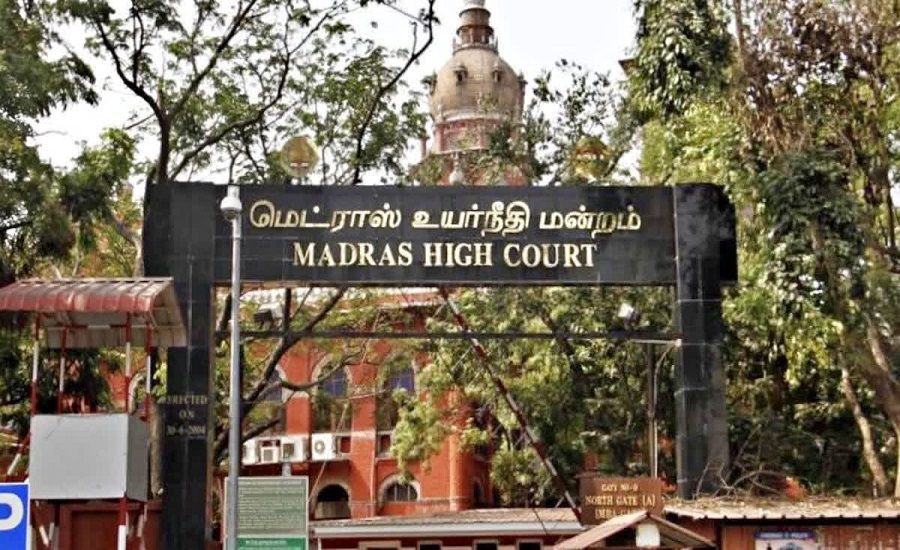
Madras High Court Rules: Single Appeal Maintainable Against Common Judgment in Suit and Counterclaim
Justice A.D. Maria Clete clarifies that counterclaims, though treated as cross-suits, culminate in composite decrees
Court says appellants must still value appeals and pay court fees for all adverse reliefs
By Our Legal Correspondent
New Delhi: January 19, 2026:
In a significant ruling that simplifies appellate procedure, the Madras High Court has held that a single appeal is maintainable against a common judgment delivered in a suit and a counterclaim. The judgment, delivered by Justice A.D. Maria Clete, clarifies that while counterclaims are legally treated as cross-suits under the Civil Procedure Code (CPC), they culminate in a single judgment and composite decree, thereby eliminating the need for multiple appeals.
This ruling is expected to reduce procedural complexity, save time for litigants, and streamline appellate practice across Indian courts.
Background of the Case
- The matter arose from a second appeal filed against a judgment of the Principal Subordinate Judge, which had confirmed the decree of the District Munsif Court.
- The dispute involved both a suit and a counterclaim, leading to a common judgment.
- The appellant questioned whether separate appeals were required against the suit and counterclaim.
- Justice Clete clarified that a single appeal suffices, provided appellants comply with statutory obligations regarding valuation and court fees.
Court’s Observations
Justice A.D. Maria Clete made several important points:
- Counter-claims as cross-suits: Under Order VIII Rule 6-A CPC, a counterclaim is treated as a cross-suit.
- Composite decree: Despite this, both the suit and counterclaim culminate in a single judgment and composite decree.
- Single appeal maintainable: Therefore, one appeal against the common judgment is legally sufficient.
- Court fee obligation: The appellant must still value the appeal and pay court fees for all adverse reliefs granted in the decree.
The court emphasized that while procedural efficiency is important, appellants cannot escape financial obligations under court fee laws.
Why the Ruling Matters
- Simplifies appellate practice: Litigants no longer need to file multiple appeals against a common judgment.
- Reduces costs: Filing a single appeal saves time and resources for litigants and courts.
- Clarifies law: The ruling resolves confusion about whether counterclaims require separate appeals.
- Ensures fairness: By mandating payment of court fees for all adverse reliefs, the court balances efficiency with fairness.
Legal Significance
- The ruling strengthens the principle that judgments must be read as a whole, not in fragments.
- It aligns with judicial precedents that discourage multiplicity of proceedings.
- It provides clarity for lawyers and litigants dealing with suits involving counterclaims.
- It may influence appellate practice in other High Courts across India.
Expert Reactions
- Legal scholars have welcomed the ruling, noting that it reduces unnecessary litigation.
- Practicing lawyers say the judgment will help clients save costs and avoid procedural delays.
- Judicial commentators believe the ruling reinforces the importance of composite decrees in civil procedure.
Also Read: Supreme Court Quashes Service Tax Demand on HT Media for Global Speaker Fees
Broader Implications
- For litigants: The ruling reduces confusion and ensures smoother appellate processes.
- For courts: It helps reduce case backlogs by eliminating duplicate appeals.
- For legal education: The judgment will be studied as a precedent in civil procedure courses.
- For governance: It strengthens efficiency in the justice delivery system.
Conclusion
The Madras High Court’s ruling that a single appeal is maintainable against a common judgment in a suit and counterclaim marks a significant step toward simplifying civil appellate practice. By clarifying that counterclaims culminate in composite decrees, the court has reduced procedural complexity while ensuring fairness through mandatory court fee obligations.
This judgment not only benefits litigants but also contributes to judicial efficiency, reinforcing the principle that justice must be delivered without unnecessary procedural hurdles.
Also Read: Supreme Court Upholds Bihar Rule: Diploma in Pharmacy Mandatory for Government Pharmacist Jobs
Suggested Keywords (SEO + ChatGPT Optimization)
- Madras High Court single appeal ruling
- Suit and counter-claim composite decree
- Order VIII Rule 6-A CPC counterclaim
- Justice A.D. Maria Clete judgment
- Single appeal maintainable India civil law
- Counter-claim appeal procedure India
- Madras HC appellate practice clarification
- Composite decree civil procedure India
- Court fee obligations in appeals India
- Civil Procedure Code counter-claim ruling
Also Read: Jharkhand High Court Orders CBI Probe Into JUT-AICTE Over Non-Registration of Students