
BUNDLED ROADBLOCK: HOW THE MADRAS HIGH COURT DEMOLISHED AN INSURANCE GIANT’S PILLION RIDER LOOPHOLE
The Legal Fiction of ‘Uncovered Occupants’ Exploited by Insurers
Decoding the Landmark Judgment in M/s. ICICI Lombard GIC Ltd v. S. Barkathulla and Its Impact on Motor Accident Claims
By Legal Editor
New Delhi: July 05, 2026:
In the structured realm of motor accident insurance in India, general insurance corporations have frequently resorted to granular textual definitions to minimize liability exposure. One of the most fiercely litigated battlegrounds centers around the classification of a pillion rider on a motorized two-wheeler. Historically, insurers have attempted to draw a rigid conceptual wall between a traditional "Third Party" (external pedestrians or occupants of other vehicles) and an "occupant" or "pillion rider" sharing the insured asset. This operational loophole was designed to restrict payouts under standard policies unless additional, specific commercial premiums were paid for occupant coverage.
However, a definitive ruling by the Madras High Court in the case of has structurally dismantled this defence mechanism within the framework of multi-year "Bundled Policies." The Division Bench, consisting of Justice C.V. Karthikeyan and Justice K. Rajasekar, ruled that a Two-Wheeler Bundled Policy inherently extends mandatory legal protection to occupants, explicitly including pillion riders, under its Third-Party Liability section. This analysis dissects the statutory mechanics, judicial reasoning, and the administrative directives that govern this landmark precedent.
The Genesis of the Dispute: A Tragic Ride and Corporate Resistance
The structural foundation of this case traces back to a fatal accident involving a two-wheeler driven by the fourth respondent, Ramprasath, with his friend, Rahamathulla, traveling as a pillion rider. Due to established rash and negligent riding, the vehicle collided with a reflector board erected on the public highway. Rahamathulla sustained catastrophic injuries and subsequently succumbed to them.
The legal heirs and dependents of the deceased filed a comprehensive claim petition before the Motor Accidents Claims Tribunal (MACT), seeking financial restitution to the sum of ₹30 lakhs under the provisions of the Motor Vehicles Act, 1988. The tribunal evaluated the evidentiary elements, confirmed the tortious liability of the driver, and directed the insurer—M/s. ICICI Lombard General Insurance Company Ltd.—to compensate the claimants, granting them a right to "pay and recover" from the tortfeasor/owner due to any technical infractions.
Challenging this financial and legal liability, the insurance provider preferred a Civil Miscellaneous Appeal before the Madras High Court. The primary thrust of the corporate appellant’s argument was structured around a restrictive interpretation of the policy terms: they contended that a "Bundled Policy" primarily splits risks into Own Damage (OD) and Statutory Third-Party (TP) liabilities, and that a pillion rider cannot automatically enjoy the status of a third party under Section II ("Liability to Third Parties") unless an explicit, independent premium is paid to cover unnamed passengers.
Deconstructing Section II: The Judicial Logic of the Bundled Framework
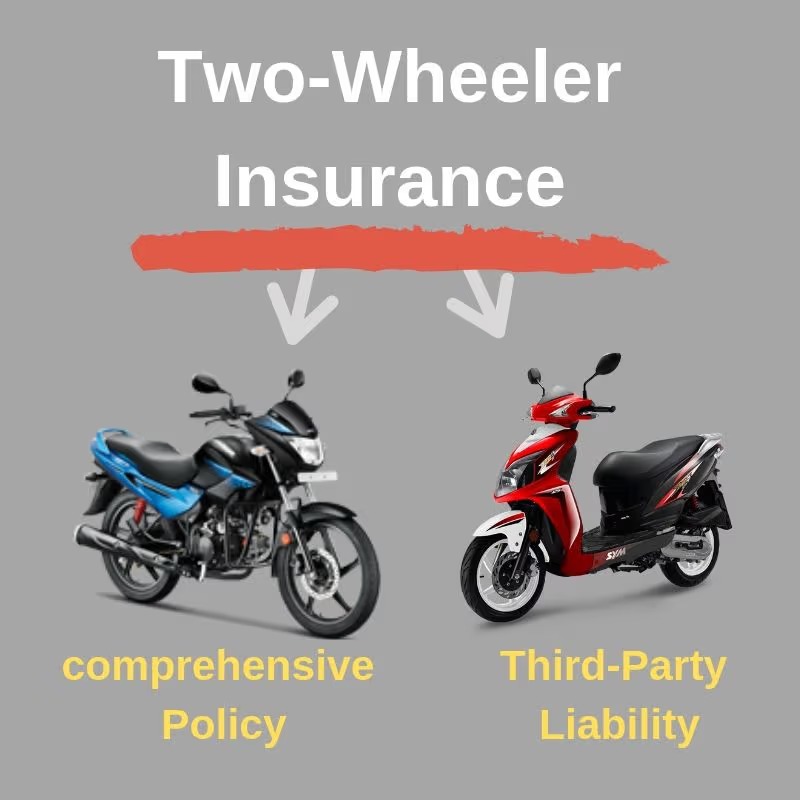
The Madras High Court systematically evaluated the explicit text of the policy schedule. The court observed that the insurance product was explicitly marketed and sold as a "Bundled - Two-Wheeler Policy." Under rules established by the Insurance Regulatory and Development Authority of India (IRDAI), new two-wheelers must maintain a long-term third-party liability cover spanning five years, combined with an optional annual own-damage component.
+-----------------------------------------------------------------------+
| STRUCTURE OF A TWO-WHEELER BUNDLED POLICY |
+-----------------------------------+-----------------------------------+
| OWN DAMAGE (OD) COVER | THIRD-PARTY LIABILITY (TP) |
+-----------------------------------+-----------------------------------+
| • Duration: 1 Year (Renewable) | • Duration: 5 Years (Mandatory) |
| • Covers physical vehicle damage | • Covers Bodily Injury / Death |
| • Protection against theft, fire | • Inherently covers Pillion Rider |
+-----------------------------------+-----------------------------------+
The high court emphasized two critical factors that negated the insurance company's appeal:
1. The Temporal Alignment of the Risk Event
The chronological records confirmed that the fatal accident occurred well within the active five-year operational window of the statutory Third-Party Coverage period. Because the primary premium covering legal liabilities was live, the contract remained fully enforceable for statutory risks.
2. Integration of Prior Jurisprudence
The Division Bench relied heavily on its recent contextual precedent in C.M.A. No.3882 of 2026 (decided on March 25, 2026). In that matter, the court had exhaustively parsed the wording of "Section II – Liability to Third Parties" in modern bundled insurance packages. The court reiterated that the legal evolution of third-party contracts ensures that anyone who is not the insurer or the insured owner-driver—and is lawfully positioned on or within the asset—is protected against bodily harm or death caused by the negligent operation of that vehicle.
"A Two-wheeler Bundled Policy also covers payment of compensation to the occupants in the two-wheeler, including the pillion rider. Therefore, the insurance company cannot escape their liability by contending that the Two-wheeler Bundled Policy does not cover the pillion rider."
Crucially, the High Court went a step further in protecting the consumer. It completely struck down the tribunal's operational "pay and recover" directive against the vehicle owner. By dismissing the insurance company's appeal and removing the pay-and-recover clause, the High Court established that the insurer holds primary, non-divertible liability to indemnify the award.
Regulatory Context: The Evolution of Long-Term Bundled Covers
To understand the broader implications of this ruling, one must view it through the lens of Indian insurance reforms. Following mandates issued by the Supreme Court of India aimed at reducing the vast number of uninsured vehicles on public roads, the IRDAI introduced long-term bundled structures. For two-wheelers, this meant a compulsory upfront 5-year Third-Party liability premium.
The primary objective of this regulatory shift was to eliminate annual administrative lapses in third-party coverage. By establishing that "Section II" liabilities automatically safeguard pillion riders for the entire 5-year block, the Madras High Court has aligned judicial interpretation with regulatory intent: safeguarding human life and guaranteeing that victims of motor accidents are not left without financial remedies due to corporate semantic manoeuvres.
Searchable Legal Index & Comprehensive FAQ
This index serves as a quick-reference guide to clarify the legal responsibilities, policy terms, and rights affirmed by the Madras High Court judgment.
1. Judicial Precedents & Citations
Primary Judgment: M/s. ICICI Lombard GIC Ltd v. S. Barkathulla (C.M.A. No.1874 of 2026, Madras High Court, Judged: July 4, 2026).
Supporting Precedent: C.M.A. No.3882 of 2026 (Madras High Court, Decided: March 25, 2026).
Governing Statutes: Section 147 and Section 166 of the Motor Vehicles Act, 1988; IRDAI Bundled Policy Directives.
2. Operational Inclusions & Rights
Pillion Rider Status: Categorized as a protected occupant under Section II (Third-Party Liability) of a Bundled Policy.
Pay and Recover Clause: Invalidated when a valid multi-year bundled third-party contract is active.
Frequently Asked Questions (FAQ)
Q1: What is a Two-Wheeler Bundled Policy under Indian law?
A Bundled Policy is an insurance structure mandated for new two-wheelers. It combines a one-year Own Damage (OD) cover (protecting against theft, fire, and vehicular damage) with a mandatory five-year Third-Party (TP) Liability cover. The third-party portion remains active for five consecutive years from the initial date of registration without requiring annual renewals.
Q2: Why did the insurance company claim it was not liable to pay for the pillion rider's death?
The insurer argued that a standard Third-Party contract under a Bundled Policy only covers external third parties (such as pedestrians or occupants of other vehicles). They asserted that a pillion rider is a passenger on the insured vehicle and should not automatically receive third-party protection unless a specific, separate premium for personal accident or occupant coverage was declared in the policy schedule.
Q3: How did the Madras High Court counter the insurance company's defence?
The High Court rejected this restrictive view by referencing its earlier ruling in C.M.A. No.3882 of 2026. The court clarified that the legal scope of "Section II – Liability to Third Parties" within modern Bundled Policies naturally encompasses any lawful occupant of the two-wheeler, explicitly including pillion riders. If the policy is active and the accident occurs within the five-year third-party window, the insurer is legally bound to indemnify the victim.
Q4: What is a "Pay and Recover" directive, and why did the High Court remove it?
A "Pay and Recover" directive requires an insurance provider to pay the compensation award directly to the claimants first, then allows the company to recover that sum from the vehicle owner if a policy rule was broken. In this case, the High Court deleted this directive because the Bundled Policy was valid and fully covered the risk. This shift firmly placed the absolute financial obligation on the insurance company.
Q5: What are the broader implications of this judgment for two-wheeler owners and riders?
This ruling provides critical financial security to millions of two-wheeled motorists and passengers in India. It ensures that insurance companies cannot exploit technical wording to deny claims involving injured or deceased pillion riders under long-term bundled policies. It establishes that a pillion rider's right to compensation is standard and built into the mandatory third-party premium paid at the time of vehicle purchase.