

COURTKUTCHEHRY SPECIAL ON SCOPE OF COPYRIGHT ASSIGNMENT IN INDIA’s FILM INDUSTRIES
Madras High Court Clarifies Copyright: Theatrical Rights Don’t Cover Satellite Telecast
Court dismisses Lahari Recording Co.’s claims over Roja Telugu dub
Producers retain independent authority over theatrical, satellite, and dubbing rights
By Our Legal Correspondent
New Delhi: March 07, 2026:
Also Read: ED Attaches ₹250 Crore Assets of TDI Infrastructure in Money Laundering Probe
The Madras High Court has delivered a significant ruling in the case Lahari Recording Co. Pvt. Ltd. v. Jain Television & Mala Publicity Service Pvt. Ltd., involving the Telugu-dubbed version of the iconic Tamil film Roja. The Court held that theatrical rights do not extend to satellite telecast rights, thereby dismissing Lahari’s appeals against alleged unauthorized satellite broadcasting. This judgment clarifies the scope of copyright assignments in India’s film industry, where disputes over dubbing and broadcasting rights are common.
Also Read: Kerala High Court: Transfer of Matrimonial Case at Trial Stage Is Improper
Case Background
- Original Agreement (1992): Lahari Recording Co. obtained exclusive rights to dub Roja into Telugu and exploit theatrical exhibition in Andhra Pradesh, Rayalaseema, Nizam, Coastal Andhra, and Orissa for 25 years, paying ₹34.5 lakh.
- Dispute: Lahari claimed that its rights included satellite telecast, alleging unauthorized broadcasting by Jain Television and Mala Publicity Service.
- Court’s Finding: The Court ruled that theatrical rights are distinct from satellite rights, and Lahari’s agreement did not cover television broadcasting.
[Recommended Research Resources]
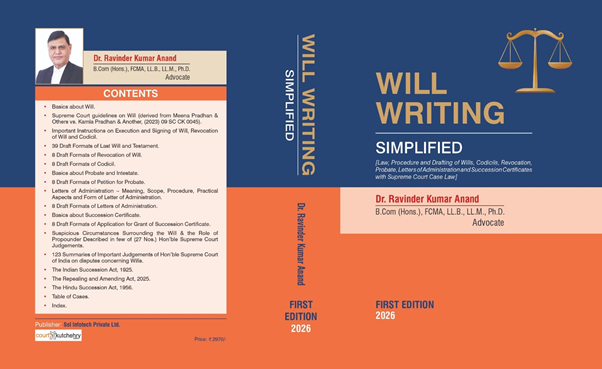
📘 Legal professionals and students alike will benefit from Will Writing Simplified, which covers procedure and case law in detail.
🔹 Buy online: Amazon | Flipkart
Also Read: Allahabad High Court: No Pension Without Enabling Rule
High Court’s Observations
Justice M. Sathyanarayanan emphasized:
- Producer’s Ownership: Under Section 17 of the Copyright Act, the producer is the first owner of copyright and may assign rights separately.
- Independent Rights: Theatrical, satellite, and dubbing rights are independent and must be explicitly assigned.
- Dismissal of Appeals: Lahari’s claims were dismissed as the agreement did not include satellite telecast rights.
Also Read: Abhishek Manu Singhvi Declares ₹2,800 Crore Assets: What Senior Lawyers Earn in India
Broader Implications
- Film Industry Contracts: Reinforces the need for clear drafting of agreements covering theatrical, satellite, OTT, and dubbing rights.
- Legal Precedent: Strengthens the principle that copyright assignments must be specific and cannot be implied.
- Content Distribution: Clarifies boundaries in India’s growing digital and satellite broadcasting market.
Why This Matters
- For Producers: Ensures they retain control over different modes of exploitation unless explicitly assigned.
- For Distributors: Highlights the importance of negotiating comprehensive rights to avoid disputes.
- For Legal Professionals: Provides a precedent in interpreting copyright agreements in the entertainment industry.
Conclusion
The Madras High Court’s ruling in the Roja case is a landmark in copyright law, affirming that theatrical rights do not automatically include satellite telecast rights. By dismissing Lahari’s claims, the Court has clarified the scope of copyright assignments, ensuring greater transparency and fairness in India’s film industry.
Also Read: Delhi-Goa Flight Scare: Passenger Booked for Smoking Beedi Mid-Air
Keywords for SEO & Faster Searches
Madras High Court Roja case, Lahari Recording Co copyright dispute, theatrical vs satellite rights India, Telugu dubbed Roja copyright, Jain Television satellite telecast case, Section 17 Copyright Act India, film industry copyright law India.
Also Read: Madras High Court: Solar Panels Not Valid Industrial Use of Allotted Land