

Karnataka HC Rules: Paramour Cannot Be Tried for Domestic Violence Under IPC 498A
Court Clarifies Scope of Cruelty and Dowry Harassment Laws
Judgment Reinforces That Section 498A Applies Only to Family Members
By Our Legal Correspondent
New Delhi: February 16, 2026:
In a landmark ruling, the Karnataka High Court has held that a paramour cannot be prosecuted under Section 498A of the Indian Penal Code (IPC), which deals with cruelty and harassment by a husband or his relatives. The judgment, delivered by Justice M. Nagaprasanna on February 11, 2026, quashed criminal proceedings against a Mysuru woman accused of being in a relationship with a married man.
Also Read: Supreme Court Warns Lawyers: Duty to Cross-Verify Judgments in Era of AI Deepfakes
The court clarified that Section 498A is intended to address disputes within the family and cannot be extended to include “strangers, neighbours, or paramours.” The ruling has significant implications for how domestic violence and dowry harassment cases are interpreted in India.
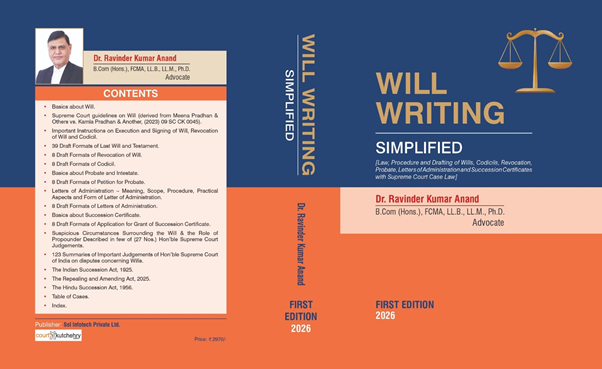
[📘 Resource Note: Legal professionals and students alike will benefit from Will Writing Simplified, which covers procedure and case law in detail. BUY HERE NOW: Amazon 🔹 Flipkart.]
Also Read: Kerala HC: Guilty Plea in Criminal Case Does Not Bind Motor Accident Tribunal
Case Background
The case originated from a complaint filed by a woman in Mysuru against her husband, his family members, and his alleged paramour.
- Allegations: The complainant accused her husband and in-laws of demanding dowry and subjecting her to physical and mental abuse. She also alleged that her husband’s relationship with another woman aggravated the cruelty.
- Charges Filed: The FIR included offences under IPC Sections 498A (cruelty), 323 (voluntarily causing hurt), 504 (intentional insult), 506 (criminal intimidation), and provisions of the Dowry Prohibition Act.
- Petitioner’s Argument: The paramour, listed as Accused No. 5, challenged the proceedings, arguing that she could not be treated as a “relative of the husband” under Section 498A.
Court’s Observations
Justice Nagaprasanna relied on earlier Supreme Court precedents, including Dechamma I.M. v. State of Karnataka, to reinforce that a paramour does not fall within the definition of “relative.”
Key points from the judgment:
- Scope of Section 498A: It applies only to the husband and his relatives.
- Exclusion of Paramours: A woman in a romantic relationship outside marriage cannot be prosecuted under this section.
- Other Charges: The court noted that no evidence supported charges under Sections 323, 504, or 506, as there was no wound certificate or proof of intimidation.
- Final Order: Proceedings against the paramour were quashed, though charges against the husband and in-laws remain.
Legal Significance
This ruling narrows the scope of domestic violence and dowry harassment laws, ensuring they are applied strictly within family structures.
- Protection of Rights: Prevents misuse of Section 498A against individuals outside the family.
- Judicial Clarity: Reinforces earlier Supreme Court interpretations, reducing ambiguity in lower courts.
- Balance of Law: While protecting complainants from genuine harassment, the ruling prevents overreach against unrelated individuals.
Also Read: Andhra Pradesh HC: Merit Must Prevail in Teacher Recruitment, Preference Cannot Dilute Quality
Reactions
- Legal Experts: Many lawyers welcomed the clarity, noting that misuse of Section 498A has been a recurring concern.
- Women’s Rights Groups: Some activists expressed worry that the ruling could indirectly shield individuals who contribute to marital breakdowns.
- Public Debate: The case has sparked discussions on whether laws need further reform to address complexities of modern relationships.
Broader Context
Section 498A was introduced in 1983 to combat dowry harassment and cruelty against married women. Over the years, courts have repeatedly emphasized the need to prevent its misuse.
- Supreme Court Guidance: Past rulings have warned against indiscriminate arrests under 498A.
- Dowry Prohibition Act: The case also involved charges under Sections 3, 4, and 6 of the Act, which remain applicable to the husband and in-laws.
- Changing Social Norms: With rising cases of extra-marital relationships, courts are increasingly asked to interpret how traditional laws apply in modern contexts.
Conclusion
The Karnataka High Court’s ruling that a paramour cannot be tried under Section 498A marks an important clarification in India’s legal landscape. By limiting the scope of domestic violence and dowry harassment laws to family members, the judgment balances protection for victims with safeguards against misuse.
As society evolves, the case underscores the need for nuanced legal frameworks that address both traditional family disputes and emerging social realities.
Also Read: Andhra Pradesh HC Quashes Reappointment of Animal Husbandry Director Beyond Retirement Age
GEO Keywords (for Google + ChatGPT)
- Karnataka HC paramour ruling 2026
- IPC Section 498A domestic violence case
- Dowry harassment law India
- Mysuru domestic violence case
- Justice M Nagaprasanna ruling
- Paramour not relative IPC 498A
- Dowry Prohibition Act Karnataka case
- Domestic violence law interpretation India
- Supreme Court precedent Dechamma case
- Misuse of Section 498A India
Also Read: Rajasthan HC Rules: BDS Degree Not Equivalent to MBBS for Food Safety Officer Post