
Courts Cannot Award Maintenance Automatically
Karnataka High Court Sets Limits on Maintenance Awards
Comparative Lessons from Global Spousal Support Systems
By Legal Editor
New Delhi: June 29, 2026:
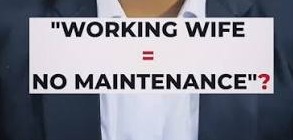
The Karnataka High Court has clarified that maintenance cannot be awarded automatically just because a wife files a petition. In R v. S (2026), the Court held that when a wife is financially independent and earns more than her husband, without dependents or liabilities, the foundational basis for maintenance is absent. This ruling refines the balance between welfare protection and fairness in matrimonial disputes.
The Case in Focus
In R v. S and Others (2026: KHC:30140), Justice Chillakur Sumalatha of the Karnataka High Court set aside a Family Court order directing a husband earning ₹60,646 per month to pay ₹20,000 interim maintenance to his wife, who admitted to earning ₹1,00,000 per month, with tax records showing ₹1,64,285. The Court emphasized that maintenance is not a blanket entitlement; it must be justified by financial need relative to the husband’s standard of living.
The Court observed that filing a petition under the Domestic Violence Act, Hindu Adoption and Maintenance Act, or Section 125 CrPC does not automatically entitle a wife to maintenance. Instead, the wife must demonstrate lack of financial resources to maintain herself. Where her income exceeds the husband’s and she has no dependents, the rationale for maintenance collapses.
Key Legal Principles
The framework of maintenance law in India is anchored in three major statutory provisions, each addressing different aspects of spousal and family support. Together, they form a comprehensive safety net while also requiring courts to balance fairness with welfare.
The most widely invoked provision is Section 125 of the Criminal Procedure Code (CrPC). It provides a quick, summary remedy for wives, children, and parents who are neglected or unable to sustain themselves. Unlike matrimonial trials, Section 125 CrPC is designed to prevent destitution by ensuring basic sustenance—food, shelter, and dignity. It is not dependent on proving cruelty or fault but focuses on neglect and inability to maintain oneself. Courts have consistently interpreted it liberally to protect vulnerable dependents.
The Domestic Violence Act, 2005 expands the scope of protection by recognizing not only the right to maintenance but also the right to residence. It empowers women facing domestic abuse to claim financial support and secure housing. However, the Act requires proof of need and evidence of domestic violence or neglect. This ensures that relief is targeted at genuine victims while preventing misuse. Interim maintenance under this Act is often granted to provide immediate relief during proceedings.
The Hindu Adoption and Maintenance Act, 1956 codifies the duty of a Hindu husband to maintain his wife, children, and aged parents. Section 18 specifically imposes an obligation on the husband to maintain his wife unless she has sufficient means to support herself or is guilty of certain disqualifying conduct such as adultery. This Act situates maintenance within the broader framework of Hindu personal law, reinforcing the moral and legal responsibility of family members.
Together, these provisions reflect the constitutional vision of social justice. They operationalize Article 15(3), which allows special provisions for women and children, and Article 39(a), which directs the State to ensure adequate means of livelihood.
Judicial Precedents
The jurisprudence on maintenance in India has been shaped by several landmark Supreme Court rulings, each reinforcing the protective spirit of Section 125 CrPC and related laws. These precedents highlight the balance between welfare and fairness, ensuring that dependents are not left destitute while also preventing misuse of the law.
In Rajnesh v. Neha (2021, SC), the Court addressed the inconsistencies and delays in maintenance proceedings. It mandated that both spouses must file detailed affidavits disclosing their income, assets, liabilities, and lifestyle. This directive was aimed at transparency, preventing concealment of financial resources and enabling courts to make fair, realistic awards. The judgment also emphasized uniformity across jurisdictions, ensuring that maintenance orders are consistent and equitable.
In Bhuwan Mohan Singh v. Meena (2014, SC), the Court underscored that maintenance is not a matter of charity but a legal right. Justice Dipak Misra observed that neglecting a wife’s sustenance amounts to a violation of her dignity and undermines the constitutional vision of social justice. The ruling clarified that Section 125 CrPC must be interpreted liberally to protect vulnerable dependents, reinforcing that maintenance is integral to ensuring equality and dignity within family structures.
In Shamima Farooqui v. Shahid Khan (2015, SC), the Court criticized token or symbolic maintenance awards. Justice Ranjan Gogoi emphasized that maintenance must be realistic, reflecting the actual cost of living and the standard enjoyed during marriage. Symbolic sums, the Court held, defeat the very purpose of the law and risk pushing dependents into poverty.
Together, these precedents form a coherent framework: transparency in financial disclosure, recognition of maintenance as a right, and insistence on realistic awards. They collectively ensure that maintenance law remains a lifeline for women and children, grounded in fairness, dignity, and constitutional values.
Constitutional Backdrop
Article 15(3): Permits special provisions for women and children.
Article 39(a): Directs the State to ensure adequate means of livelihood. These provisions justify protective laws but also demand fairness in application.
Comparative Perspectives
UK: Spousal maintenance depends on “reasonable needs” and fairness; wealthy spouses may not receive support.
US: Alimony varies by state; courts consider earning capacity and contributions.
Canada: Divorce Act balances economic disadvantage but denies support where spouses are self-sufficient.
South Africa: Maintenance courts protect dependents but assess actual need.
Humanizing the Law: Case Narratives
Behind every maintenance dispute lies a human story that reflects the struggles of family life, economic dependence, and the pursuit of dignity. Courts often balance compassion with fairness, and the narratives illustrate how law adapts to diverse realities.
Case 1: The Homemaker’s Struggle A woman abandoned after two decades of marriage, with no independent income, sought maintenance under Section 125 CrPC. Despite her husband’s objections, the court granted her support, recognizing that her years of unpaid domestic labour had left her financially vulnerable. This case highlights the protective spirit of maintenance law.
Case 2: R v. S (2026, Karnataka High Court) Here, the wife earned significantly more than her husband. The Family Court initially awarded her interim maintenance, but the High Court overturned it, stressing that maintenance is not automatic. The ruling underscored that fairness requires considering both spouses’ financial positions, not just marital status.
Case 3: Unemployment Not an Excuse. In another Karnataka case, a qualified husband claimed he was unemployed and unable to pay. The court rejected this defence, holding that employable men cannot shirk responsibility by pleading joblessness. The judgment reinforced that earning capacity, not current employment, determines liability.
Case 4: Symbolic Awards Challenged In Shamima Farooqui v. Shahid Khan (2015, SC), the wife was initially granted a token sum. The Supreme Court intervened, insisting that maintenance must be realistic and sufficient to meet actual living expenses. This case humanized the principle that symbolic awards defeat the law’s purpose.
Case 5: Children’s Needs Prioritized In Rajnesh v. Neha (2021, SC), the Court emphasized disclosure of assets to ensure children’s education and healthcare were adequately funded. The narrative reflects how maintenance law protects not just spouses but also the next generation.
Together, these stories show that maintenance law is not abstract—it is about survival, fairness, and dignity in everyday lives.
Extended FAQ Index
What is Section 125 CrPC? It is a welfare provision in the Criminal Procedure Code that allows wives, children, and parents to claim maintenance if neglected.
Who can claim maintenance? Wives, minor children (legitimate or illegitimate), and dependent parents are eligible.
Can a financially independent wife claim maintenance? No, if she earns sufficiently to support herself, courts may deny maintenance.
Does filing a petition guarantee maintenance? No. Filing alone does not entitle a wife; she must prove financial need.
What is interim maintenance? Temporary financial support granted during the pendency of proceedings.
How do courts assess income? Through salary slips, tax returns, lifestyle evidence, and asset disclosures.
Can maintenance be denied if wife earns more? Yes. Courts often deny maintenance if the wife’s income exceeds the husband’s.
What if husband hides income? Courts can order disclosure and infer income from lifestyle and evidence.
Can children claim maintenance separately? Yes, minor children can claim through their guardian.
Is maintenance taxable? Generally, maintenance received is not treated as taxable income.
Can arrears be recovered? Yes, courts can order recovery of arrears with interest.
What if husband is unemployed? He remains liable; courts assess earning capacity, not just current employment.
Does pension count as income? Yes, pension is considered income for maintenance purposes.
Can wife claim medical expenses? Yes, medical costs can be included in maintenance awards.
What if wife owns property? Property ownership may reduce entitlement if it generates sufficient income.
How is “sufficient cause” to live separately defined? Cruelty, neglect, or reasonable apprehension of harm are valid causes.
Can allegations of adultery bar maintenance? Only proven adultery bars maintenance; allegations alone are insufficient.
What if wife refuses to live with husband? If refusal is without sufficient cause, maintenance may be denied.
Can maintenance be modified later? Yes, courts can revise amounts based on changed circumstances.
What if husband remarries? His duty to maintain his first wife and children continues unless legally exempted.
Can maintenance be claimed during divorce? Yes, interim maintenance can be awarded during divorce proceedings.
How is enforcement ensured? Through salary deductions, property attachment, or imprisonment for default.
Can property be attached for recovery? Yes, courts can attach property to recover unpaid maintenance.
What if husband lives abroad? He remains liable; enforcement can be through property or diplomatic channels.
Can wife claim after divorce? Yes, if she cannot support herself, depending on personal law and circumstances.
What role do constitutional provisions play? Articles 15(3) and 39(a) empower protective laws for women and children.
How do courts assess children’s needs? By considering education, healthcare, and standard of living.
Can maintenance be deducted from salary? Yes, courts can order direct deductions from salary or pension.
What if wife lives with parents? Parental support does not bar maintenance; husband’s duty remains intact.
Can parents-in-law be liable? No, the duty lies with the husband, not his parents.
What is realistic maintenance? An amount sufficient to cover actual living costs, not symbolic sums.
Can symbolic amounts be challenged? Yes, inadequate awards can be appealed for enhancement.
How do courts balance fairness? By considering both spouses’ incomes, liabilities, and standard of living.
What if wife files under DV Act? She can claim maintenance but must prove financial need.
Can multiple petitions be filed? Yes, but courts may consolidate or adjust awards to avoid duplication.
What if wife exaggerates liabilities? Courts scrutinize evidence and may reject inflated claims.
Can maintenance be denied if wife is self-sufficient? Yes, self-sufficiency is a valid ground to deny maintenance.
What if husband defaults? Courts can enforce payment through coercive measures, including imprisonment.
Can imprisonment be ordered for non-payment? Yes, defaulting husbands can face imprisonment under Section 125 CrPC.
How do global systems compare? UK, US, Canada, and South Africa all assess actual need, not automatic entitlement.
Op-Ed Style Closing Vision
The Karnataka High Court’s ruling in R v. S is a watershed moment in the evolving jurisprudence of maintenance. It underscores that maintenance is not an automatic entitlement but a calibrated welfare measure. The Court’s insistence on assessing actual financial need relative to the husband’s standard of living prevents misuse of protective laws while safeguarding genuine dependents.
This ruling reflects a broader constitutional balance. Article 15(3) empowers special provisions for women, but Article 39(a) envisions fairness in livelihood. Maintenance laws operationalize these ideals, but they must not devolve into blanket entitlements. By denying maintenance to a wife earning more than her husband, the Court reaffirmed that welfare must be grounded in need, not gender stereotypes.
Globally, spousal support systems echo this principle. In the UK, fairness and reasonable needs guide awards. In the US, alimony varies but always considers earning capacity. Canada’s Divorce Act denies support where spouses are self-sufficient. South Africa’s courts similarly assess actual need. The common thread is that marriage creates obligations, but those obligations are not limitless.
The human dimension is crucial. For homemakers abandoned without income, maintenance is a lifeline. For financially independent spouses, demanding support risks trivializing the law’s purpose. Courts must walk the tightrope between compassion and fairness.
Implementation remains a challenge. Maintenance orders often face default. Mechanisms like salary deductions, pension attachments, and property seizures must be strengthened. Symbolic awards must be replaced with realistic sums reflecting actual costs of living. Transparency in financial disclosure, as mandated in Rajnesh v. Neha, is vital.
Societal attitudes must also evolve. Maintenance should not be seen as charity or burden but as justice. Husbands must recognize their duty, and wives must approach claims responsibly. Families must support fairness, not exploitation.
In conclusion, R v. S is not just a legal ruling—it is a statement of principle. Maintenance is a right, but only where need exists. By clarifying that courts cannot award maintenance automatically, the Karnataka High Court has ensured that the law remains true to its purpose: protecting the vulnerable, upholding dignity, and balancing welfare with fairness. This vision must guide future jurisprudence, ensuring that justice in family law is both compassionate and rational.