
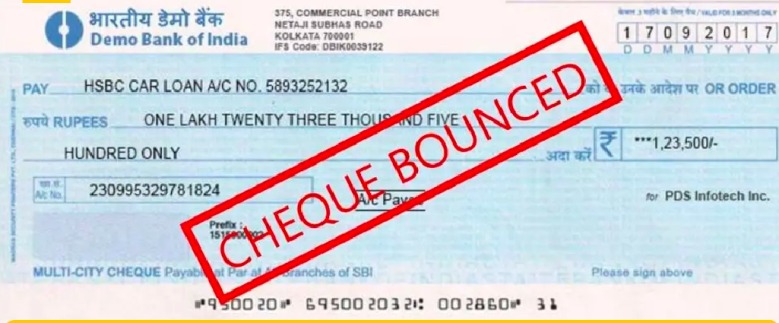
Karnataka HC Caps Default Jail Term in Cheque Bounce Cases
Court Says Liberty Cannot Be Curtailed Beyond Six Months
Clarifies Default Imprisonment Is Recovery-Oriented, Not Punitive
By Our Legal Correspondent
New Delhi: June 17, 2026:
The Karnataka High Court has ruled that a convict in cheque bounce cases cannot be jailed beyond six months for default in payment of fines, even if the fine amount runs into crores. This judgment clarifies the scope of “default imprisonment” under Section 65 of the IPC and its successor provision in the Bharatiya Nyaya Sanhita (BNS), reinforcing that such imprisonment is coercive, not punitive.
The right to life and personal liberty is one of the most significant protections available to citizens under the Indian Constitution. Over the years, the Supreme Court has expanded its scope to include rights such as privacy, dignity, livelihood, education, legal aid, and a clean environment. To understand the constitutional framework and landmark judicial interpretations, readers can refer to this detailed guide on Article 21 of the Constitution of India, which explains how courts have transformed the concept of life and liberty into a broad guarantee of human rights.
1. Case Background
The petitioner, convicted in three cheque dishonour cases under Section 138 of the Negotiable Instruments Act (NI Act), faced fines exceeding ₹11 crore. The trial court imposed three months’ simple imprisonment in default of fine in each case, totalling nine months. Unable to pay, he was jailed. After serving over six months, he approached the High Court seeking release.
Justice M. Nagaprasanna ruled that continued incarceration violated statutory and constitutional safeguards, ordering his release.
2. Key Legal Provisions Discussed
Section 138 NI Act: Punishment up to two years or fine up to twice the cheque amount.
Section 65 IPC / Section 8(3) BNS: Default imprisonment cannot exceed one-fourth of the maximum term prescribed for the offence.
Since Section 138 allows a maximum of two years, default imprisonment cannot exceed six months.
Article 21 of the Constitution: Protects personal liberty; prolonged default imprisonment beyond statutory limits violates this.
Section 421 CrPC: Allows attachment and recovery of property for unpaid fines, independent of imprisonment.
3. Court’s Reasoning
Default imprisonment is coercive, not punitive: Its purpose is to compel payment, not punish further.
Statutory cap of six months: The petitioner had already served beyond this limit.
Liberty cannot be curtailed indefinitely: Continued incarceration would breach Article 21.
Recovery mechanisms remain valid: Property attachment under CrPC continues despite release.
4. Implications of the Judgment
For Convicts: Provides clarity that default imprisonment in cheque bounce cases cannot exceed six months.
For Trial Courts: Reinforces need to align sentencing with statutory limits.
For Financial Institutions: Encourages reliance on property attachment and civil recovery rather than prolonged imprisonment.
For Legal System: Strengthens jurisprudence distinguishing punitive imprisonment from coercive default sentences.
5. Wider Context
Cheque bounce cases form a significant portion of trial court dockets. This ruling:
Reduces overcrowding in prisons due to prolonged default sentences.
Ensures proportionality in punishment.
Aligns with reforms under the Bharatiya Nyaya Sanhita (BNS), which modernizes penal provisions.
Detailed FAQ
Q1. What is Section 138 of the NI Act? It criminalizes cheque dishonour due to insufficient funds, prescribing up to two years’ imprisonment or fine up to twice the cheque amount.
Q2. What is default imprisonment? It is jail time imposed when a convict fails to pay a fine. It is coercive, meant to compel payment, not punitive.
Q3. What did the Karnataka High Court rule? That default imprisonment in cheque bounce cases cannot exceed six months, even if fines remain unpaid.
Q4. Which laws were cited? Section 65 IPC, Section 8(3) BNS, Section 138 NI Act, Article 21 of the Constitution, and Section 421 CrPC.
Q5. Why six months? Because default imprisonment cannot exceed one-fourth of the maximum punishment (two years under Section 138).
Q6. Does release mean fines are waived? No. Recovery proceedings under Section 421 CrPC continue through property attachment.
Q7. Can trial courts impose longer default sentences? No. The statutory cap of six months applies uniformly.
Q8. How does this protect liberty? It prevents indefinite incarceration for inability to pay, upholding Article 21.
Q9. What is the difference between punitive and coercive imprisonment? Punitive imprisonment punishes the crime; coercive imprisonment pressures payment of fines.
Q10. What is the impact on cheque bounce litigation? It ensures proportionality, reduces prison overcrowding, and shifts focus to civil recovery.
Conclusion
The Karnataka High Court’s ruling is a landmark clarification on default imprisonment. By capping jail terms at six months, it balances creditor rights with constitutional protections. The judgment underscores that liberty cannot be compromised by disproportionate coercive measures, while ensuring recovery mechanisms remain intact. This precedent will guide courts nationwide in cheque bounce cases, harmonizing criminal law with constitutional values.