
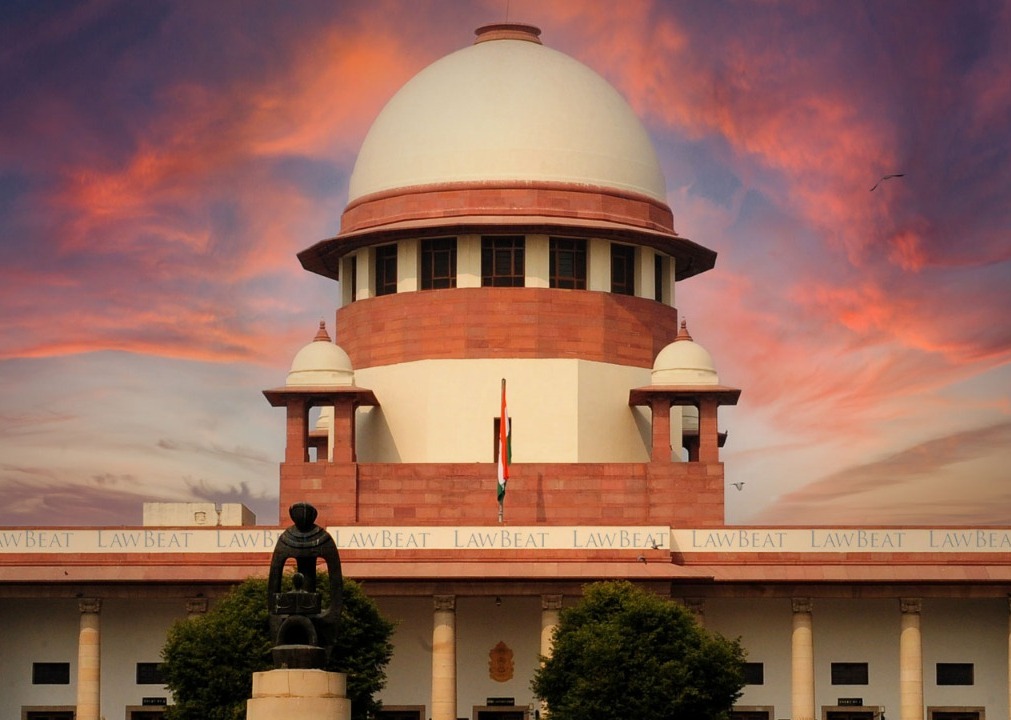
COURTKUTCHEHRY SPECIAL SERIES ON LANDMARKS JUDGEMENTS ON WILLS, CODICIL & PROBATE
Bharpur Singh & Ors. v. Shamsher Singh: Supreme Court Reasserts Strict Proof of Wills
Registration Alone Cannot Validate Testamentary Documents
Case Remanded for Fresh Consideration
By Vishwas Kumar
New Delhi: March 24, 2026:
In Bharpur Singh & Ors. v. Shamsher Singh (Civil Appeal No. 7250 of 2008, decided on 12 December 2008), the Supreme Court of India revisited the principles governing proof of Wills under succession law. The Division Bench comprising Hon’ble Mr. Justice S.B. Sinha and Hon’ble Mr. Justice Cyriac Joseph examined whether the Will executed by Ram Devi in favour of Shamsher Singh was genuine and legally valid.
check important Supreme Court rulings on wills of K. Laxmanan Case
The trial court had rejected the Will, finding it unproven. However, the appellate court and subsequently the High Court upheld its validity, relying on its registration and age. On appeal, the Supreme Court cautioned against such a simplistic approach. The Bench underscored that mere registration, or the passage of time cannot substitute for strict compliance with statutory requirements. A Will must be proved through proper attestation and by dispelling all suspicious circumstances surrounding its execution.
The Court highlighted that the burden lies squarely on the propounder of the Will to establish its authenticity beyond doubt. Since the lower courts had failed to apply the correct legal standards, the Supreme Court remanded the matter for reconsideration considering proper evidentiary principles. This decision reinforces the judiciary’s consistent stance that testamentary documents demand rigorous scrutiny to protect against fraud and undue influence.
By restoring caution in the evaluation of Wills, the ruling serves as a reminder that succession disputes hinge not on formalities like registration but on substantive proof of due execution and absence of suspicion. The case thus strengthens safeguards around inheritance and the sanctity of last wishes.
For More, Read Here the Summary of the Judgement from the Book: WILL WRITING SIMPLIFIED, read below or open page no 436, Chapter 14.1 in the book. (Online book purchase link available here on: Buy online: Amazon | Flipkart
|
|
Case Summary |
: |
Bharpur Singh & Ors. v. Shamsher Singh. |
|
|
Court |
: |
Supreme Court of India |
|
|
Citations |
: |
(2008) 12 SC CK 0067: Civil Appeal No. 7250 of 2008. |
|
|
Link |
: |
https://www.courtkutchehry.com/judgements/661748/bharpur-singh-and-others-vs-shamsher-singh/
|
|
|
Decided on |
: |
12 December 2008 |
|
|
Coram |
: |
Hon’ble Mr. Justice S.B. Sinha and Hon’ble Mr. Justice Cyriac Joseph. |
|
|
Relevant Paragraphs |
: |
Para Nos. 2 to 19 |
1. Facts of the Case:
Ram Devi, widow of Jiwan Singh of Village Gharuan, Punjab, executed a Will dated 30.03.1962 in favour of Shamsher Singh, a collateral relative of her husband, excluding her two surviving married daughters. Ram Devi died on 19.06.1990. After her death, Shamsher Singh claimed ownership and possession of her lands on the basis of the Will, whereas her daughters challenged the Will as invalid, alleging unsoundness of mind, lack of relationship, and suspicious circumstances. The trial court dismissed the suit holding that the Will was not proved and that the plaintiff was merely a tenant and mortgagee. The first appellate court reversed this finding, upheld the Will as genuine, and the High Court affirmed the appellate court’s decision. The daughters appealed to the Supreme Court.
2. Law Points Involved:
(i). Proof and validity of a Will under Section 63(c) of the Indian Succession Act, 1925 and Section 68 of the Indian Evidence Act, 1872.
(ii). Burden of proof on the propounder to dispel suspicious circumstances.
(iii). Application and limits of presumption under Section 90 of the Evidence Act in case of Wills.
(iv). Role of attesting witnesses and independent advice to an illiterate testatrix.
(v). Effect of registration and long delay in producing the Will.
3. Acts/Provisions/Articles Referred:
(i). Indian Succession Act, 1925 — Sections 63, 63(c)
(ii). Indian Evidence Act, 1872 — Sections 68, 69, 70, 90
4 Judgments Referred:
(i). H. Venkatachala Iyengar v. B.N. Thimmajamma (1958) 11 SC CK 0008;
(ii). Jaswant Kaur v. Amrit Kaur (1976) 10 SC CK 0028;
https://www.courtkutchehry.com/judgements/649331/smt-jaswant-kaur-vs-smt-amrit-kaur-and-others/]
(iii). Madhukar D. Shende v. Tarabai Aba Shedage, (2002) 01 SC CK 0024.
https://www.courtkutchehry.com/judgements/653626/madhukar-d-shende-vs-tarabai-aba-shedage/]
(iv). Sridevi v. Jayaraja Shetty, (2005) 01 SC CK 0034.
(v). Naranjan Umeshchandra Joshi v. Mrudula Jyoti Rao, (2006) 12 SC CK 0022;
5. Obiter Dicta:
(i). A Will must be proved by strict compliance with Section 63(c) of the Succession Act and Section 68 of the Evidence Act; registration does not dispense with statutory proof.
(ii). Proof of execution of a Will demands satisfaction of the Court’s conscience mere attestation or old age of document is not conclusive.
(iii). Section 90 Evidence Act (presumption as to 30-year-old documents) does not apply to Wills.
6. Ratio Decidendi:
Where a Will is surrounded by suspicious circumstances such as disinheritance of natural heirs without reason, propounder’s active involvement, old and illiterate testatrix, or long delay in disclosure the onus on the propounder is heavy. The Will must be proved by examining at least one attesting witness and by showing that the testatrix understood and executed it of her own free will. Registration or antiquity does not cure non-compliance. The appellate courts failed to address these aspects; hence their findings could not stand.
7. Final Ruling:
The Supreme Court allowed the appeal, set aside the judgments of the first appellate court and the High Court, and remanded the matter for fresh consideration. It held that statutory requirements under Sections 63 and 68 were not satisfied and that suspicious circumstances including the testatrix’s illiteracy, exclusion of natural heirs, and beneficiary’s tenancy/mortgagee position had not been dispelled. No order as to costs.
8. Gist (Dispute & Decision):
Dispute centered on whether the Will executed by Ram Devi in favour of Shamsher Singh was genuine and valid. Trial court rejected the Will; appellate and High Court upheld it. The Supreme Court restored caution, holding that the Will must satisfy strict proof and dispel all suspicion mere registration and age of document are insufficient. The case was remanded for reconsideration in light of proper legal standards.
Read full Judgement Here:
Bharpur Singh & Ors. v. Shamsher Singh.
Supreme Court of India
(2008) 12 SC CK 0067: Civil Appeal No. 7250 of 2008.
https://www.courtkutchehry.com/judgements/661748/bharpur-singh-and-others-vs-shamsher-singh/
You Can Also Purchase the Book from here on: Buy online: Amazon | Flipkart
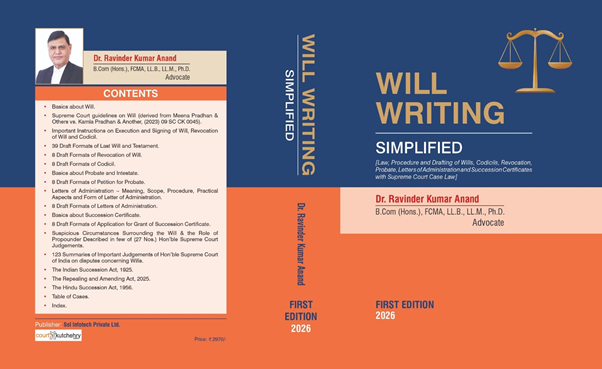
OUR RECOMMENDATION: Check out 123 Key Judgements, as highlighted in the book, WILL WRITING SIMPLIFIED, for the quick research and reference purposes. Click the link here: https://www.courtkutchehry.com/pages/blog/123-supreme-court-judgments-on-wills/
Keywords: Bharpur Singh v. Shamsher Singh, Supreme Court of India 2008, Ram Devi Will dispute, Civil Appeal No. 7250 of 2008, Justice S.B. Sinha, Justice Cyriac Joseph, proof of Will, attestation requirement, suspicious circumstances in Will, Indian succession law.