
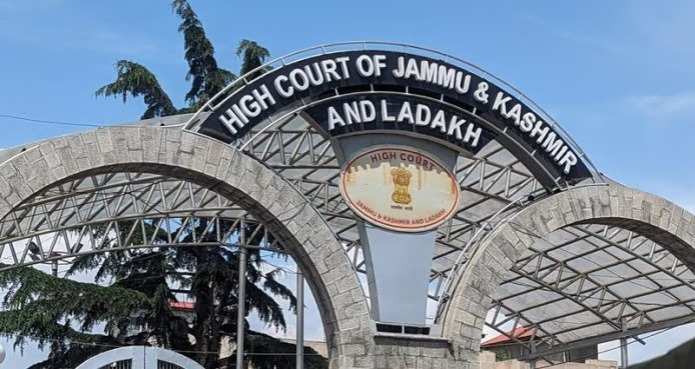
J&K High Court: Property Disputes Must Go to Trial
Order VII Rule 11 CPC Cannot Short-Circuit Litigation
Joint vs Partitioned Holdings Require Judicial Determination
By Our Legal Correspondent
New Delhi: May 04, 2026:
The Jammu & Kashmir and Ladakh High Court have ruled that when the status of property—whether it is a joint holding or partitioned—becomes a triable issue, a plaint cannot be rejected under Order VII Rule 11 of the Code of Civil Procedure (CPC). This reinforces the principle that courts must allow disputed questions of fact to proceed to trial rather than dismissing suits prematurely.
In disputes relating to ownership and possession of property, courts consistently stress the importance of establishing clear title and lawful entitlement through reliable evidence. A notable judicial reference in this regard is Balathandayutham & Another vs Ezhilarasan property ownership and possession rights judgment , where the court examined competing claims and emphasized that mere possession without valid title cannot override lawful ownership rights. The ruling highlights that courts rely on documentary proof and legal principles to ensure fair adjudication of property disputes.
Background
The case arose from a suit for declaration concerning property rights. The trial court had rejected the plaint under Order VII Rule 11 CPC, which empowers courts to dismiss suits at the threshold if they disclose no cause of action or are barred by law. The plaintiff challenged this rejection before the High Court.
Justice Sanjay Dhar of the Jammu & Kashmir and Ladakh High Court held that once the status of property—whether joint or partitioned—becomes a triable issue, the plaint cannot be rejected. The Court set aside the trial court’s order, allowing the matter to proceed.
Key Legal Principles Discussed
- Order VII Rule 11 CPC
- Provides grounds for rejection of plaints, including lack of cause of action, suits barred by law, undervaluation, or insufficiently stamped documents.
- The High Court clarified that this provision is meant for clear-cut cases, not for disputes involving factual determination.
- Triable Issues in Civil Law
- A triable issue arises when facts are disputed and require evidence.
- Whether property is joint or partitioned is a factual matter that cannot be decided summarily.
- Doctrine of Access to Justice
- Courts must ensure litigants have the opportunity to prove their claims.
- Premature rejection of suits undermines the constitutional guarantee of fair trial under Article 21.
- Property Law Principles
- Joint holdings imply co-ownership, where partition must be proved through evidence.
- Disputes over partition are inherently factual and require trial proceedings.
Court’s Observations
- The High Court emphasized that Order VII Rule 11 CPC is not a substitute for trial.
- It noted that the trial court erred in rejecting the plaint when the dispute clearly involved contested property status.
- The ruling ensures that litigants are not denied their day in court merely because the defendant disputes ownership or partition.
Implications of the Ruling
- For Litigants: Strengthens the right to have property disputes adjudicated through trial rather than summary dismissal.
- For Courts: Clarifies that Order VII Rule 11 CPC must be applied narrowly, only in cases where no cause of action exists on the face of the plaint.
- For Property Law: Reinforces that joint vs partitioned holdings are factual questions requiring evidence.
This judgment will guide trial courts across India to avoid overuse of Order VII Rule 11 CPC in property disputes.
FAQ: Quick Legal Understanding
Q1. What is Order VII Rule 11 CPC?
It allows courts to reject plaints at the threshold if they disclose no cause of action, are barred by law, or suffer from valuation/stamping defects.
Q2. Can property disputes be rejected under this rule?
Not if the dispute involves factual issues like whether property is joint or partitioned. Such matters require trial.
Q3. What is a triable issue?
A question of fact that cannot be decided without evidence, such as ownership or partition status of property.
Q4. Why did the High Court intervene?
Because the trial court wrongly rejected the plaint despite the existence of a triable issue, denying the plaintiff a fair trial.
Q5. Does this mean all suits must go to trial?
No. Only suits involving disputed facts must proceed. Clear cases with no cause of action can still be rejected under Order VII Rule 11 CPC.
Q6. How does this ruling affect property law?
It ensures that disputes over joint holdings and partition are properly adjudicated through evidence, protecting litigants’ rights.
Conclusion
The Jammu & Kashmir and Ladakh High Court’s ruling underscores that Order VII Rule 11 CPC cannot be used to bypass trial when factual disputes exist. By holding that property status is a triable issue, the Court reaffirmed the principle of access to justice and fair trial. This decision strengthens litigants’ rights in property disputes and sets a precedent for cautious application of summary dismissal provisions.