
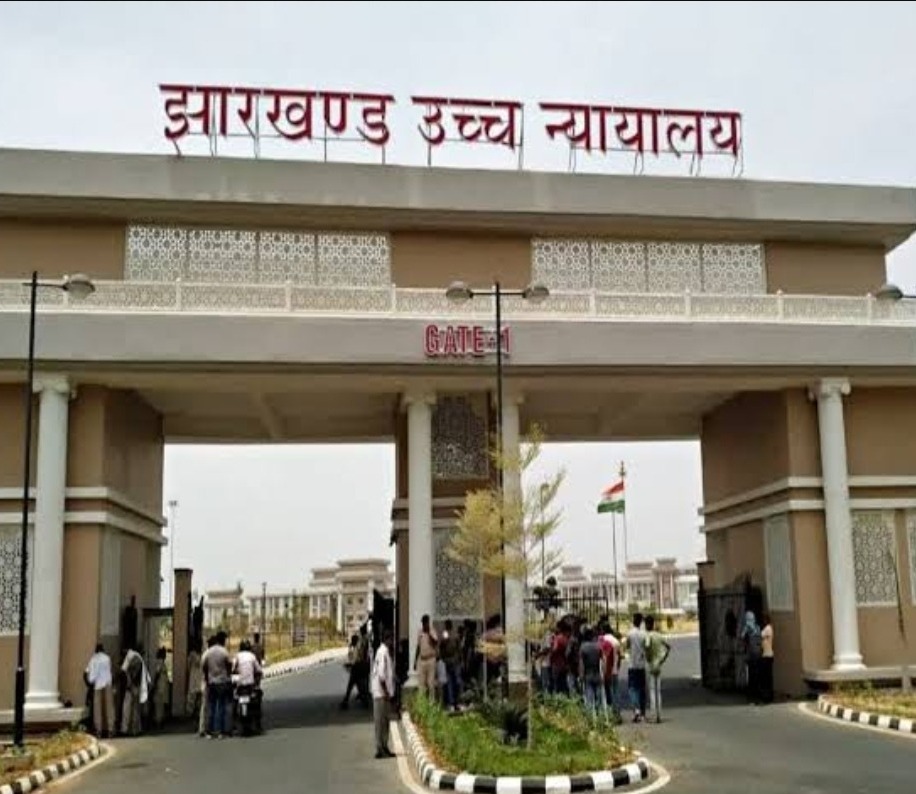
Jharkhand HC Says ‘Acid Does Not Discriminate’: Orders Equal Relief for Male Survivors
Compensation Raised Fivefold to ₹15 Lakh
Court Urges Amendment of 2016 Scheme for Gender Parity
By Our Legal Correspondent
New Delhi: June 27, 2026:
The Jharkhand High Court has delivered a landmark judgment enhancing compensation for a male acid attack survivor from ₹3 lakh to ₹15 lakh, while directing the State to amend its 2016 Victim Compensation Scheme to remove gender-based disparity. The Court emphasized that acid “does not discriminate” and compensation must reflect equality under Article 21 of the Constitution.
1. Case Background
Rahul Kumar, a young student in Ranchi, was attacked with acid in 2012 while intervening in a neighbourhood dispute. The attack left him with severe facial disfigurement, 45% permanent disability, and partial loss of eyesight. He underwent 14 reconstructive surgeries, spending over ₹25 lakh on treatment. Initially, he was awarded only ₹3 lakh under the Jharkhand Victim Compensation Scheme, 2016.
After a single judge refused enhancement, Kumar appealed. Despite a delay of 1,374 days, the Division Bench condoned it, recognizing the trauma and medical burden faced by survivors.
2. Key Legal Frameworks
Jharkhand Victim Compensation Scheme, 2016:
Minimum compensation for acid attack victims fixed at ₹3 lakh.
No upper limit prescribed, allowing courts discretion.
Jharkhand Victim Compensation Scheme, 2019:
Applied specifically to female victims.
Compensation for facial disfigurement ranged from ₹7–8 lakh.
Created disparity between male and female survivors.
Supreme Court Precedents:
Parivartan Kendra v. Union of India (2016): Held ₹3 lakh inadequate; compensation must cover rehabilitation, surgeries, and loss of amenities.
Nipun Saxena v. Union of India (2019): Directed states to frame victim compensation schemes with gender-sensitive provisions.
3. Court’s Observations
Equality Principle: Acid attacks are crimes against the human body, not gender specific. Compensation schemes must reflect this.
No Upper Limit: Courts can award higher compensation under the 2016 scheme.
Psychological Trauma: Compensation must extend beyond medical bills to address lifelong suffering.
Directive to State: Amend the 2016 scheme to ensure parity with the 2019 scheme.
4. Enhancement of Compensation
The Court enhanced Kumar’s compensation to ₹15 lakh, directing:
Payment of balance ₹12 lakh within eight weeks.
Reimbursement of past medical expenses exceeding ₹25 lakh.
Coverage of future surgeries and treatment costs.
5. Constitutional Dimensions
Article 21 (Right to Life): Compensation must ensure dignity and rehabilitation.
Article 14 (Equality Before Law): Gender-based disparity violates equality.
Doctrine of Sufficient Cause: Delay in appeal condoned due to survivor’s trauma.
6. Wider Implications
Policy Reform: States must revise victim compensation schemes to eliminate gender bias.
Judicial Activism: Courts are stepping in to ensure equitable relief where legislative gaps exist.
Social Impact: Recognition of male survivors challenges stereotypes that acid attacks affect only women.
7. Comparative Perspective
Globally, victim compensation schemes in countries like the UK and US emphasize rehabilitation without gender distinctions. India’s move towards parity aligns with international standards.
FAQ Section (Searchable Index Format)
Q1: What was the Jharkhand HC ruling about? The Court enhanced compensation for a male acid attack survivor from ₹3 lakh to ₹15 lakh and directed the State to amend its 2016 scheme to remove gender disparity.
Q2: Why was the compensation increased? Because ₹3 lakh was deemed grossly inadequate for lifelong medical treatment, rehabilitation, and psychological trauma.
Q3: What is the difference between the 2016 and 2019 schemes?
2016 Scheme: Minimum ₹3 lakh for acid attack victims, no upper limit.
2019 Scheme: Applied to female victims, compensation ranged from ₹7–8 lakh.
Q4: Does acid attack compensation differ by gender? Yes, under Jharkhand’s schemes. The Court held this discriminatory and urged parity.
Q5: What constitutional rights were invoked?
Article 21: Right to life and dignity.
Article 14: Equality before law.
Q6: Can courts award more than the minimum compensation? Yes. The 2016 scheme has no upper limit, allowing courts to enhance compensation based on circumstances.
Q7: What precedent did the Court rely on?
Parivartan Kendra v. Union of India (2016): ₹3 lakh inadequate.
Nipun Saxena v. Union of India (2019): Directed gender-sensitive schemes.
Q8: What relief was granted to Rahul Kumar?
₹15 lakh compensation.
Reimbursement of past and future medical expenses.
Recognition of lifelong trauma.
Q9: What does this mean for other male survivors? They can seek enhanced compensation and challenge discriminatory schemes.
Q10: What reforms are expected? States must amend victim compensation schemes to ensure gender-neutral relief.
Conclusion
The Jharkhand High Court’s ruling is a watershed moment for victim rights in India, ensuring that male acid attack survivors are not left behind in compensation frameworks. By invoking constitutional guarantees of equality and dignity, the Court has paved the way for gender-neutral victim compensation policies. This judgment not only provides justice to Rahul Kumar but also sets a precedent for equitable treatment of all survivors, regardless of gender.