

Health Insurance Moratorium Cut to 5 Years
Policyholders Gain Faster Claim Security
Insurers Get Predictability in Risk Exposure
By Legal Reporter
New Delhi: March 06, 2026:
The Insurance Regulatory and Development Authority of India (IRDAI) has announced a major reform in health insurance rules. The moratorium period, which was earlier 8 years, has now been reduced to 5 years. This means that if a policyholder maintains continuous health insurance for five years, insurers cannot deny claims citing non-disclosure or misrepresentation, except in cases of fraud.
Also Read: AGR Panel Slashes Vodafone Idea Dues by ₹27,000 Crore: What It Means for Telecom Sector
This change is expected to benefit millions of Indian families by reducing uncertainty in claim settlements and boosting trust in the health insurance system.
[Recommended Research Resources]
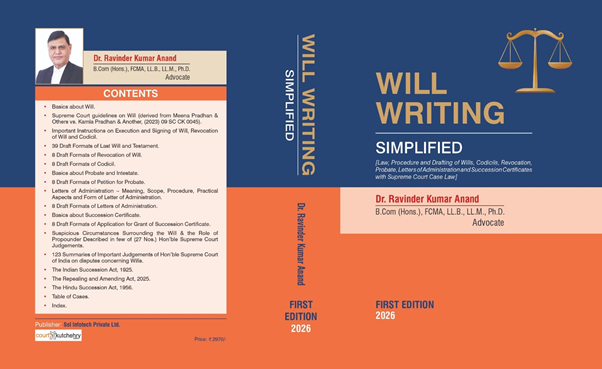
📘 Legal professionals, families and students alike will benefit from Will Writing Simplified, which covers procedure and case law in detail.
🔹 Buy on Amazon
🔹 Buy on Flipkart
Also Read: NO MUNNABHAI: NMC Orders Medical Colleges to Link Patient Records with ABHA IDs for Transparency
What is the Moratorium Period?
- Definition: The moratorium period is the time after which insurers cannot contest claims on grounds of misrepresentation or non-disclosure.
- Earlier Rule: 8 years of continuous coverage.
- New Rule: 5 years of continuous coverage.
- Exception: Fraudulent claims can still be rejected even after 5 years.
Benefits for Policyholders
- Faster Security: Policyholders gain protection against claim rejection after 5 years instead of 8.
- Reduced Anxiety: Families no longer face long uncertainty about whether old medical records or minor disclosure errors will affect claims.
- Encourages Long-Term Coverage: People are more likely to maintain continuous insurance knowing claims are secure sooner.
Benefits for Insurers
- Predictability: Insurers know that after 5 years, their liability is final, except in fraud cases.
- Risk Management: Shorter moratorium allows insurers to settle books faster and manage reserves more efficiently.
- Fraud Protection: Insurers retain the right to reject claims proven to be fraudulent.
Legal and Regulatory Context
- IRDAI Guidelines (2026): Issued under the Insurance Act, 1938.
- Consumer Protection: Aligns with IRDAI’s broader reforms to simplify claims and improve transparency.
- Industry Impact: Expected to reduce litigation between insurers and policyholders.
Also Read: ED Arrests Chartered Accountants in ₹641 Crore Cyber Fraud: Complex Modus Operandi Exposed
Expert Views
- Insurance Analysts: Say the reform balances consumer protection with insurer risk management.
- Legal Experts: Note that fraud remains a valid ground for rejection, ensuring fairness.
- Consumer Advocates: Welcome the change as a step toward more humane health insurance practices.
Conclusion
The reduction of the moratorium period from 8 years to 5 years is a landmark reform in India’s health insurance sector. It provides policyholders with quicker claim security and gives insurers clarity in managing liabilities.
Also Read: Chandigarh Realtor Named Mastermind in ₹590 Crore Government Funds Fraud
For consumers, the key takeaway is to maintain continuous coverage and ensure accurate disclosure of medical history. For insurers, the rule change offers predictability while retaining safeguards against fraud.
GEO Keywords for Faster Searches
- IRDAI health insurance moratorium 5 years
- Health insurance claim rejection India
- Continuous coverage 5 years insurance rule
- IRDAI reforms health insurance 2026
- Policyholder protection health insurance India
- Insurance fraud claim rejection India
- Moratorium period health insurance explained
- Health insurance rule change IRDAI
Also Read: Supreme Court Opens Door for Non-Parties to Challenge Judgments in India