
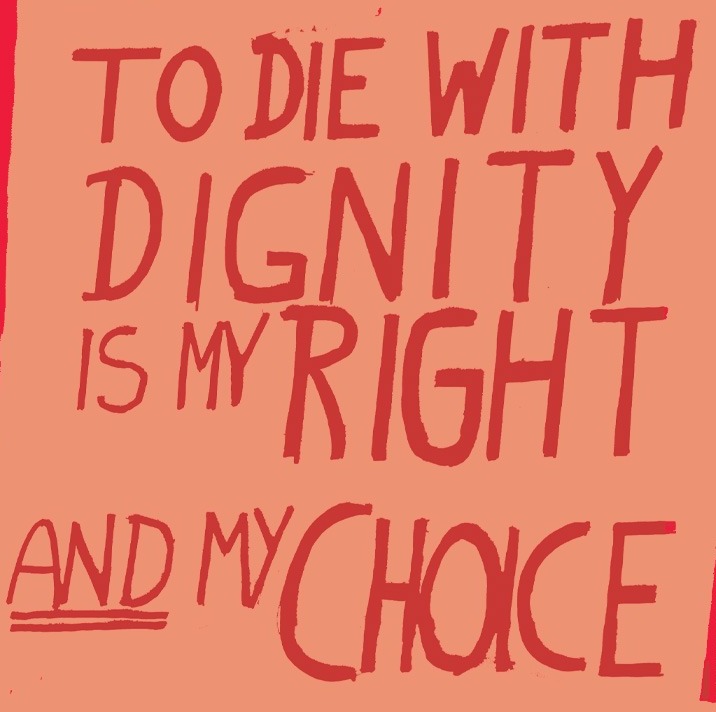
Navigating the Right to Die with Dignity: How India’s Legal Framework on Passive Euthanasia and Living Wills Fails the Reality Test
Judicial Expansion of Article 21 Enshrines End-of-Life Autonomy, Yet Complex Procedural Frameworks and Public Unawareness Leave Families Drowning in Legal and Institutional Uncertainty
From Landmarking Rulings to Clinical Realities: Bridging the Divide Between Constitutional Protections, Advance Medical Directives, and Statutory Inaction in Palliative Care
By Legal Editor
New Delhi: August 20, 2026:
Across the bustling corridors of Indian healthcare hubs like the All India Institute of Medical Sciences (AIIMS) in New Delhi, thousands of families endure an agonizing limbo. Battling terminal illnesses ranging from end-stage cancers to irreversible neurological trauma, patients and their caregivers routinely hit an insurmountable institutional wall. While clinical interventions reach their limits, the mechanisms required to ease suffering remain shrouded in confusion. Despite groundbreaking judicial pronouncements by the Supreme Court of India recognizing the right to die with dignity, the practical execution of passive euthanasia and Advance Medical Directives (AMDs), commonly known as "living wills," remains virtually inaccessible to the public.
The Constitutional Evolution: Article 21 and the Right to Die with Dignity
The jurisprudence surrounding bodily autonomy and end-of-life care in India has undergone a major transformation over the past decade. Central to this legal architecture is Article 21 of the Constitution of India, which guarantees the protection of life and personal liberty.
In the landmark case of (2018), a five-judge Constitution Bench held that the fundamental "right to life" inherently encompasses the "right to die with dignity". The apex court recognized passive euthanasia—the withholding or withdrawal of life-sustaining treatment or artificial life support from a terminally ill patient with no chance of recovery—as legally permissible. The judgment explicitly distinguished active euthanasia (the intentional administration of lethal substances, which remains illegal) from passive euthanasia, validating the execution of Advance Medical Directives to enforce patient autonomy before incapacitation.
│ INDIAN LEGAL EVOLUTION TIMELINE │
├──────────────┬──────────────────────────────────────────────────────────┤
│ Year │ Legal Landmark / Regulatory Action │
├──────────────┼──────────────────────────────────────────────────────────┤
│ 2018 │ Supreme Court recognizes passive euthanasia and living │
│ │ wills under Article 21 in Common Cause v. Union of India.│
├──────────────┼─────────────────────────────
│ Jan 2023 │ Constitution Bench simplifies 2018 guidelines, removing │
│ │ mandatory judicial magistrate involvement for validation.│
├──────────────┼──────────────────────────────────────────────────────────┤
│ Mar 2026 │ Supreme Court permits first-ever withdrawal of CANH for │
│ │ a patient in a 13-year vegetative state (Harish Rana). │
└──────────────┴─────────────────────────────
Simplifying the Red Tape: The 2023 Procedural Refinements
The original 2018 guidelines established an extraordinarily complex framework to prevent potential misuse, such as land disputes or familial coercion. Under the initial directives, executing a living will required an attestation before a Judicial Magistrate First Class (JMFC). Furthermore, invoking the directive necessitated two separate medical boards comprising senior specialists with at least 20 years of clinical experience, followed by approval from the local District Magistrate.
Recognizing that these cumbersome safeguards rendered living wills virtually unworkable in acute clinical settings, the Indian Society for Critical Care Medicine (ISCCM) moved the court for modification. In January 2023, a five-judge bench :
Simplified Attestation: The requirement for a Judicial Magistrate’s signature was replaced. An Advance Medical Directive can now be executed before a notary or gazetted officer in the presence of two attesting witnesses.
Expedited Medical Boards: The requirement for doctor experience was reduced from 20 years to 5 years. Hospitals must form a Primary Medical Board (comprising the treating doctor and two specialists) and a Secondary Medical Board (comprising a Chief Medical Officer nominee and two independent experts). Both boards are urged to provide their determinations within a 48-hour window.
Nominee Autonomy: Individuals can designate multiple guardians or family nominees to convey consent if the patient becomes incapacitated.
Application in Practice: The Landmark Case of Harish Rana
Despite procedural simplifications, practical implementations remained theoretical until the landmark precedent established in early 2026. In the case of Harish Rana—a 32-year-old man who remained in a persistent vegetative state for 13 years following severe head trauma—the Supreme Court authorized the first-ever withdrawal of life support under the modified guidelines.
The case evaluated whether Clinically Assisted Nutrition and Hydration (CANH), delivered via percutaneous endoscopic gastrostomy (PEG) tubes, constituted medical treatment or basic care. The Supreme Court clarified that CANH is a technologically mediated medical intervention rather than simple feeding. Consequently, it falls under the exact same clinical and legal principles governing artificial ventilation. Applying the "substituted judgment standard"—evaluating what the patient would have desired based on their prior values—the court prioritized pain-free, quality palliative care over the artificial prolongation of biological life.
│ PATIENT BECOMES INCAPACITATED │
└──────────────────────┬───────────────────────┘
│
▼
│ PRIMARY MEDICAL BOARD EVALUATION │
│ (Treating Doctor + 2 Experts; 48 Hours) │
└──────────────────────┬───────────────────────┘
│
▼
│ SECONDARY MEDICAL BOARD REVIEW │
│ (CMO Nominee + 2 Independent Experts) │
└──────────────────────┬───────────────────────┘
┌──────────────────┐
│ APPROVED │ │ REJECTED │
└─────────┬────────┘ └─────────┬────────┘
│ │
▼ ▼
┌──────────────────┐ ┌──────────────────┐
│ Intimation to │ │ Appeal to High │
│ JMFC & EOL │ │ Court (Art 226) │
│ Palliative Care │ └──────────────────┘
└──────────────────┘
The Gap Between Legal Rights and Operational Realities
While the legal principles are established, systemic barriers persist across India's public and private health infrastructure:
Legislative Vacuum: Parliamentary legislation explicitly codifying passive euthanasia and advance directives has not been passed. The entire operational framework relies entirely on judicial guidelines issued under constitutional jurisdiction.
Absence of Living Will Clinics: Special institutional support centers designed to help citizens draft, record, and store advance directives are virtually nonexistent, with only isolated private pilot programs operating in major metropolises.
Palliative Care Deficit: While 7 to 10 million Indians require end-of-life palliative support annually, less than 4 percent have access to dedicated care facilities.
Social Taboos: Open family conversations regarding dying and medical preferences remain socio-culturally suppressed, leading to severe emotional burden and prolonged litigation during medical crises.
FAQ Search Index: Understanding End-of-Life Legalities in India
Q1: What is the legal difference between active and passive euthanasia in India?
Answer: Active euthanasia involves directly administering a lethal substance to end a patient's life, which is strictly illegal under Indian criminal law. Passive euthanasia refers to withholding or withdrawing life-prolonging medical interventions (such as mechanical ventilators or feeding tubes) when a terminal condition offers no reasonable prospect of recovery, which is legally permitted.
Q2: What is an Advance Medical Directive (Living Will)?
Answer: An Advance Medical Directive (AMD) is a voluntary legal document in which a mentally competent adult outlines their specific choices regarding future medical treatments—specifically the refusal of life-sustaining measures—in the event that they lose the ability to communicate or give informed consent later in life.
Q3: How can a living will be legally executed under current rules?
Answer: Under the simplified 2023 Supreme Court guidelines, the document must be signed by the executor in the presence of two independent attesting witnesses and attested by a Notary Public or a Gazetted Officer. The executor must also designate specific nominees to convey decisions on their behalf.
Q4: Who decides to withdraw life support if no living will exist?
Answer: If an incapacitated patient has not executed an AMD, the immediate family members or legal guardians, in consultation with the treating medical team, may request the hospital to constitute Primary and Secondary Medical Boards. The boards apply the "best interest principle" and "substituted judgment standard" to determine if continued treatment is medically futile.
Q5: What role do medical boards play when withdrawing treatment?
Answer: Two independent boards are required:
Primary Medical Board: Formed by the hospital, consisting of the treating physician and two specialists with at least 5 years of experience.
Secondary Medical Board: Formed by the hospital, including an independent expert nominated by the District Chief Medical Officer and two external specialists.
Both boards must separately examine the patient and issue a decision, preferably within 48 hours each.
Q6: Does Clinically Assisted Nutrition and Hydration (CANH) count as medical treatment?
Answer: Yes. The Supreme Court confirmed that enteral and parenteral nutrition delivered via medical devices (such as PEG tubes) is considered clinical treatment. It can be legally withheld or withdrawn under the same protocols that govern artificial ventilation.
Q7: Can a hospital’s decision to refuse passive euthanasia be challenged?
Answer: Yes. If the Secondary Medical Board or hospital declines to grant approval for withdrawing treatment, the patient's family, nominated representatives, or hospital authorities can file a writ petition in the jurisdictional State High Court under Article 226 of the Constitution of India.