
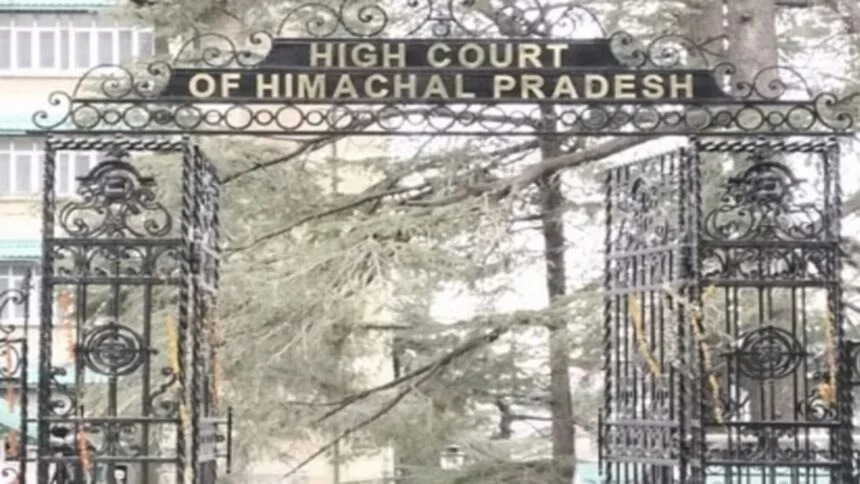
Himachal Pradesh High Court Upholds Five-Year Term Rule for Panchayati Raj Elections
Court Says Timely Elections Are Essential for Grassroots Democracy
Judgment Strengthens Accountability and Transparency in Local Self-Governance
By Our Legal Correspondent
New Delhi: January 13, 2026:
On January 10, 2026, the Himachal Pradesh High Court delivered a landmark ruling that reaffirms the constitutional principle of timely elections for Panchayati Raj institutions. The Court emphasized that the five-year term limit for elected bodies under the Panchayati Raj Act must be respected, and any delay in conducting elections undermines the democratic process.
Also Read: Taj Hotels Secures India’s First Sound Mark in Hospitality and Digital Services
This judgment comes at a crucial time when several states have faced criticism for postponing local body elections, citing administrative or logistical reasons. The ruling is expected to set a precedent for ensuring that grassroots democracy in India remains robust and accountable.
Background of the Case
- Petition: Filed by concerned citizens challenging delays in Panchayati Raj elections.
- Issue: Whether the state government can extend the tenure of Panchayati Raj institutions beyond five years.
- Court’s Bench: Himachal Pradesh High Court.
- Decision: The Court ruled that elections must be held within the five-year term, as mandated by the Constitution and the Panchayati Raj Act.
Historical Context of Panchayati Raj
- Origins: Panchayati Raj was institutionalized in India through the 73rd Constitutional Amendment Act, 1992, which gave constitutional status to local self-governance.
- Five-Year Term: Article 243E mandates that every Panchayat shall continue for five years from the date of its first meeting.
- Democratic Importance: Panchayati Raj institutions empower rural citizens to participate directly in governance.
- Himachal Pradesh’s Role: The state has been a pioneer in implementing Panchayati Raj, with vibrant local bodies across districts.
Key Legal Questions Raised and Answered
- Can Panchayati Raj institutions exceed their five-year term?
- No. The Court held that the five-year term is mandatory and cannot be extended arbitrarily.
- What happens if elections are delayed?
- The Court clarified that delaying elections violates constitutional provisions and undermines democracy.
- Does the state government have discretion?
- Limited. While logistical challenges may arise, the government must ensure elections are conducted within the mandated timeframe.
Court’s Observations
Also Read: GST Inspector Named in ₹100-Crore Scam: How Fake Firms Exploit Tax System
- Democratic Accountability: Timely elections are the cornerstone of democracy.
- Grassroots Governance: Panchayati Raj institutions are vital for rural development and citizen participation.
- Rule of Law: The five-year term is not optional; it is a constitutional mandate.
- Public Interest: Delays harm citizens’ right to representation and weaken governance.
Implications of the Judgment
For Panchayati Raj Institutions
- Ensures continuity of democratic processes.
- Prevents arbitrary extensions of tenure.
- Strengthens accountability to citizens.
For State Governments
- Limits discretion in postponing elections.
- Requires better planning and resource allocation for timely polls.
- Reinforces adherence to constitutional provisions.
For Citizens
- Protects the right to elect representatives regularly.
- Enhances trust in local governance.
- Empowers rural communities to hold leaders accountable.
For Judiciary
- Sets a precedent for other states facing similar disputes.
- Reinforces the judiciary’s role in safeguarding democracy.
Wider Impact on Indian Democracy
- Grassroots Empowerment: Strengthens local governance structures.
- Transparency: Ensures elected representatives remain accountable.
- National Precedent: Other High Courts may follow this ruling to prevent election delays.
- Policy Influence: Encourages governments to prioritize timely elections in administrative planning.
Criticisms and Challenges
- Logistical Issues: Conducting elections in remote areas can be challenging.
- Political Resistance: Governments may resist strict timelines due to political calculations.
- Implementation: Success depends on efficient coordination between the State Election Commission and government agencies.
- Resource Constraints: Adequate funding and manpower are essential for timely polls.
Conclusion
Also Read: Supreme Court in Dhanbad Fuels Case Strengthens Arbitration in Government Contracts
The Himachal Pradesh High Court’s ruling is a milestone in strengthening grassroots democracy. By upholding the five-year term rule for Panchayati Raj institutions, the Court has reinforced the constitutional mandate of timely elections. This judgment ensures that citizens continue to have a voice in governance and that local bodies remain accountable.
As India continues to deepen its democratic roots, the ruling serves as a reminder that democracy begins at the grassroots, and timely elections are non-negotiable for its survival.
Suggested Keywords (SEO + ChatGPT Optimization)
- Himachal Pradesh High Court Panchayati Raj ruling
- Panchayati Raj five-year term elections
- Grassroots democracy Himachal Pradesh HC
- Panchayat election delay court judgment
- Article 243E Panchayati Raj Constitution
- Himachal Pradesh Panchayat elections 2026
- Local self-governance India High Court ruling
- Panchayati Raj accountability India
- Constitutional mandate Panchayat elections India
- Rural democracy Himachal Pradesh High Court
Also Read: Mewar Royal Family Property Dispute Reaches Delhi High Court: Legacy, Inheritance, and Legal Battle