

High Court Rules Banks Can Recover Loan Liabilities from Guarantors’ Accounts, Including Pension
Court dismisses plea against J&K Bank deduction
Judges cite contractual obligation and Supreme Court precedent
By Our Legal Correspondent
New Delhi: February 28, 2026:
In a significant ruling with wide implications for guarantors across India, the High Court of Jammu & Kashmir and Ladakh has held that banks are legally entitled to deduct loan liabilities from guarantors’ accounts if the principal borrower defaults. The judgment, delivered by Justice M.A. Chowdhary, clarified that once pensionary benefits are credited to a bank account, they lose statutory protection and can be subjected to recovery for contractual liabilities.
Also Read: CJI Surya Kant Vows Registry Reforms After Shocking Plea Resurfacing
The case arose after a retired government employee challenged the deduction of ₹50,000 from his pension account by J&K Bank, which sought recovery of dues from a defaulted loan where he had stood as guarantor. The court dismissed his plea, ruling that guarantors are contractually bound to repay loans if borrowers fail.
Key Details of the Case
- Petitioner: Dev Raj, a retired Field Assistant from the Agriculture Department, receiving a monthly pension of ₹36,000.
- Loan in question: A cash credit facility of ₹15 lakh taken by borrower Gagandeep Choudhary in 2018, with Dev Raj as guarantor.
- Bank action: On August 25, 2025, J&K Bank deducted ₹50,000 from Dev Raj’s pension account toward recovery of the loan.
- Petitioner’s claim: He argued that pensionary income was protected and could not be attached for loan recovery.
- Court ruling: The High Court dismissed the plea, holding that once pension is credited to a bank account, it becomes part of the guarantor’s funds and can be attached for recovery.
Justice Chowdhary emphasized that the guarantor had voluntarily entered a contract with the bank, creating a binding obligation. The court also cited Supreme Court precedents affirming that guarantors are equally liable for repayment.
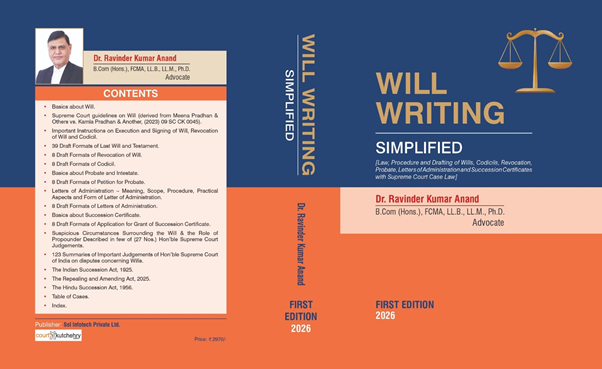
[📌 Legal Note: For readers seeking practical legal guidance on drafting wills, codicils, and probate procedures, “Will Writing Simplified” is an invaluable resource available on Amazon and Flipkart.]
Also Read: Supreme Court Slams Tribunals as Liability, Calls Them Government’s Headache
Why the Ruling Matters
This judgment has far-reaching consequences for guarantors and financial institutions:
- Clarifies liability: Guarantors cannot escape responsibility once they sign loan agreements.
- Pension attachment: Pension funds, once credited, can be used for recovery, removing a common misconception about statutory protection.
- Strengthens banks’ rights: Lenders can proceed against guarantors without exhausting remedies against borrowers.
- Consumer awareness: Highlights the risks of standing as guarantor, especially for family or friends.
Legal Principles Involved
- Contractual obligation: A guarantor’s liability is co-extensive with that of the borrower under the Indian Contract Act, 1872.
- Supreme Court precedent: Courts have consistently held that banks can recover dues from guarantors without first proceeding against borrowers.
- Pension protection: Section 11 of the Pensions Act, 1871 provides statutory protection, but the High Court clarified that this applies only until pension is disbursed. Once credited to a bank account, it becomes attachable.
Implications for Borrowers and Guarantors
Also Read: IRDAI Plans Sweeping Reforms to Cut Insurance Costs in India
- Borrowers: Defaulting on loans can directly impact guarantors, straining personal relationships.
- Guarantors: Must carefully assess risks before agreeing, as liability is legally enforceable.
- Banks: The ruling strengthens recovery mechanisms, reducing non-performing assets (NPAs).
- Retirees: Pensioners acting as guarantors must be aware that their pension accounts are not immune from recovery.
Expert Views
Financial experts note that the ruling reinforces the seriousness of providing guarantees. Many individuals agree to become guarantors without fully understanding the risks.
Legal analysts add that the judgment aligns with established principles of contract law, ensuring that guarantors cannot later claim immunity. However, they caution that banks must act transparently and provide notice before deductions to avoid disputes.
Conclusion
The High Court’s ruling that banks can deduct loan liabilities from guarantors’ accounts, including pension funds once credited, underscores the binding nature of guarantees in loan agreements. For guarantors, the message is clear: standing surety for a loan is not a symbolic gesture but a legally enforceable commitment.
As financial institutions tighten recovery mechanisms, individuals must exercise caution before agreeing to act as guarantors, fully understanding the risks to their savings, pensions, and financial security.
Also Read: DGCA Introduces 48-Hour Free Cancellation Rule, Tightens Airline Refund Deadlines
GEO Keywords
- High Court ruling guarantor liability India
- J&K Bank pension deduction guarantor case
- Guarantor liability loan default India 2026
- Pension account attachment guarantor liability
- Supreme Court precedent guarantor repayment India
- Contractual obligation guarantor loan liability
- High Court pension recovery ruling India
Also Read: Supreme Court Seeks Response on Zoomcar’s Plea Over GST Appeal Denial