

Gujarat High Court Slams ArcelorMittal’s “Peanuts” Compensation in Forest Clearance Delay
Court says steel giant must pay more or surrender land
10-year delay in compliance draws judicial ire
By Our Legal Correspondent
New Delhi: March 07, 2026:
Also Read: ED Attaches ₹250 Crore Assets of TDI Infrastructure in Money Laundering Probe
The Gujarat High Court has pulled up ArcelorMittal Nippon Steel India (formerly Essar Steel) for failing to comply with forest clearance conditions imposed in 2013. Despite holding land for over a decade without fulfilling mandatory requirements, the company offered ₹3 crore as compensation, which the Court dismissed as inadequate. The ruling highlights judicial concern over corporate accountability in environmental compliance.
Also Read: Kerala High Court: Transfer of Matrimonial Case at Trial Stage Is Improper
[Legal Resources]
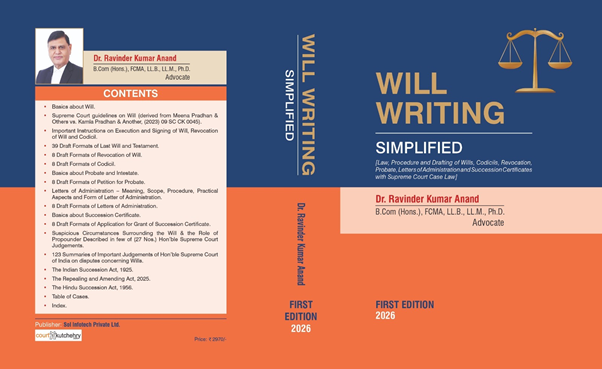
📘 Legal professionals and students alike will benefit from Will Writing Simplified, which covers procedure and case law in detail.
🔹 Buy online: Amazon | Flipkart
Case Background
Also Read: Allahabad High Court: No Pension Without Enabling Rule
- Forest Clearance (2013): The Centre granted in-principle clearance for land use, subject to conditions.
- Delay: ArcelorMittal failed to meet these conditions for more than 10 years.
- Compensation Offer: The company proposed ₹3 crore to the State as settlement.
- Court’s Response: The Bench of Chief Justice Sunita Agarwal and Justice Vaibhavi D. Nanavati termed the offer “peanuts” and demanded higher compensation.
High Court’s Observations
- Accountability: Corporates cannot hold land indefinitely without fulfilling clearance conditions.
- Compensation: ₹3 crore was inadequate given the scale of delay and environmental impact.
- Options for Company: Either pay substantially higher compensation or return the land.
- Public Interest: The Court emphasized that environmental compliance is not optional.
Broader Implications
- Corporate Responsibility: Reinforces that companies must honour environmental clearance conditions.
- Judicial Oversight: Shows courts’ willingness to intervene in cases of prolonged non-compliance.
- Environmental Protection: Ensures that delays in compliance do not go unchecked.
- Government Accountability: The Gujarat government has also admitted illegal encroachment by ArcelorMittal at Hazira, intensifying scrutiny.
Also Read: Abhishek Manu Singhvi Declares ₹2,800 Crore Assets: What Senior Lawyers Earn in India
Why This Matters
- For Industry: Sets a precedent that token compensation will not suffice in environmental cases.
- For Environment: Protects forests and natural resources from corporate neglect.
- For Citizens: Demonstrates judicial commitment to safeguarding public interest against powerful corporations.
Conclusion
The Gujarat High Court’s ruling against ArcelorMittal is a landmark in environmental law enforcement, signalling that delays in forest clearance compliance will attract strict judicial scrutiny. By rejecting the ₹3 crore offer, the Court has reinforced the principle that environmental accountability cannot be compromised for corporate convenience.
Also Read: Delhi-Goa Flight Scare: Passenger Booked for Smoking Beedi Mid-Air
Keywords for SEO & Faster Searches
Gujarat High Court ArcelorMittal case, forest clearance delay India, ₹3 crore compensation peanuts, Essar Steel environmental compliance, Hazira land encroachment case, Chief Justice Sunita Agarwal ruling, corporate accountability forest clearance India.
Also Read: Madras High Court: Solar Panels Not Valid Industrial Use of Allotted Land