
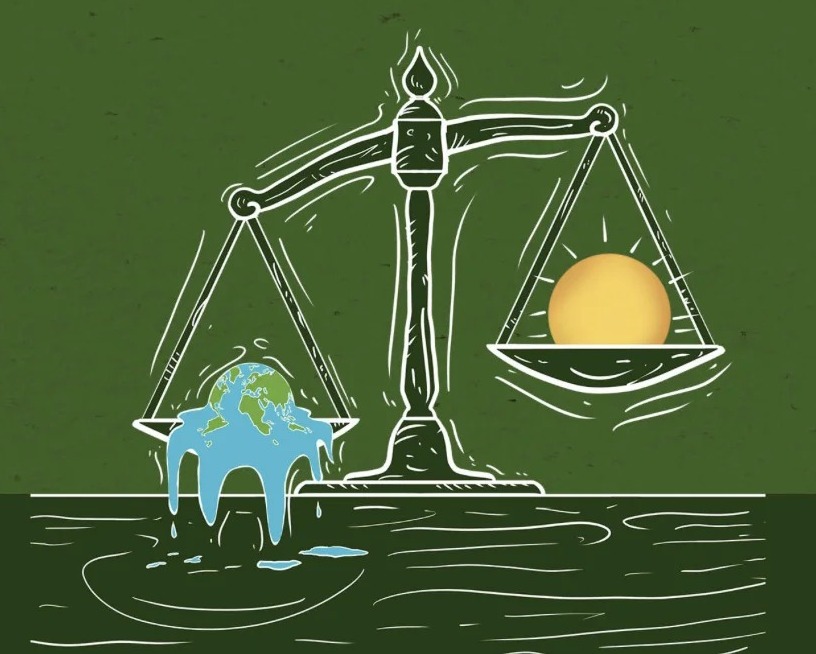
Resolving Green Conflicts: Arbitration’s Role in Environmental and Climate Governance
Arbitration in Renewable Energy and Carbon Markets
Balancing Development and Sustainability Through Arbitration
By Vishwas Kumar
New Delhi: June 07, 2026
Environmental and climate disputes are no longer peripheral—they are central to global governance and economic development. As nations commit to ambitious climate targets, expand renewable energy projects, and regulate carbon markets, conflicts inevitably arise. Arbitration is increasingly being recognized as a vital mechanism to resolve these disputes, offering neutrality, speed, and enforceability in areas where litigation may be slow or politically charged.
Few constitutional developments have generated as much legal and political debate as the abrogation of Article 370. The provision governed the special constitutional status of Jammu and Kashmir for decades before undergoing a historic transformation in 2019. To understand its origins, constitutional framework, presidential orders, parliamentary actions, and the Supreme Court’s landmark verdict on the issue, explore our in-depth analysis of Article 370: A Turning Point in Indian Constitutional History , covering one of the most significant constitutional developments in modern India.
India, with its ambitious renewable energy goals and pressing environmental challenges, must adapt its arbitration framework to address sustainability disputes. From solar and wind projects to carbon credit trading and environmental compliance, arbitration can provide the predictability investors and communities need.
Legal Framework
- Indian Environmental Laws: Environmental Protection Act, Forest Conservation Act, and renewable energy regulations intersect with arbitration when disputes arise in project execution.
- International Treaties: Paris Agreement and Kyoto Protocol create obligations that may lead to arbitration in cross‑border climate disputes.
- Arbitration Act: Provides the procedural foundation but must evolve to accommodate environmental and climate‑specific disputes.
Types of Disputes
- Renewable Energy Projects: Solar, wind, and hydro contracts often face disputes over tariffs, delays, and compliance.
- Carbon Credit Trading: Disputes over verification, compliance, and cross‑border trading.
- Environmental Impact Assessments: Conflicts between developers, regulators, and communities.
Comparative Lens
- EU: Arbitration in carbon trading and renewable energy disputes.
- US: Renewable energy contract disputes resolved through arbitration.
- Singapore: Emerging hub for green finance arbitration.
Sociological, Economic, and Ethical Impacts
- Sociological: Communities benefit when environmental disputes are resolved fairly, preventing ecological harm.
- Economic: Arbitration ensures predictability in green investments, attracting capital.
- Ethical: Balancing development with sustainability and justice is critical.
Case Narratives
- India’s Renewable Energy Arbitration: Disputes over solar tariffs resolved through arbitration.
- Global Carbon Trading Disputes: Arbitration ensures compliance and predictability.
Connecting Renewable Energy Arbitration with Sustainability Governance
The two dimensions of environmental arbitration—renewable energy and carbon markets on one hand, and balancing development with sustainability on the other—are deeply interconnected. Renewable energy projects and carbon trading schemes cannot succeed in isolation; they exist within broader ecosystems where community rights, ecological integrity, and regulatory compliance play decisive roles.
For instance, a solar or wind project may face tariff disputes with utilities, but it may also encounter resistance from local communities concerned about land use or biodiversity. Similarly, carbon credit trading requires robust verification mechanisms, but its legitimacy depends on ensuring that projects generating credits do not harm ecosystems or marginalize vulnerable populations. Arbitration must therefore operate at both levels—resolving commercial conflicts while embedding sustainability principles into its processes.
This dual role highlights arbitration’s unique position in India’s green transition. By providing predictability in renewable energy contracts, arbitration attracts investment and accelerates project execution. At the same time, by offering fairness and transparency in disputes involving environmental impact assessments or regulatory compliance, arbitration ensures that development does not compromise sustainability.
Globally, jurisdictions that have successfully integrated arbitration into climate governance—such as the EU, US, and Singapore—demonstrate that commercial viability and ecological responsibility can coexist. India must adopt a similar approach, tailoring its arbitration framework to reflect both economic imperatives and ethical obligations.
In essence, arbitration in environmental and climate disputes is not about choosing between growth and sustainability—it is about reconciling them. By bridging renewable energy arbitration with sustainability governance, India can position itself as a leader in green dispute resolution, ensuring that its development trajectory aligns with global climate commitments and community expectations.
Arbitration in Renewable Energy and Carbon Markets
The renewable energy sector has emerged as one of the most dynamic areas of investment in India. With ambitious targets to achieve 500 GW of renewable capacity by 2030, the country is witnessing unprecedented growth in solar, wind, and hydro projects. Yet, this rapid expansion inevitably generates disputes—over tariffs, delays in project execution, land acquisition, regulatory compliance, and financing. Arbitration provides a neutral, efficient, and enforceable mechanism to resolve these conflicts, ensuring that projects remain viable and investor confidence is preserved.
One of the most common disputes in renewable energy arises from power purchase agreements (PPAs). Tariff renegotiations, often triggered by changes in government policy or market conditions, have led to conflicts between developers and state utilities. Arbitration allows these disputes to be resolved without lengthy litigation, preserving relationships and ensuring continuity of supply. For example, solar developers have frequently resorted to arbitration when state electricity boards attempted to revise tariffs downward, threatening project viability.
Wind energy projects face similar challenges, particularly in land acquisition and regulatory approvals. Arbitration offers a structured process to resolve disputes between developers, landowners, and regulators. Hydro projects, often involving cross‑border rivers, raise complex issues of sovereignty and environmental compliance. Here, international arbitration plays a critical role in balancing national interests with global obligations.
Beyond renewable energy, carbon markets are becoming a major source of disputes. India is preparing to launch its own carbon trading framework, aligned with global climate commitments. Disputes in carbon markets typically involve verification of emissions reductions, compliance with trading rules, and cross‑border enforcement. Arbitration ensures predictability in these markets, providing investors and governments with confidence that disputes will be resolved fairly.
Globally, the European Union has integrated arbitration into its carbon trading system, while the US has seen disputes in renewable energy contracts resolved through arbitration. Singapore is positioning itself as a hub for green finance arbitration, leveraging its reputation for efficiency and neutrality. India must learn from these examples, embedding arbitration into its renewable energy and carbon market frameworks.
The economic impact of arbitration in renewable energy and carbon markets is significant. By providing predictability, arbitration attracts investment, reduces risk, and accelerates project execution. Sociologically, communities benefit when disputes are resolved quickly, preventing projects from stalling and ensuring access to clean energy. Ethically, arbitration must balance development with sustainability, ensuring that environmental concerns are not sacrificed for economic gain.
In conclusion, arbitration in renewable energy and carbon markets is not just about resolving disputes—it is about enabling India’s green transition. By embedding arbitration into these sectors, India can attract investment, foster innovation, and meet its climate commitments.
Balancing Development and Sustainability Through Arbitration
India’s development trajectory is marked by ambitious infrastructure projects, industrial expansion, and urban growth. Yet, these initiatives often clash with environmental concerns, community rights, and sustainability goals. Arbitration offers a mechanism to balance these competing interests, providing fairness, transparency, and accountability in disputes that pit development against ecological preservation.
One of the most pressing areas of conflict is environmental impact assessments (EIAs). Large projects—whether highways, dams, or industrial plants—require EIAs to evaluate their ecological footprint. Disputes often arise when communities challenge the adequacy of assessments or allege violations of environmental norms. Arbitration provides a neutral forum to resolve these disputes, ensuring that development proceeds without compromising ecological integrity.
Arbitration also plays a role in disputes involving regulatory compliance. Industries are required to adhere to pollution control norms, waste management rules, and sustainability standards. Non‑compliance can lead to conflicts with regulators, communities, and investors. Arbitration ensures that these disputes are resolved efficiently, balancing enforcement with business viability.
The ethical dimension of arbitration in sustainability disputes is critical. Arbitrators must weigh economic benefits against ecological costs, ensuring that decisions reflect fairness and justice. Transparency is essential—communities must trust that arbitration is not biased in favor of powerful corporations or governments. Accountability mechanisms, such as disclosure of conflicts of interest and adherence to global ethical standards, are vital to maintaining credibility.
Globally, arbitration has been used to resolve disputes in environmental governance. The EU has integrated arbitration into its climate frameworks, while the US has seen arbitration in renewable energy and environmental compliance disputes. Singapore is emerging as a hub for green finance arbitration, emphasizing sustainability in its dispute resolution mechanisms. India must adapt these lessons, embedding sustainability into its arbitration framework.
The sociological impact of arbitration in sustainability disputes is profound. Communities gain confidence when disputes are resolved fairly, protecting their rights and preserving ecosystems. Economically, arbitration ensures predictability in infrastructure projects, attracting investment while safeguarding sustainability. Ethically, arbitration reinforces the principle that development must not come at the expense of ecological integrity.
Case narratives illustrate the importance of arbitration in balancing development and sustainability. Disputes over hydro projects, where communities allege ecological harm, have been resolved through arbitration, ensuring compensation and compliance. Renewable energy projects facing challenges from local communities have used arbitration to balance development with community rights.
In conclusion, arbitration is not just a legal mechanism—it is a guardian of sustainability. By embedding arbitration into environmental and climate governance, India can balance development with ecological preservation, ensuring fairness, transparency, and accountability. Arbitration in sustainability disputes is about shaping the future—one where economic growth and environmental integrity coexist.
Extended FAQ (40 Questions)
1. What is environmental arbitration? Neutral resolution of environmental disputes.
2. How does climate arbitration differ? Focuses on disputes arising from climate obligations.
3. What laws govern environmental arbitration in India? Environmental Protection Act and Arbitration Act.
4. How do renewable energy disputes arise? Tariffs, delays, and compliance issues.
5. How does carbon trading lead to disputes? Verification and compliance challenges.
6. How does arbitration help communities? Ensures fair resolution of ecological conflicts.
7. How does arbitration help investors? Provides predictability in green projects.
8. How does arbitration help governments? Reduces litigation and ensures compliance.
9. How does arbitration help SMEs? Provides affordable resolution in green contracts.
10. How does arbitration help banks? Ensures enforceability of green financing.
11. How does arbitration help capital markets? Boosts confidence in green bonds.
12. How does arbitration help employees? Protects jobs in renewable projects.
13. How does arbitration help creditors? Ensures recovery in green contracts.
14. How does arbitration affect ethics? Balances development with sustainability.
15. How does arbitration affect global commerce? Facilitates green trade.
16. How does arbitration affect India’s image? Enhances credibility as a green hub.
17. How does arbitration affect FDI inflows? Predictability attracts investors.
18. How does arbitration affect judicial backlog? Reduces litigation.
19. How does arbitration affect UNCITRAL principles? Aligns India with global norms.
20. How does arbitration affect BITs? Investor‑state disputes in green projects.
21. How does arbitration affect infrastructure financing? Ensures enforceability in renewable projects.
22. How does arbitration affect renewable energy? Resolves disputes in solar and wind.
23. How does arbitration affect software licensing? Applies to green tech contracts.
24. How does arbitration affect pharma licensing? Balances IP with sustainability.
25. How does arbitration affect judicial discipline? Courts must respect green awards.
26. How does arbitration affect sovereign powers? Challenges sovereignty in regulation.
27. How does arbitration affect taxation disputes? Raises green enforcement issues.
28. How does arbitration affect India’s growth? Boosts green economy.
29. How does arbitration affect SMEs abroad? Provides affordable resolution.
30. How does arbitration affect multinational corporations? Ensures predictability in green contracts.
31. How does arbitration affect credibility? Integrity is central to trust.
32. How does arbitration affect UNCITRAL harmonization? Aligns India with standards.
33. How does arbitration affect judicial delays? Minimizes delays.
34. How does arbitration affect enforcement predictability? Ensures swift outcomes.
35. How does arbitration affect training needs? Arbitrators must learn green law.
36. How does arbitration affect transparency? Embeds accountability.
37. How does arbitration affect global integration? Connects India with green networks.
38. How does arbitration affect climate governance? Provides neutral resolution.
39. How does arbitration affect carbon markets? Ensures compliance.
40. What is India’s future in green arbitration? Embracing sustainability will elevate India’s standing.
Op‑Ed Closing Vision
India’s arbitration reforms must now embrace sustainability. Environmental and climate disputes are not peripheral—they are central to governance and commerce. Comparative jurisdictions show the way: the EU integrates arbitration into carbon trading, the US resolves renewable energy disputes, and Singapore positions itself as a hub for green finance. India must craft its own model, combining global best practices with domestic realities.
Economically, green arbitration boosts investor confidence in renewable projects. Sociologically, it protects communities and ecosystems. Ethically, it balances development with sustainability.
The vision for India’s future is clear: discipline, predictability, and sustainability integration. Reforming laws, training arbitrators in environmental law, and embedding sustainability into arbitration are essential. If India sustains this trajectory, arbitration will evolve into a cornerstone of its green growth story.
Ultimately, arbitration is not just about resolving disputes—it is about shaping the future. In the era of climate change, arbitration must serve as a guardian of sustainability. If India can embrace green arbitration, it will attract investment, foster innovation, and elevate its global standing. If not, neglecting sustainability risks undermining its ambition to be a credible hub. The choice is stark: embrace green arbitration and lead, or resist change and risk irrelevance.