
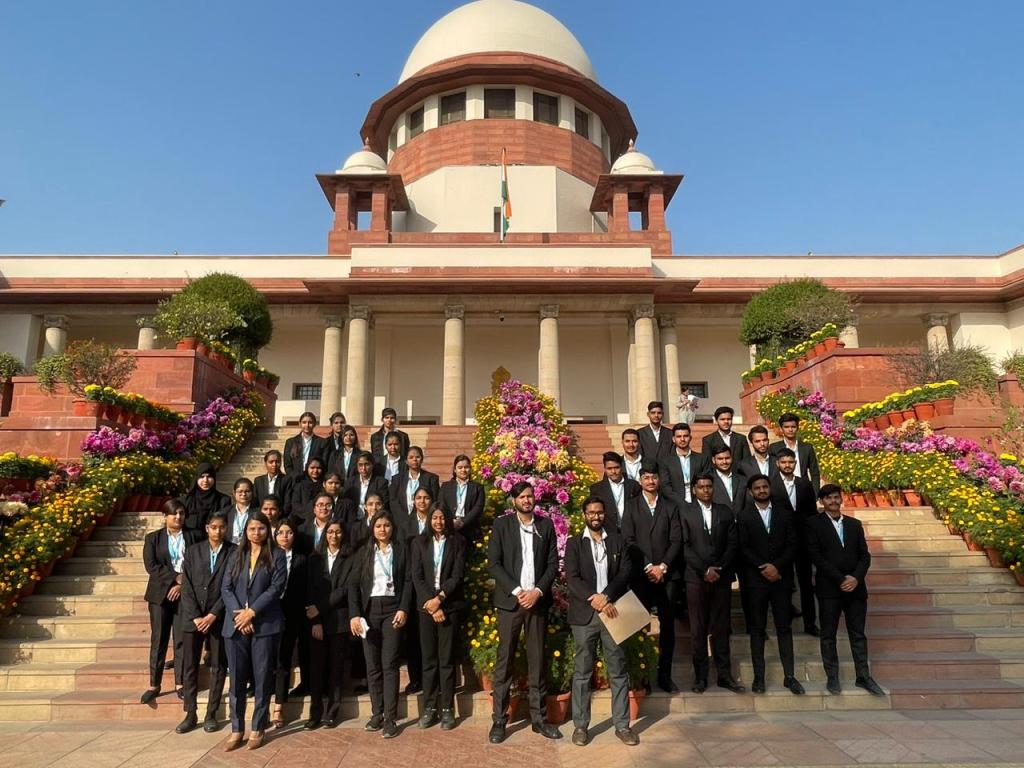
COURTKUTCHEHRY SPECIAL SERIES ON LANDMARKS JUDGEMENTS ON WILLS, CODICIL & PROBATE
Dr. K.S. Palanisami (Dead) Vs Hindu Community in General and Citizens of Gobichettipalayam: Supreme Court Upholds Charitable Obligation in Joint Will
Survivor’s Absolute Ownership Subject to Fiduciary Duty
1980 Will Invalidated, Appeals Dismissed
By Vishwas Kumar
New Delhi: March 22, 2026:
In Dr. K.S. Palanisami (Dead) Vs Hindu Community in General and Citizens of Gobichettipalayam (Civil Appeals Nos. 5924, 5925, 5926 & 6469 of 2005), decided on 9 March 2017, the Supreme Court of India delivered a crucial judgment on the interpretation of joint wills and charitable obligations. The Division Bench comprising Justice Dr. A.K. Sikri and Justice Ashok Bhushan examined whether the joint Will of 1968 created a binding charitable trust or conferred absolute rights on the surviving testator.
curated list of landmark will case laws
The Court held that while the survivor enjoyed full ownership of the property during her lifetime, she was bound by a fiduciary obligation to ensure that the residue of the estate was devoted to charitable purposes after her death. This interpretation balanced the survivor’s autonomy with the original charitable intent embedded in the joint Will.
The Bench categorically rejected the validity of the 1980 Will, which attempted to divert the property to private beneficiaries, ruling it inconsistent with the binding fiduciary duty established in 1968. By dismissing the appeals, the Supreme Court reinforced the principle that charitable obligations in joint wills cannot be overridden by subsequent instruments that contradict the original intent.
This ruling is significant for succession law, particularly in cases involving joint wills and charitable trusts, as it underscores the Court’s commitment to uphold fiduciary responsibilities and prevent dilution of charitable bequests. The judgment provides clarity on the delicate balance between absolute ownership rights and binding obligations in testamentary dispositions, ensuring that charitable purposes envisioned by testators are honoured across generations.
For More, Read Here the Summary of the Judgement from the Book: WILL WRITING SIMPLIFIED, read below or open page no 436, Chapter 14.1 in the book. (Online book purchase link available here on: Buy online: Amazon | Flipkart
|
|
Case Summary |
: |
Dr. K.S. Palanisami (Dead) Vs Hindu Community in General and Citizens of Gobichettipalayam. |
|
|
Court |
: |
Supreme Court of India |
|
|
Citations |
: |
(2017) 03 SC CK 0048: Civil Appeals Nos. 5924, 5925, 5926 & 6469 of 2005. |
|
|
Link |
: |
|
|
|
Decided on |
: |
9 March 2017 |
|
|
Coram |
: |
Hon’ble Justice Dr. A.K. Sikri and Hon’ble Mr. Justice Ashok Bhushan. |
|
|
Relevant Paragraphs |
: |
Para No. 2–5, 12–19, 37–57, 66 |
1. Facts of the Case:
Palaniappa Chettiar and his wife Rangammal owned extensive properties and executed a joint registered Will dated 27.09.1968, dedicating their estate to specified charitable purposes. The Will directed that the survivor of the two could enjoy the properties “absolutely with all rights,” but after their lifetime, the properties’ income was to fund charities like a choultry, maternity ward, temple pooja, and educational institution. After Palaniappa’s death (1969), Rangammal alienated several properties and later executed another Will dated 27.11.1980 in favour of defendants 4 & 5 (Perumal and Ramayammal). Following her death (1980), disputes arose between these defendants and members of the Hindu community, who claimed that the 1968 Will created an irrevocable charitable trust. The plaintiffs sought administration of the trust under Section 92 CPC.
2. Law Points Involved:
(i). Whether the suit was barred under Section 108, Tamil Nadu Hindu Religious and Charitable Endowments Act, 1959.
(ii). Whether the Will dated 27.09.1968 was a joint Will or a joint and mutual Will and irrevocable after one’s death.
(iii). Whether the surviving testator (Rangammal) had absolute ownership or only life interest.
(iv). Whether alienations made by Rangammal after her husband’s death were valid or void.
(v). Whether the later Will dated 27.11.1980 was genuine or tainted by suspicious circumstances.
3. Acts / Provisions / Articles Referred:
(i). Section 63, Indian Succession Act, 1925
(ii). Section 92, Code of Civil Procedure, 1908
(iii). Section 3, 5, 108, Tamil Nadu Hindu Religious and Charitable Endowments Act, 1959
4. Judgments Referred:
(i). Kochu Govindan Kaimal v. Thayankoot Thekkot Lakshmi Amma, (1958) 10 SC CK 0002.
(ii). Kuppuswami Raja v. Perumal Raja, (1963) 04 MAD CK 0015. https://www.courtkutchehry.com/judgements/32927/kuppuswami-raja-and-another-appellant-hash-perumal-raja-and-others-respondent]
(iii). Dilharshankar C. Bhachecha v. Controller of Estate Duty, (1986) 01 SC CK 0012.
(iv). Minakshi Ammal v. Viswanatha Aiyar, (1909) 12 MAD CK 0020.
(v). Navneet Lal v. Gokul, (1975) 12 SC CK 0025.
(vi). Gnambal Ammal v. T. Raju Ayyar, (1950) 10 SC CK 0002.
5. Obiter Dicta:
The Court reiterated that the testamentary intention must be derived solely from the language of the Will, and clear words such as “absolutely with all rights” cannot be cut down or diluted by speculation or presumed charitable intent. Even in mutual Wills, survivorship rights must be interpreted strictly based on the document’s text.
6. Ratio Decidendi:
(i). The Will dated 27.09.1968 was a joint and mutual Will, but the survivor (Rangammal) had absolute ownership over the properties during her lifetime.
(ii). The phrase “absolutely with all the rights” conferred full power of alienation to the survivor; it could not be curtailed to a mere life interest.
(iii). The suit was not barred under Section 108 of the 1959 Act since it related to a charitable endowment, not a religious institution.
(iv). The subsequent Will of 27.11.1980 propounded by defendants 4 and 5 was not proved; it was vitiated by suspicious circumstances and lacked evidence of proper execution.
7. Final Ruling:
The Supreme Court dismissed the appeals, affirming the High Court’s finding that the 1980 Will was invalid. It held that the 1968 Will was valid and effective, that the survivor held absolute ownership during her life, and that after her death, the remaining properties must be applied for the enumerated charitable purposes under judicial supervision.
8. Gist / Dispute & Final Decision:
The core issue concerned whether the joint Will (1968) created a binding charitable trust or conferred absolute rights on the survivor. The Court resolved that the survivor enjoyed full ownership but was bound by a fiduciary obligation that the property’s residue be devoted to charity after her death. The 1980 Will in favour of private beneficiaries was held invalid, and the appeals were dismissed.
Read full Judgement Here:
Dr. K.S. Palanisami (Dead) Vs Hindu Community in General and Citizens of Gobichettipalayam.
Supreme Court of India
(2017) 03 SC CK 0048: Civil Appeals Nos. 5924, 5925, 5926 & 6469 of 2005.
You Can Also Purchase the Book from here on: Buy online: Amazon | Flipkart
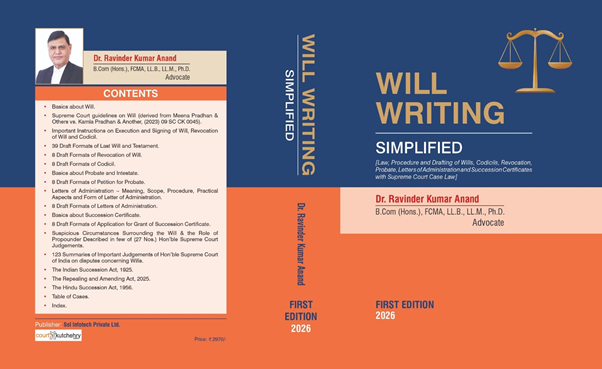
OUR RECOMMENDATION: Check out 123 Key Judgements, as highlighted in the book, WILL WRITING SIMPLIFIED, for the quick research and reference purposes. Click the link here: https://www.courtkutchehry.com/pages/blog/123-supreme-court-judgments-on-wills/
SEO-Friendly Keywords
- Dr. K.S. Palanisami Supreme Court case
- Joint Will 1968 charitable trust India
- Fiduciary obligation in inheritance law
- Supreme Court ruling on wills and charities
- 1980 Will invalidated Palanisami case
- Civil Appeals Nos. 5924-5926 & 6469 of 2005