
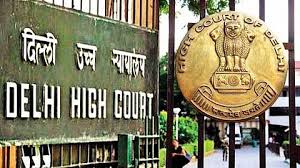
Delhi High Court: PSU Employee’s Tweets Alleging Corruption Amount to Misconduct, But Removal Too Harsh
Court rules social media allegations bypassing internal grievance channels violate service rules
Judges stress proportionality in punishment, set aside removal but uphold misconduct finding
By Legal Reporter
New Delhi: February 13, 2026:
The Delhi High Court has delivered an important judgment on the limits of free speech for public sector employees. The Court ruled that tweets or social media posts alleging corruption against a public sector employer can amount to misconduct under service rules but also clarified that the punishment of removal from service may be disproportionate.
Also Read: Supreme Court Quashes SC/ST Act Case Against Vyapam Whistleblower Dr. Anand Rai
The case involved Madanjit Kumar, a Senior Manager (Public Relations) at Central Electronics Limited (CEL), who was removed from service after a disciplinary inquiry found him guilty of posting tweets alleging corruption against the organization. Justice Sanjeev Narula, while upholding the finding of misconduct, set aside the penalty of removal, stressing that disciplinary action must pass the constitutional test of proportionality.
Case Background
- Kumar had posted tweets and retweets alleging corruption at CEL, amplifying allegations on social media instead of using internal grievance mechanisms.
- A disciplinary inquiry found him guilty of misconduct under the Conduct, Discipline and Appeal Rules, 1976.
- Initially, he was dismissed from service, later modified to removal by the appellate authority.
- Kumar challenged the orders before the Delhi High Court, arguing that his tweets were an exercise of free speech.
[Recommended Legal Resource]
Also Read: Supreme Court Rejects Plea for Re-Evaluation of SSC Exam Answers: No Role for Sympathy or Compassion
- For those interested in understanding legal procedures, disciplinary rules, and broader case law, the book Will Writing Simplified [Law, Procedure and Drafting of Wills, Codicils, Revocation, Probate, Letters of Administration and Succession Certificates with Supreme Court Case Law] is a valuable resource. It provides practical guidance and case references, making it useful for lawyers, law students, and researchers.
- You can access it here: Amazon | Flipkart
Court’s Key Observations
- Bypassing internal mechanisms: The Court noted that Kumar’s conduct bypassed established grievance redressal channels and sought to generate external pressure on the organization.
- Misconduct under service rules: Such actions, the Court held, can attract disciplinary action under service rules.
- Deletion of tweets irrelevant: The subsequent deletion of tweets did not absolve the employee of misconduct.
- Proportionality of punishment: While misconduct was established, the Court found removal from service too harsh, directing reconsideration of the penalty.
Implications of the Judgment
Also Read: Supreme Court Halts Talaq-e-Hasan Between Couple, Refers Case to Mediation
- For PSU Employees: Highlights that social media allegations against employers can lead to disciplinary action.
- For Employers: Reinforces the authority of service rules but also requires proportionality in punishment.
- For Courts: Strengthens judicial oversight in balancing free speech with organizational discipline.
- For Governance: Encourages employees to use internal grievance mechanisms rather than public platforms.
Broader Legal Significance
This ruling reflects the judiciary’s effort to balance freedom of expression with discipline in public service. While the Supreme Court has recognized peaceful articulation as part of free speech, the Delhi High Court clarified that employees in sensitive positions cannot bypass internal mechanisms and publicly allege corruption without consequences.
At the same time, the Court’s insistence on proportionality ensures that disciplinary measures do not become punitive beyond necessity. This judgment will likely serve as a precedent in future cases involving social media conduct of government and PSU employees.
Conclusion
The Delhi High Court’s ruling in Madanjit Kumar v. Central Electronics Limited underscores that while PSU employees enjoy freedom of speech, they must exercise it responsibly within the framework of service rules. Allegations of corruption made on social media without using internal grievance mechanisms amount to misconduct. However, the Court’s emphasis on proportionality ensures that disciplinary action remains fair and just.
Also Read: Punjab & Haryana High Court Declines to Entertain Punjab Kesari Hotel Plea
Suggested Keywords for Faster Searches
- Delhi High Court PSU employee tweets ruling
- Social media misconduct PSU employees
- Madanjit Kumar Central Electronics case
- Delhi High Court corruption tweets judgment
- Service rules misconduct social media India
- Proportionality in disciplinary action Delhi HC
- Free speech vs service rules India
- Delhi HC PSU employee removal case
Also Read: Supreme Court Flags Racket of Fake Motor Accident Claims Using Insured Vehicles