
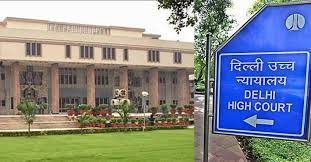
Delhi High Court: Possession Without Lawful Title Is Only a Shadow of Right
Court upholds ejectment of occupant claiming oral purchase agreement in Karol Bagh property dispute.
Judges stress nemo dat principle—no one can transfer better title than they possess.
By Legal Reporter
New Delhi: February 28, 2026:
In a significant ruling on property and tenancy laws, the Delhi High Court has upheld a trial court’s decree for recovery of possession and mesne profits against an occupant who claimed ownership of a property based on an oral purchase agreement. The Division Bench, comprising Justice Anil Kshetarpal and Justice Shail Jain, emphasized that possession without lawful title cannot confer ownership rights, describing it as merely a “shadow of right.”
Also Read: Calcutta High Court: GST Assessment Order Without Hearing Is Unsustainable
The judgment reinforces the principle that property ownership must be backed by valid documentation and lawful title, and that oral agreements without corroboration cannot override statutory requirements.
[Resource Note]
If you want practical guidance on drafting wills, codicils, and probate procedures, Will Writing Simplified is an invaluable resource. BUY TODAY: Amazon 🔹 Flipkart
Background of the Case
Also Read: ITAT Rules Assessee Not Required to Prove “Source of Source” When Loan Repaid via Bank
- The dispute arose over a property in Karol Bagh, New Delhi.
- The plaintiff filed a civil suit seeking recovery of possession and mesne profits from the occupant.
- The occupant claimed he had purchased the property through an oral agreement and therefore had ownership rights.
- The trial court rejected this claim and ordered ejectment.
- The occupant appealed to the High Court, which upheld the trial court’s decision.
High Court’s Observations
- The Court invoked the principle of nemo dat quod non habet (“no one can transfer a better title than they possess”).
- It held that mere possession without lawful title cannot confer ownership rights.
- Oral agreements, without documentary proof or registration, are insufficient to establish ownership.
- The Court noted that the appellant’s claim was uncorroborated and legally untenable.
Legal Significance
- Property Law Clarity: Reinforces that ownership must be proven through valid documents such as sale deeds, registered agreements, or succession certificates.
- Oral Agreements: While oral contracts are recognized under Indian law, they cannot establish ownership of immovable property without corroboration.
- Tenant vs. Owner Rights: Occupants cannot claim ownership merely by virtue of possession.
Impact of the Judgment
- For Property Owners: Strengthens their ability to reclaim property from unauthorized occupants.
- For Occupants: Warns against relying on oral agreements without proper documentation.
- For Legal System: Sets a precedent for rejecting fraudulent or unsubstantiated ownership claims.
Expert Opinions
- Legal Scholars: Applaud the ruling for reinforcing documentary evidence as the cornerstone of property ownership.
- Property Lawyers: Stress that oral agreements often lead to disputes and litigation, making registration essential.
- Critics: Note that while the ruling is legally sound, it highlights the need for greater awareness among citizens about property documentation.
Conclusion
The Delhi High Court’s ruling that possession without lawful title is only a “shadow of right” underscores the importance of proper documentation in property transactions. By upholding the ejectment of an occupant claiming ownership through an oral agreement, the Court has reinforced the principle that property rights must be backed by lawful title. This judgment serves as a reminder to buyers and sellers alike: without valid documents, property claims are legally unsustainable.
Also Read: Supreme Court Rejects Plea Against Film Yadav Ji Ki Love Story, Says Title Does Not Defame Community
Keywords for Faster Searches
- Delhi High Court oral purchase agreement case
- Possession without lawful title ruling
- Karol Bagh property dispute Delhi HC
- Nemo dat property law India
- Oral agreement property ownership India
- Delhi HC ejectment unauthorized occupant
- Property law judgment February 2026
Also Read: Supreme Court Clarifies: High Courts Cannot Disturb Finality of Apex Court Orders