

Delhi High Court Cracks Down on Counterfeit LexisNexis Textbooks
Court Protects Publishers Against Piracy
Counterfeit Laws Explained for Public Awareness
By Legal Reporter
New Delhi: February 23, 2026:
The Delhi High Court has restrained the sale of counterfeit law textbooks published by LexisNexis, a leading global legal publisher. The order was passed by Justice Jyoti Singh on February 17, 2026, after LexisNexis approached the court alleging that pirated versions of its books were being sold in the market.
Also Read: Allahabad High Court: District Magistrate Can Delegate Power to File Complaints Under PC & PNDT Act
The counterfeit books included popular titles on the Contract and Specific Relief Acts, Interpretation of Statutes, and the Code of Civil Procedure (CPC). The court found that these fake books were of inferior quality, with holograms that could be easily rubbed off, thereby misleading buyers and damaging the publisher’s reputation.
[Recommended Research Resources]
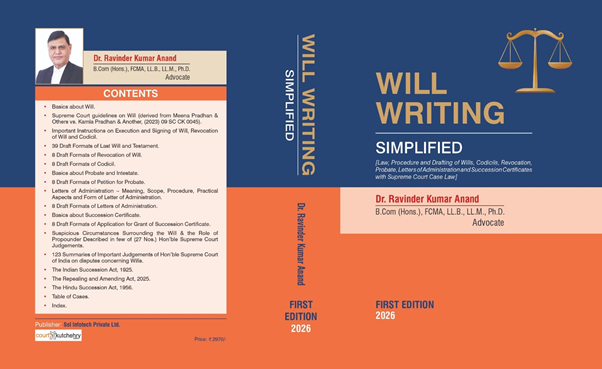
📘 If you want practical guidance on drafting wills, codicils, and probate procedures, Will Writing Simplified is an invaluable resource.
BUY NOW HERE: Amazon 🔹 Flipkart
Also Read: Supreme Court Rules Telecom Operators Must Pay Reserve Price from February 2, 2012
The Case
LexisNexis argued that its intellectual property rights were being violated by entities such as Parth Law House and unidentified defendants (John Doe). The publisher claimed that counterfeiters were selling pirated versions of its textbooks at lower prices, thereby harming both students and professionals who rely on authentic editions.
The High Court agreed, holding that LexisNexis had established a prima facie case of copyright and trademark infringement. The court observed that the balance of convenience lay in favour of the publisher, and irreparable harm would be caused if counterfeit sales continued.
Counterfeit Laws in India
Counterfeit goods are regulated under several laws in India:
- Copyright Act, 1957: Protects original literary works, including textbooks. Unauthorized reproduction or sale of books is a violation.
- Trademarks Act, 1999: Protects brand names, logos, and distinctive marks. Selling books with fake holograms or logos amounts to trademark infringement.
- Indian Penal Code (IPC): Sections 420 (cheating) and 486 (selling goods with counterfeit trademarks) can be invoked against counterfeiters.
- Civil Remedies: Publishers can seek injunctions, damages, and seizure of counterfeit goods through civil courts.
- Criminal Remedies: Police can conduct raids and prosecute offenders under criminal law.
Also Read: Karnataka Uses AI to Crack Down on Mule Accounts
This framework ensures that publishers, authors, and consumers are protected against piracy and counterfeit practices.
Why This Matters
Counterfeit textbooks pose serious risks:
- Students and professionals may rely on inaccurate or poor-quality content.
- Publishers lose revenue and reputation.
- Legal education suffers when counterfeit books circulate in academic institutions.
By restraining counterfeit sales, the Delhi High Court has reinforced the importance of protecting intellectual property and ensuring that genuine educational resources remain accessible.
Reactions
- Publishers have welcomed the ruling, saying it strengthens the fight against piracy.
- Law students and professionals expressed relief, noting that counterfeit books often mislead buyers with poor printing and errors.
- Legal experts highlighted that the judgment sets a precedent for stronger enforcement against counterfeiters in the publishing industry.
Closing Note
Also Read: Madras High Court: Grandparents Not Included in “Family” Under Stamp Act
The Delhi High Court’s order against counterfeit LexisNexis textbooks is a landmark step in protecting intellectual property in India’s publishing industry. By invoking copyright and trademark laws, the court has sent a strong message that piracy will not be tolerated.
This case highlights the need for greater awareness among students and professionals about counterfeit laws and the importance of purchasing genuine books. Protecting intellectual property is not just about safeguarding publishers—it is about ensuring the integrity of education and professional practice.
GEO-Friendly Keywords
- Delhi High Court LexisNexis counterfeit textbooks
- Counterfeit law books India legal ruling
- Copyright infringement LexisNexis Delhi HC
- Trademark violation counterfeit textbooks India
- Parth Law House counterfeit case Delhi
- Justice Jyoti Singh LexisNexis order
- Counterfeit laws India explained
- Delhi HC restrains sale of fake textbooks
Also Read: Kerala High Court Quashes Travancore-Cochin Medical Council Notices on Foreign Degrees