
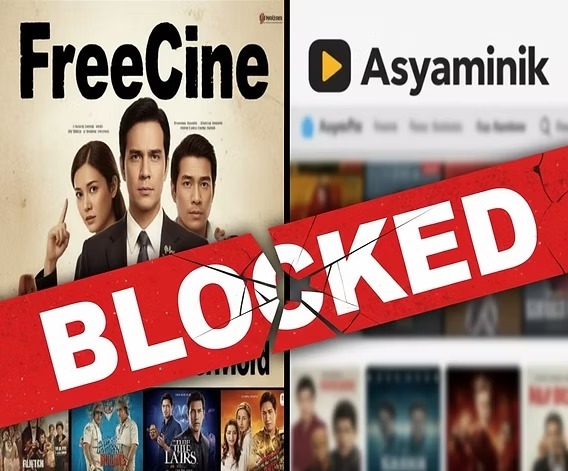
Neither Copyright Owners nor ISPs Can Unilaterally Block 'Rogue Websites': Delhi High Court Mandates Judicial Oversight in Online Piracy Enforcement
Justice Anup Jairam Bhambhani Devises Balanced Protocol for Dynamic Injunctions, Restraining Blanket Powers while Preserving Intermediary Safe Harbour Protections
High Court Calibrates Section 79 of IT Act and Copyright Principles in HBO Landmark Judgment Against 30 Digital Infringers
By Legal Editor
New Delhi: July 28, 2026:
Introduction: The Ongoing Battle Against Digital Piracy and Procedural Integrity
The clash between intellectual property rights holders and digital copyright infringement has reached a crucial inflection point in Indian legal jurisprudence. In a landmark ruling delivered by the Delhi High Court in the matter of , the court addressed one of the most contentious dilemmas in contemporary internet governance: whether content creators or internet intermediaries possess the legal authority to determine if an online location is a "rogue website" liable to be blocked. Justice Anup Jairam Bhambhani categorically held that neither copyright owners nor internet intermediaries, including Internet Service Providers (ISPs) and Domain Name Registrars (DNRs), can unilaterally decide whether a website is illegal or rogue. While acknowledging that entertainment conglomerates should not be compelled to initiate fresh litigation every time a pirated platform reappears under a new domain name, the court reasserted that the final determination of illegality must reside exclusively within judicial authority.
The decision arose out of a suit filed by Home Box Office Inc (HBO) against thirty group websites engaged in unauthorized streaming and distribution of high-value copyrighted cinematographic works and television programming. HBO demonstrated that these portals regularly made blockbuster content available immediately upon release, and in certain instances, prior to theatrical premiere dates. Furthermore, the operators behind these entities used privacy proxy tools to obscure their identity, making direct enforcement virtually impossible. While granting ad-interim injunctive relief, the High Court refused to issue a blanket order that would empower plaintiffs or intermediaries to execute domain blocks via simple affidavit notifications without court intervention. This ruling provides a calibrated synthesis between protecting copyright holders' economic interests and upholding due process, procedural fairness, and statutory safeguards.
Analyzing the 'Rogue Website' Doctrine and Flagrantly Infringing Online Locations
To appreciate the legal mechanics of the HBO ruling, one must examine the legal concept of a "rogue website" as recognized by Indian courts. Under the Indian Copyright Act, 1957, exclusive rights are conferred upon copyright owners under Section 14 to communicate works to the public, reproduce content, and distribute copies. Section 51 of the Copyright Act defines copyright infringement, establishing that any person who does anything without a license that the copyright holder has the exclusive right to do commits an actionable civil and criminal wrong.
However, the internet ecosystem presents unique enforcement challenges because infringing content is frequently hosted on decentralized, anonymous online locations. Indian jurisprudence established the standard for identifying rogue websites in the seminal decision of . In that case, the Delhi High Court formulated a non-exhaustive list of qualitative factors to determine whether a portal constitutes a "Flagrantly Infringing Online Location" (FIOL). These factors include:
Whether the primary purpose or effect of the website is to facilitate copyright infringement;
The flagrancy of the infringement or the nature and scale of the infringing activity;
Whether the website operator displays disregard for copyright generally;
Whether the registrant details of the domain owner are hidden behind privacy shielding services;
Whether the website provides administrative contacts that are unresponsive, false, or non-existent;
Whether the platform actively advertises pirate branding to invite users to access illicit media.
In applying these criteria to the HBO suit, Justice Bhambhani concluded that the thirty target websites were not engaged in incidental copyright violations. Instead, their foundational purpose was to facilitate large-scale copyright piracy. Their identity masking and unverified credentials firmly positioned them as rogue platforms. Nevertheless, establishing that an initial set of websites is rogue does not automatically grant rights holders carte blanche power to deem future websites rogue without legal oversight.
Intermediary Safe Harbour Protections Under Section 79 of the IT Act
A cornerstone of modern cyber law is the liability framework governing online intermediaries, codified in Section 79 of the Information Technology Act, 2000. Section 79 grants conditional immunity, known as "safe harbour," to intermediaries such as Internet Service Providers, Domain Name Registrars, search engines, and web hosts. Under Section 79(1), an intermediary is exempt from liability for any third-party information, data, or communication link hosted or made available by it, provided specific legal statutory conditions under Section 79(2) and 79(3) are met.
To maintain safe harbour status:
The intermediary must function strictly as a passive conduit;
The intermediary must not initiate the transmission, select the receiver of the transmission, or select or modify the information contained in the transmission;
The intermediary must exercise due diligence as prescribed under the Information Technology (Intermediary Guidelines and Digital Media Ethics Code) Rules;
Upon receiving actual knowledge or court orders, the intermediary must act expeditiously to remove or disable access to infringing material without making independent legal determinations.
The domain name registrars appearing in the HBO litigation argued that compelling them to evaluate copyright claims and decide whether a newly reported domain name should be blocked would violate their statutory role. If an intermediary begins actively evaluating content, making value judgments regarding infringement, or assessing whether a third-party domain is "rogue," it risks forfeiting its neutral, passive status. Once neutral status is compromised, the intermediary could be exposed to liability under Section 79(3) for participating in or encouraging unlawful acts.
Justice Bhambhani acknowledged this legal risk, explicitly stating that an ISP or DNR is fundamentally a neutral entity. It is not within the jurisdiction, competence, or statutory mandate of an intermediary to adjudicate whether a website is rogue. Forcing intermediaries to perform quasi-judicial duties would undermine the statutory architecture governing digital platforms under Indian information technology law.
The Evolution of Dynamic Injunctions and the Court's New Balanced Protocol
The central dilemma in digital anti-piracy litigation is the phenomenon known as "chasing a moving target". When a court issues an injunction against a primary domain (e.g., example-piracy.com), the operators quickly activate mirror websites, redirect URLs, or alphanumeric variations (e.g., example-piracy1.to, example-piracy2.net) to bypass blocking filters. Requiring copyright holders to institute separate lawsuits for every domain iteration would create unmanageable litigation expenses and render judicial remedies ineffective.
To address this challenge, the High Court in UTV Software instituted the "Dynamic Injunction" framework. Under a traditional dynamic injunction order, once a court finds a set of websites to be rogue platforms, the plaintiff can file an affidavit before the Joint Registrar of the High Court detailing newly discovered mirror or redirect websites. The Joint Registrar then extends the injunction to block these new domains without requiring a fresh trial before a Judge.
In the HBO matter, the plaintiffs sought a broader mechanism: directly serving affidavits to ISPs and DNRs so that intermediaries would immediately block new domains without prior judicial or administrative review. The High Court rejected this request, holding that self-administered blocking power creates significant risks of over-blocking, suppression of legitimate speech, and arbitrary censorship.
To resolve this tension, the Court formulated a precise protocol that separates technical verification from legal adjudication:
Affidavit and Evidence Submission: The copyright owner (HBO) identifies a suspected mirror, redirect, or alphanumeric variation of an injuncted website and serves an affidavit supported by technical evidence on the intermediary.
Strictly Technical Verification: The intermediary (ISP or DNR) conducts a limited technical verification to confirm whether the new URL is indeed a mirror, alphanumeric variant, or redirect domain linking directly to the original injuncted website. The intermediary does not judge copyright liability; it only checks technical linkage.
Pro-Tem (Temporary) Blocking: If the technical connection is established, the intermediary must enforce the injunction as a temporary measure to prevent immediate loss.
Mandatory Judicial Impleadment: Simultaneously, the plaintiff must file an application before the High Court to formally implead the newly identified website.
Judicial Confirmation: The High Court reviews the filing and determines whether the temporary blocking order should be confirmed, modified, or vacated.
This structure ensures that intermediaries perform only objective technical functions while keeping ultimate judicial authority intact. Additionally, the court warned that any false, reckless, or mala fide assertions made by copyright owners when claiming a site is a mirror domain will result in severe legal penalties.
Strategic Implications for Digital Governance and Intellectual Property Litigation
The Delhi High Court's decision sets an important precedent for intellectual property litigation in India's digital economy. By maintaining a clear boundary between private rights enforcement and public judicial authority, the court protected the legal framework against privatized censorship.
For rights holders like motion picture studios and streaming services, the ruling preserves an efficient mechanism to stop persistent piracy without forcing them into endless original litigation. For intermediaries, the ruling provides clarity regarding their legal duties, protecting their safe harbour immunity under Section 79 of the IT Act by ensuring they are not forced into adjudicatory roles. Finally, for internet users and digital platforms, the ruling safeguards against unchecked website blocking, maintaining judicial oversight over online access.
By balancing the Copyright Act, 1957, the Information Technology Act, 2000, and established precedent from UTV Software, the Delhi High Court has established a proportional and constitutionally sound model for anti-piracy enforcement in the digital era.
Searchable Legal Index & Comprehensive FAQ
Searchable Index Categories
Section A: Concepts of Rogue Websites and FIOL
Section B: Intermediary Protection and IT Act Rules
Section C: Dynamic Injunction Procedures & Safeguards
Section A: Concepts of Rogue Websites and FIOL
Q1: What defines a 'rogue website' under Indian law?
Answer: Under Indian jurisprudence established in cases like , a "rogue website" (or Flagrantly Infringing Online Location - FIOL) is an online portal whose primary purpose or effect is to facilitate, host, or distribute copyright-infringing content. Key indicators include masked registrant details, lack of genuine contact details, systematic dissemination of unlicensed content, use of pirate branding, and disregard for copyright notices.
Q2: How does the Copyright Act, 1957 apply to online streaming piracy?
Answer: Online streaming without authorization violates Section 14 of the Copyright Act, 1957, which grants copyright owners exclusive rights to communicate their works to the public. Unauthorized hosting, streaming, or downloading constitutes copyright infringement under Section 51. Rogue websites that provide links or direct access to pirated files act as secondary or primary infringers.
Section B: Intermediary Protection and IT Act Rules
Q3: What is the Safe Harbour doctrine under Section 79 of the IT Act, 2000?
Answer: Section 79 of the Information Technology Act, 2000 provides conditional legal immunity (safe harbour) to intermediaries like Internet Service Providers (ISPs) and Domain Name Registrars (DNRs) against third-party content liability. To maintain safe harbour, intermediaries must remain neutral, perform passive technical functions, observe due diligence under the Intermediary Guidelines, and promptly comply with official court or government blocking orders.
Q4: Why cannot an ISP or Domain Name Registrar decide to block a website independently?
Answer: As highlighted in the , an ISP or DNR is a neutral intermediary and lacks the legal authority to determine whether a website is infringing or rogue. If an intermediary makes legal determinations on copyright compliance, it loses its passive status, jeopardizing its safe harbour immunity under Section 79 of the IT Act.
Section C: Dynamic Injunction Procedures & Safeguards
Q5: What is a Dynamic Injunction in Indian copyright enforcement?
Answer: A dynamic injunction is an injunction order issued by a court that extends protection beyond specified URLs to include future mirror, redirect, or alphanumeric variations of the same infringing website. It prevents copyright owners from having to file separate lawsuits every time a rogue website changes its domain address to evade blocking orders.
Q6: What is the new procedure established in HBO v. Streamzy.to for blocking mirror sites?
Answer: The Delhi High Court established a multi-step protocol:
The copyright owner serves an affidavit with technical evidence identifying a mirror/redirect site to the intermediary.
The intermediary performs a technical verification to confirm the link between the new URL and the original injuncted site.
Upon technical confirmation, the intermediary temporarily blocks the domain as a pro-tem measure.
The copyright owner must file an application before the High Court to formally implead the new website for judicial review and final confirmation.
Q7: What happens if a copyright owner submits a false or unjustified blocking request?
Answer: The Delhi High Court explicitly stated that any false, reckless, or mala fide assertions made by copyright owners in affidavits alleging a website is a mirror domain will result in court sanctions and adverse legal consequences.
Q8: How does this procedure balance intellectual property rights and digital freedom?
Answer: It prevents unauthorized domain blocking without judicial oversight, ensuring that copyright owners cannot unilaterally shut down websites. At the same time, it provides copyright holders with rapid temporary relief against mirror platforms while preserving the statutory safe harbour status of internet intermediaries.